Owner’s manual
 Error Codes



Are GE side by side refrigerators good?
Yes. GE side-by-side refrigerators like model GSH25JGDCWW are a solid choice for everyday use because they typically offer dependable cooling, easy organization with shelves and bins, and convenient ice and water dispensing when maintained properly. For model-specific features and care details, use the owner's manual.
A good side-by-side refrigerator consistently holds safe temperatures, makes ice reliably, and seals tightly so it does not waste energy.
- Refrigerator section stays near 37°F
- Freezer section stays near 0°F
- Doors close and seal without gaps (no warm air leaks)
- Ice maker and dispenser work without frequent jams
- Fans run smoothly with normal operating sounds
Side-by-side designs are popular because they balance fresh-food and freezer access, but they also rely on airflow and defrost components to stay efficient.
| Area | Strength | What to watch for |
|---|---|---|
| Storage | Adjustable shelves and door bins help organization | Overpacking can block vents and cause warm spots |
| Convenience | In-door ice and water is easy to use | Filters and valves need periodic attention |
| Visibility | Bright interior lighting makes items easier to find | A burned-out bulb is a quick fix |
These steps prevent many cooling and dispenser complaints on GE side-by-side units.
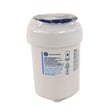
- Replace the water filter about every 6 months, or sooner if flow slows (see refrigerator water filter MWFP)
- Keep air vents clear in both compartments
- Clean spills and wipe moisture around the dispenser area
- Listen for changes in fan noise that can signal airflow issues
- If temperatures swing, check the sensor and defrost system components
Most “bad refrigerator” complaints come from temperature instability, restricted airflow, or neglected water filtration. Staying on top of basic care helps your GSH25JGDCWW cool evenly, protect food quality, and keep the ice and water dispenser working as designed.
Last updated: February 2026
What is the most common problem with a GE refrigerator?
In our experience with GE side-by-side refrigerators like model GSH25JGDCWW, the most common complaint is poor cooling (fresh food warm, freezer not cold enough, or temperatures swinging). The usual causes are restricted airflow, dirty condenser coils, or a problem in the fan, defrost, or temperature-sensing system; our GSH25JGDCWW owner's manual supports focusing on airflow clearances and basic care.
- Confirm the temperature settings were not accidentally changed.
- Make sure air vents inside both compartments are not blocked by food.
- Avoid overpacking; cold air has to circulate.
- Verify the doors close fully and the gaskets seal all the way around.
- Clean dust from the condenser area (unplug first).
- Listen for fans: you should typically hear airflow when the unit is running.
| Symptom | Most likely area | What you may notice |
|---|---|---|
| Fresh food warm, freezer OK | Airflow/damper issue | Weak airflow into refrigerator section |
| Freezer warm and fridge warm | Condenser airflow or sealed system | Hot cabinet sides, long run times |
| Frost buildup, then warming | Defrost system | Ice on rear freezer panel |
| Temps swing up and down | Sensor/control issue | Random warming, inconsistent cycling |
If basic airflow and cleaning do not help, these model-matched parts are commonly involved in cooling complaints:
- Refrigerator temperature sensor WR55X10025 (helps the control “know” actual temperature)
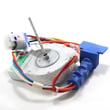
- Rca refrigerator evaporator fan motor WR60X10185 (moves cold air through the freezer and into the fresh food section)
- Refrigerator defrost heater WR51X10055 and refrigerator defrost bi-metal thermostat WR50X10065 (prevent heavy frost that blocks airflow)
- Refrigerator electronic control board WR55X11072C (manages cooling and defrost timing)
When airflow is restricted or a fan/defrost component fails, the compressor can run longer than normal and temperatures can drift. Catching the issue early helps protect food and reduces strain on major components.
Last updated: February 2026
Why is my GE side by side freezer freezing up?
Frost or ice buildup in the freezer on your GE GSH25JGDCWW is usually caused by warm, moist air getting inside (most often from a door that is left ajar or a leaking door gasket) or from frequent, long door openings. Less commonly, a defrost system problem can let frost accumulate on the evaporator and restrict airflow.
- Make sure the freezer door closes fully and nothing is holding it open (food packages, bins, ice bucket).
- Check the door gasket for gaps, tears, or areas that are folded over.
- Reduce long door openings; humid room air quickly turns into frost inside the freezer.
- Confirm the temperature controls are not set to the coldest setting unnecessarily.
- If the gasket sticks on the hinge side, apply a very thin film of petroleum jelly to the face of the gasket (a common fix noted in the troubleshooting tips).
A worn or warped gasket lets moisture in, which freezes on surfaces and can create heavy frost.
The manual notes frost can occur with a door left open and with frequent or long door openings.
If the back wall of the freezer is packed with frost and airflow is weak, the defrost heater or defrost thermostat can be involved.
| Symptom you see | What it often points to | Example part on this model page |
|---|---|---|
| Frost around door edge, corners, or shelves | Door not sealing, moisture intrusion | Refrigerator door gasket (white) WR24X10294 |
| Solid frost blanket behind rear freezer panel, warm fridge section | Defrost system not clearing evaporator | Refrigerator defrost heater WR51X10055 or refrigerator defrost bi-metal thermostat WR50X10065 |
A freezer that is “freezing up” can block airflow through the evaporator area, which makes temperatures swing, reduces ice maker performance, and forces the compressor to run longer than normal.
We recommend following the troubleshooting section in the owner's manual for your GE GSH25JGDCWW; it covers frost causes such as door left open, frequent door openings, and gasket sealing issues.
Last updated: February 2026
How wide is a 25.6 cubic foot refrigerator?
A 25.6 cubic foot side-by-side refrigerator is typically about 35 to 36 inches wide. For your GE GSH25JGDCWW, use the dimension and clearance chart in the GSH25JGDCWW owner's manual to confirm the exact cabinet width, door-swing space, and ventilation clearances before installation.
The listed “width” is usually the cabinet; the space you need can be larger once you account for handles, door swing, and airflow.
- Plan for cabinet width plus side clearance
- Allow extra room for handles (overall width can be wider)
- Leave space for door swing so bins and drawers can pull out
- Keep rear clearance for airflow and the water line
- Measure the opening at top, middle, and bottom
| What you are measuring | What it usually means | Typical range |
|---|---|---|
| Cabinet width | Box only, no handles | 35 to 36 in. |
| Overall width | Cabinet plus handles/trim | 36 to 37.5 in. |
| Opening width to target | Cabinet plus clearance | 36 in. or more |
- Measure the finished opening width (wall to wall or cabinet to cabinet)
- Check for baseboards, trim, and uneven walls that reduce clearance
- Confirm hinge-side clearance so doors open fully
- Verify depth so doors close without hitting a wall
- Measure the delivery path (doorways, turns, flooring)
If the opening is tight, doors may not open fully, airflow can be restricted (hurting cooling performance), and installation can become difficult. Confirming the GE GSH25JGDCWW dimensions and clearances prevents fit problems.
Last updated: February 2026