Installation guide
 Owner’s manual


Is the DW80J7550US a good dishwasher?
Yes; the Samsung DW80J7550US is a solid built-in dishwasher when it’s installed correctly, loaded properly, and maintained. It’s designed for a 15 place setting capacity and standard 120 V power, and it fits common 24-inch cabinet openings, which makes it a good choice for many kitchens.
What “good” means for this model
For DW80J7550US, “good” usually comes down to three things: fit, performance, and upkeep.
- Fit: Built for a standard enclosure (minimum 24 inches wide, 24 inches deep, 34 1/8 inches high).
- Capacity: Rated for 15 place settings.
- Electrical: 120 V / 60 Hz on a dedicated circuit.
- Results: Best cleaning happens when spray paths are not blocked and the detergent dispenser can open.
- Longevity: Regular filter and interior cleaning helps prevent odors, poor wash results, and drain issues.
Quick spec snapshot (DW80J7550US)
| Item | What to expect |
|---|---|
| Type | Built-in dishwasher |
| Dimensions (W x D x H) | 23 7/8 x 25 x 33 7/8 in. |
| Capacity | 15 place settings |
| Water pressure | 20 to 120 psi |
How to get the best performance
We recommend these habits because they directly affect cleaning and drying on this Samsung dishwasher.
- Scrape off bones, seeds, toothpicks, and paper before loading
- Load so spray arms can rotate freely and nothing blocks the upper nozzles
- Keep items from blocking the detergent dispenser door
- Use the correct amount of dishwasher detergent and rinse aid
- Choose a cycle that matches soil level (heavy soil needs a stronger cycle)
For model-specific loading and cycle guidance, use the DW80J7550US owner’s manual.
Why it matters
Most “bad dishwasher” complaints trace back to installation, loading, or maintenance issues, not the tub size or basic design. When the unit is level, secured, and supplied with proper water pressure, DW80J7550US is built to deliver consistent wash performance.
If you’re evaluating installation quality (leveling, securing, drain routing), follow the DW80J7550US installation guide.
Last updated: February 2026
How tall is a Samsung dishwasher?
Most Samsung built-in dishwashers are about 34 to 35 inches tall once installed. For the Samsung DW80J7550US, the installation opening needs to be at least 34 1/8 inches high, and the dishwasher itself is about 33 7/8 inches tall (adjustable with leveling legs); see the DW80J7550US installation guide for the exact fit requirements.
Model-specific height and what it means
Here are the key height numbers that matter for DW80J7550US:
| Measurement | Typical value for this model | Why you care |
|---|---|---|
| Minimum enclosure (opening) height | 34 1/8 in. | Ensures the dishwasher slides in without binding |
| Dishwasher height (unit) | 33 7/8 in. | Leaves room for leveling and minor floor variation |
| Common installed height range | About 34 to 35 in. | Matches most standard kitchen cabinet cutouts |
Quick measuring checklist (before you buy parts or reinstall)
- Measure the opening height at the left, center, and right (floors can slope).
- Confirm the opening is at least 24 inches wide and 24 inches deep.
- If you want the door to sit flush with the countertop edge, plan on a countertop depth of at least 25 inches.
- Check that the dishwasher can sit level; leveling legs fine-tune final height.
- Make sure the door can open freely with a small clearance to cabinet sides.
Why it matters
Dishwasher height affects whether the unit fits under the countertop, whether the door aligns correctly, and whether the tub seals and drains properly. A tight opening can cause rubbing, vibration, and installation headaches.
Last updated: February 2026
What is the most common problem with Samsung dishwashers?
The most common problem we see on Samsung dishwashers like model DW80J7550US is a drain-related issue: the dishwasher will not drain fully, drains slowly, or shows a drain/overflow style code. The usual causes are a clogged filter/sump area, a kinked or blocked drain hose, or a failing drain pump.
Most common symptoms and what they usually mean
- Standing water in the bottom: drain path restriction (filter, sump, hose) or weak drain pump
- Stops mid-cycle with an information code: the control is detecting a fill, leak, heat, or drain problem
- Poor cleaning: spray arm movement issue, low water fill, or clogged filters
- Leaking: loose water supply connection, door sealing issue, or overfill condition
- Will not start: door not latching, power issue, or control not accepting a cycle
Quick checks you can do first (no parts needed)
- Turn off power at the breaker, then inspect the tub bottom for debris around the sump and drain opening.
- Check the drain hose routing under the sink; straighten kinks and confirm it is not crushed.
- If you recently installed the dishwasher, run the post-install leak check steps in the DW80J7550US installation guide.
- If an information code appears, match it to the troubleshooting steps in the DW80J7550US user manual.
When a part is commonly involved
If the basic checks do not restore normal draining, these parts are frequent suspects on drain complaints:
| Problem you notice | Common cause | Part that often fixes it |
|---|---|---|
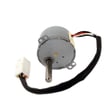
| Hums but does not drain | Pump impeller jammed or worn | Dishwasher drain pump DD31-00016A |
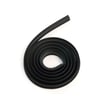
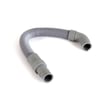
| Drains slowly or backs up | Hose restricted or sagging | Dishwasher drain hose DD67-00115A |
| Not filling well, poor wash | Water supply restriction or valve issue | Dishwasher water inlet valve DD33-01001A |
Why it matters
Drain and fill problems can trigger safety shut-downs and information codes, and they also cause poor cleaning and odors. Fixing the root cause (restriction, hose routing, or a weak pump) restores normal cycle operation and helps prevent repeat clogs.
Last updated: February 2026
Does the DW80J7550US have a food disposer?
The Samsung DW80J7550US dishwasher does not use a traditional hard food disposer (grinder). Instead, it relies on a filter-based system; we recommend scraping off bones, seeds, and toothpicks before loading to prevent noise, clogs, and wash performance issues (see the DW80J7550US user manual).
How to tell what your dishwasher uses
A disposer-style dishwasher typically has a noticeable grinding sound and a “chopper” assembly in the sump. Filter-based designs are quieter and depend on keeping the filter area clear.
Common signs you have a filter-based system:
- Wash performance drops when fine food particles build up
- You occasionally see debris left in the bottom after a cycle
- The unit is relatively quiet during wash (no grinding)
- Drain issues show up as standing water after the cycle
What we recommend before loading (best practice)
Even without a disposer, you do not need to pre-rinse everything. Do this instead:
- Scrape plates into the trash or compost
- Remove hard items (bones, fruit pits, toothpicks)
- Avoid loading dishes with paper labels or chunks of food
- Make sure items do not block spray movement
- Confirm the detergent dispenser can open freely
If food debris is causing draining problems
A filter-based system is more sensitive to drain restrictions. If your DW80J7550US is leaving water behind, these parts are commonly involved:
| Symptom | What to check first | Related part (if replacement is needed) |
|---|---|---|
| Standing water | Drain path and pump operation | Dishwasher drain pump DD31-00016A |
| Slow drain | Kinked or restricted hose | Dishwasher drain hose DD67-00115A |
For step-by-step installation and routing details, use the DW80J7550US installation guide.
Why it matters
Knowing whether your dishwasher has a disposer helps you load and maintain it correctly. With a filter-based design, simple scraping and occasional cleaning prevents clogs, improves cleaning, and reduces service calls.
Last updated: February 2026