Owner’s manual



What are the most common issues with WF448AAP?
The most common issues we see on the Samsung WF448AAP front-load washer are no-drain or slow-drain problems, fill errors, door won’t lock, excessive vibration (out-of-balance), and leaks around the door boot. Use the WF448AAP owner's manual to match symptoms to cycles, indicators, and basic checks.
Common problems and what to check first
- Washer won’t drain or drains slowly: check the drain hose for kinks and clogs; confirm the standpipe is not blocked.
- Washer won’t fill or fills slowly: verify both water supply valves are fully open; clean inlet screen filters.
- Door won’t lock or won’t start: make sure the door is fully closed and the latch area is clear.
- Vibration or banging in spin: reduce load size, redistribute items, and confirm the washer is level.
- Water leaks at the front: inspect the door boot for tears, debris, or a loose clamp.
Parts that commonly relate to these symptoms
If basic checks point to a failed component, these model-matched parts are often involved:
| Symptom | Likely area | Example part on this model |
|---|---|---|
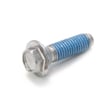
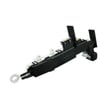
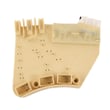
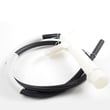
| No fill, fill error | Water inlet system | Washer water inlet valve DC62-30314K |
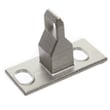
| Door won’t lock/start | Door lock system | Washer door lock DC64-00519B |
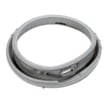
| Leak at door opening | Door boot and clamps | Washer door boot DC64-01570A |
Error codes that show up often on Samsung front-load washers
Samsung front-load washers frequently display codes tied to these conditions:
- ND: drain problem
- NF: fill problem
- DC: door or out-of-balance related condition
For code meanings and targeted checks, use these guides:
- Samsung front load washer nd error code
- Samsung front load washer nf error code
- Samsung front load washer dc error code
Why it matters
Catching a drain, fill, door-lock, or leak issue early prevents repeat shutdowns, reduces wear on the motor and tub system, and helps avoid water damage. Simple steps like leveling, cleaning inlet screens, and keeping the door boot clean solve many complaints.
Last updated: March 2026
What does SE mean on Samsung VRT washer?
On the Samsung WF448AAP VRT washer, an SE code means the washer is having a drain problem (the water is not pumping out fast enough). Many Samsung front-load models show this same issue as 5E or ND, depending on the display.
What to check first (fast fixes)
- Make sure the drain hose is not kinked, crushed, or pushed too far down the standpipe.
- Check the standpipe or laundry tub for a slow household drain (a partial clog can trigger SE).
- Reduce oversudsing; too much HE detergent can slow draining and cause an SE/5E/ND code.
- Run a Drain/Spin cycle with the washer empty to see if it clears.
- Follow the drain-cleanout and error-code steps in the WF448AAP user manual.
Common causes and what they point to
| What you notice | Most likely cause | What to do next |
|---|---|---|
| Water stays in the drum | Clogged pump filter or drain path | Clean the filter and check hoses for debris |
| Drains slowly, lots of suds | Oversudsing | Use less HE detergent; run rinse/spin |
| Hums but will not drain | Pump jam or failing drain pump | Inspect for blockage; replace pump if needed |
| Drains sometimes, then errors | Intermittent restriction or wiring issue | Check hose routing and connections |
Why it matters
A drain error stops the cycle to prevent overflow and protect the motor and control from running with a tub full of water. Clearing the restriction quickly helps prevent repeat shutdowns and odor from standing water.
Helpful related guidance
For Samsung front-load drain-related codes and what they mean across models, use our Samsung front load washer nd error code guide.
Last updated: January 2026
What is the capacity of the WF448AAP?
The Samsung WF448AAP is an extra-large capacity front-load washer designed to handle bulky loads like bedding and multiple towels in fewer cycles. For the exact rated tub capacity (in cubic feet) for your specific WF448AAP version, confirm it in the WF448AAP user manual.
What we can confirm from the manual
Samsung describes the WF448 series as “extra-large capacity” and notes it can wash large items such as:
- A full set of bedding (including a king-size comforter)
- Up to 28 bath towels in a single load
- Large mixed loads with fewer cycles (saving time, water, and energy)
Typical capacity range for washers like this
Most Samsung extra-large front-load washers in this design class are commonly in this range:
| Washer type | Typical capacity range |
|---|---|
| Standard front-load washer | 3.0 to 3.6 cu. ft. |
| Extra-large front-load washer (like WF448 series) | 3.7 to 4.5 cu. ft. |
Why it matters
Capacity affects real-world performance and ownership costs. When you match load size to the washer’s capacity, you get better cleaning, fewer vibration issues, and more efficient water and energy use.
Tips to get the most from the washer’s capacity
- Load loosely; do not pack items tightly against the door boot.
- Mix large and small items to help balance the spin.
- Use HE detergent and measure carefully to reduce oversudsing.
- For bulky items (comforters, towels), choose the cycle recommended in the manual.
- If the washer struggles to balance, reduce the load size and re-run the spin.
Last updated: January 2026