Installation guide
 Owner’s manual


How to do a hard reset on a dryer?
To hard reset a GE GTD65EBSJ3WS electric dryer, we recommend doing a full power reset: turn the dryer off, disconnect power at the breaker (or unplug it), wait 1–5 minutes, then restore power and start a new cycle. This clears most control glitches.
Hard reset steps for GE GTD65EBSJ3WS
- Press Power to put the dryer in idle.
- Disconnect power (unplug, or switch the dryer breaker off).
- Wait at least 1 minute (up to 5 minutes is fine).
- Restore power.
- Select a cycle and press Start.
For control and cycle behavior details specific to this model, use the GTD65EBSJ3WS owner’s manual.
Quick checks if it still won’t run after a reset
A “reset” won’t fix a door, power, or safety-interlock problem. We recommend checking these common causes:
- Confirm the door is fully closed (the dryer will not start with the door open).
- Check the home electrical panel; many electric dryers use two breakers/fuses.
- Make sure Control Lock is not enabled (locked controls can look like a dead panel).
- Try a different cycle (Timed Dry is a good test cycle).
- If the dryer starts then stops, check airflow and lint buildup.
What “hard reset” can and can’t fix
| Symptom | Hard reset helps? | What to check next |
|---|---|---|
| Display frozen or buttons not responding | Yes | Control Lock, power supply |
| Dryer tumbles but won’t heat | Sometimes | Breakers/fuses, venting, heating circuit parts |
| Dryer won’t start at all | Sometimes | Door switch, power supply |
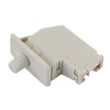
If the dryer won’t start and the door feels “closed” but the dryer acts like it’s open, the door switch may be the issue; see the dryer door switch WE04X28977.
Why it matters
A proper power reset is the safest first step because it can clear a temporary electronic fault without disassembly. If the problem returns immediately, it usually points to a power supply issue, a door/lock input, or a failing component rather than the control needing a reset.
Last updated: January 2026
What is the life expectancy of a GE dryer?
A GE electric dryer like model GTD65EBSJ3WS typically lasts about 10 years in normal household use. GE doesn’t publish a model-specific lifespan in the documentation for GTD65EBSJ3WS, but good airflow and routine cleaning often help dryers reach 12–15 years.
What the GTD65EBSJ3WS documentation does tell you
The GTD65EBSJ3WS owner’s manual focuses on safe operation, venting, and maintenance, and it includes a one-year limited warranty: GE will replace any part that fails due to defects in materials or workmanship during the first year (labor and related service costs included).
Warranty vs. lifespan (quick comparison)
| Item | What it covers | Typical time frame |
|---|---|---|
| Limited warranty | Defects in materials/workmanship | 1 year |
| Life expectancy | Normal wear and aging of components | About 10 years |
What affects dryer lifespan most
- Venting and airflow: restricted exhaust makes the dryer run hotter and longer
- Lint buildup: increases heat stress and can cause performance problems
- Load size: chronic overloading strains the drum, belt, and motor
- Heat management: repeated long cycles with poor airflow accelerates wear
- Basic upkeep: cleaning the lint screen and inspecting the exhaust duct
Maintenance checklist that helps a dryer last longer
- Clean the lint screen before or after every load
- Inspect and clean the exhaust ducting at least once a year
- Use 4-inch metal ducting and keep runs as short and straight as practical
- Stop using the dryer and correct airflow issues if dry times suddenly increase
- Keep the lint screen fitting properly; replace it if it’s torn or warped (see GE dryer lint screen WE03X23881)
Why it matters
Most dryer “end of life” problems trace back to overheating from poor airflow. Keeping venting clear helps protect high-wear components such as the heating system, thermostats, wiring, belt, and motor.
Last updated: January 2026
What is the most common problem with a GE dryer?
For the GE GTD65EBSJ3WS electric dryer, the most common customer-reported issues are “no heat” or “takes too long to dry.” In many cases, the root cause is restricted airflow (lint buildup or venting problems) or a failed heating or temperature-sensing component.
Quick checks we recommend first (fast, no parts)
- Clean the lint screen before every load and make sure it seats fully.
- Inspect the exhaust duct for kinks, crushing, or long runs.
- Confirm the outside vent hood opens freely while the dryer runs.
- Avoid overloading; heavy loads dry slower and can fool sensor cycles.
- Try a Timed Dry cycle once; it helps separate airflow issues from sensor issues.
For venting requirements and safety basics, follow the guidance in the GTD65EBSJ3WS owner’s manual.
When it’s likely a part problem
If airflow is good but drying is still poor, these parts are common suspects on electric dryers like the GTD65EBSJ3WS:
| Symptom | What it often points to | Example compatible part for this model |
|---|---|---|
| Drum tumbles but no heat | Failed heater circuit component | Dryer heating element WE11M10001 |
| Overheats, shuts down, or cycles heat oddly | Thermostat/limit issue | Dryer high-limit thermostat (model-specific match varies) |
| Heat is inconsistent, cycle times vary a lot | Temperature sensing issue | Dryer thermistor (model-specific match varies) |
Why it matters
Restricted venting and lint buildup do more than slow drying; they can cause overheating that trips safety devices and shortens the life of heating components. Keeping airflow strong is the best way to prevent repeat “no heat” and long-dry-time complaints.
Helpful DIY troubleshooting
- Use our dryer takes a long time to dry guide to pinpoint airflow vs. heating issues.
Last updated: January 2026