Owner’s manual



How to find part number for Samsung dryer?
To find the correct part number for your Samsung dryer, we match parts to the model number first. For Samsung model DV338AEW, the model and serial tag is typically on the front frame behind the door; if it’s missing or unreadable, check the back of the dryer for a secondary tag. See the DV338AEW manual for the exact tag location and identification details.
Step-by-step: find the model tag, then the part number
- Open the dryer door and look on the front frame (cabinet opening) behind the door.
- If you don’t see a tag, inspect the rear panel area for a second label.
- Write down the full model number (DV338AEW) and the serial number.
- Use the model number to look up the part by section (heater, drum, door, controls).
- If multiple versions appear, match any suffix/revision shown on the tag.
Common parts people look up on DV338AEW
If you already know what symptom you’re fixing, these are common “search starting points” for this model:
| Symptom | Part type to check | Example part for this model |
|---|---|---|
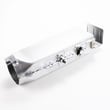
| Dryer won’t heat | Heating circuit | Samsung dryer heating element DC47-00019A |
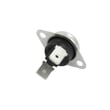
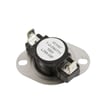
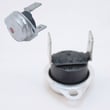
| Overheats or shuts off | Safety thermostats/fuses | Dryer high-limit thermostat DC47-00018A |
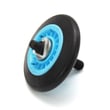
| Noisy thumping/squeal | Drum support | Samsung dryer drum support roller DC97-16782A |
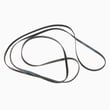
| Drum not turning | Belt/drive | Samsung dryer drum belt 6602-001655 |
Why it matters
Samsung dryers often use different parts across similar-looking models. Using the exact DV338AEW model tag information prevents ordering a heating element, thermistor, belt, or thermostat that does not fit your dryer.
Last updated: February 2026
What is the average lifespan of a Samsung dryer?
Samsung dryers (including model DV338AEW) typically last 10 to 15 years with normal household use. Consistent airflow maintenance (lint screen and venting) and avoiding overloads are the biggest factors that push lifespan toward the high end; neglected airflow shortens it.
What affects dryer lifespan most
- Airflow and lint control: clean the lint screen every load; keep the exhaust vent clear.
- Load size: repeated overloading strains the drum belt, motor, and rollers.
- Heat stress: restricted venting overheats thermostats and the heating circuit.
- Installation quality: crushed or extra-long vent runs increase drying time and wear.
- Usage frequency: multiple loads per day wears moving parts faster than a few loads per week.
Quick maintenance checklist (best ROI)
- Clean the lint screen every cycle.
- Inspect and clean the vent duct periodically (more often with pets or heavy use).
- Keep the dryer level to reduce drum and roller wear.
- Stop using the dryer if you smell burning or notice repeated overheating.
- Follow the care and cleaning schedule in the DV338AEW owner’s manual.
Common wear items and what they usually mean
| Symptom | Most common wear area | Typical result if ignored |
|---|---|---|
| Thumping or rumbling | Drum support rollers | Faster drum wear, louder operation |
| Squealing | Belt or roller surfaces | Belt damage, possible no-tumble |
| Long dry times | Venting or heating system | Overheating, higher energy use |
| No heat (electric models) | Heating circuit safety parts | Dryer runs but won’t dry |
Why it matters
A dryer that is taking longer to dry or running hotter than normal is not just inconvenient; it accelerates wear on key components like the drum belt, drive motor, and heating safety thermostats. Keeping airflow strong is the simplest way to protect the dryer and your clothes.
Last updated: February 2026
Is it worth replacing a heating element in a Samsung dryer?
Yes, for a Samsung DV338AEW dryer it’s usually worth replacing the heating element when the dryer otherwise runs normally (tumbles, timer advances, good airflow). The part cost is typically far less than a new dryer, and a correct diagnosis prevents replacing the wrong component.
When replacement makes sense
Replacing the heater is a good value when the problem is isolated to “no heat” or weak heat and the rest of the dryer is in solid shape.
- The drum turns and the dryer runs, but clothes stay cold or damp
- You’ve confirmed strong airflow at the outside vent
- The dryer is in good overall condition (drum, rollers, belt, door seal)
- You can test parts with a multimeter (or have a technician do it)
Helpful model-specific reference: use the DV338AEW owner’s manual for access steps, wiring diagrams (if included), and safety notes.
Don’t assume it’s the element; check these first
On DV338AEW electric dryers, several safety and temperature parts can mimic a failed element.
| Symptom | Common cause | What to check next |
|---|---|---|
| Runs but no heat | Blown thermal cut-off or fuse | Dryer thermal cut-off fuse, 320-degree f DC47-00015A |
| Heats briefly then stops | High-limit thermostat opening | Dryer high-limit thermostat DC47-00018A |
| Heat is erratic | Temperature sensing issue | Dryer thermistor DC32-00007A |
| Long dry times | Vent restriction or lint buildup | Venting, lint screen, blower housing |
Cost and effort: what to expect
A heating element replacement is typically a mid-level DIY repair.
- Parts cost is usually much lower than replacing the dryer
- Labor is the bigger cost if you hire service
- If airflow is restricted, a new element can fail again quickly
- If the dryer also squeals or thumps, plan for wear items like rollers or a belt at the same time
Why it matters
A failed heater is common, but overheating from poor venting is a common root cause. Fixing airflow and verifying thermostats and fuses protects the new element and restores normal dry times.
Last updated: February 2026