Owner’s manual
 View engine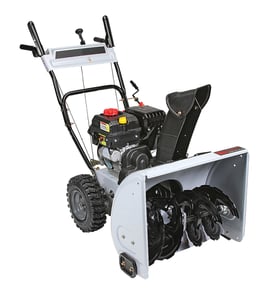



Is a 2 stage or 3 stage snowblower better?
For most homeowners, a 2-stage snowblower is the better all-around choice because it balances power, price, and ease of maintenance. A 3-stage snowblower is better when you regularly face deep drifts, heavy wet snow, or plow-packed end-of-driveway piles and want faster clearing with more complexity.
Quick comparison
| Feature | 2-stage snowblower | 3-stage snowblower |
|---|---|---|
| Best for | Typical driveways; moderate to heavy snow | Deep drifts; wet, icy, plow-packed snow |
| How it moves snow | Auger feeds an impeller | Auger plus accelerator feeds an impeller faster |
| Clearing speed | Strong | Fastest in tough snow |
| Cost and upkeep | Lower; fewer moving parts | Higher; more moving parts |
| Weight and handling | Usually lighter | Usually heavier |
How this relates to Craftsman model 536881500
Craftsman model 536881500 is a single-stage, 22-inch snow thrower (auger-propelled). It is designed for quicker passes in lighter to moderate snowfall and for clearing soon after snow falls. For operating and safety details, use the 536881500 owner's manual.
How to choose (what we recommend)
- Choose 2-stage if you want the best value for most storms and a machine that handles end-of-driveway buildup better than single-stage.
- Choose 3-stage if you routinely clear very deep snow, wet packed snow, or hard plow berms and want maximum throughput.
- If your snowfall is frequent but not extreme, prioritize intake width, engine power, and tire traction over “stages.”
- If storage space matters, a 2-stage is often easier to fit and maneuver than a 3-stage.
- If you already own a single-stage (like 536881500) and it bogs down often, moving up to a 2-stage is the most noticeable upgrade.
Why it matters
The “best” stage count is really about matching the machine to your snow conditions. Oversizing (going 3-stage when you do not need it) adds cost and maintenance; undersizing means slower clearing, more clogging in wet snow, and more strain on belts, pulleys, and the auger system.
Last updated: February 2026
Can you use 10W30 instead of 5W30 in a snowblower?
For the Craftsman 536881500 gas snow thrower, we use SAE 5W-30 motor oil; it is the specified oil for engine lubrication and cold-weather operation. Using 10W-30 can make cold starts harder, so we stick with 5W-30 (synthetic 5W-30 is ideal below 32°F). See the 536881500 owner's manual for the oil fill and oil-change procedure.
What the manual says for this model
The 536881500 was shipped with 5W-30 oil and the manual directs you to add SAE 5W-30 as needed and keep the level at the FULL mark on the dipstick.
Key takeaways:
- Use SAE 5W-30 for normal operation.
- Use synthetic 5W-30 for temperatures below 32°F.
- Do not overfill; fill only to the FULL mark.
- Do not mix oil with gasoline.
When 10W-30 is most likely to cause trouble
10W-30 is thicker at cold temperatures than 5W-30, so the main risk is harder starting and slower lubrication right after startup.
Most common symptoms in freezing weather:
- Engine cranks slowly or feels “stiff” to pull-start
- Longer time to start, especially after sitting overnight
- Rough running for the first minute until the oil warms
Quick oil selection guide
| Outdoor temperature | Best choice | Why |
|---|---|---|
| Below 32°F | Synthetic 5W-30 | Best cold-flow for easier starts |
| Around 32°F and above | SAE 5W-30 | Matches the model’s lubrication guidance |
| Mild weather only | 5W-30 (preferred) | Consistent protection across conditions |
Why it matters
Snow thrower engines depend on fast oil flow at startup. In winter, the right viscosity helps protect internal engine parts and improves starting reliability, especially when you are clearing wet, packed snow or working the machine hard.
Last updated: February 2026
What is the typical lifespan of a gas snowblower?
A typical gas snowblower lasts 10 to 15 years with normal residential use and consistent maintenance. For the Craftsman 536881500 gas snow thrower, following the oil, fuel, lubrication, and storage steps in the 536881500 owner's manual helps you reach the high end of that range.
What most affects lifespan
- Fuel care and storage: stale fuel and ethanol moisture cause hard starting and carburetor issues.
- Annual maintenance: oil level, tune-ups, and lubrication reduce wear.
- Snow conditions: heavy, wet snow and gravel drive more stress on the auger and drive system.
- Wear items: belts, shear pins, and spark plugs are normal replacements over time.
- Rust prevention: protecting bare metal on the housing, auger, and impeller slows corrosion.
Maintenance schedule that extends service life
Use this as a practical baseline; match exact intervals and procedures to the manual.
| When | What to do | Why it helps |
|---|---|---|
| Before each use | Check oil level; verify controls operate correctly | Prevents engine damage and unsafe operation |
| During season | Keep chute moving freely; inspect fasteners and moving parts | Avoids binding and premature wear |
| End of season (storage) | Clean unit; lubricate points; touch up paint; protect bare metal with rust preventative | Reduces corrosion and seizure |
| Storage over 30 days | Run engine dry or treat fuel with stabilizer | Prevents gum deposits and fuel system damage |
Parts that commonly impact longevity
Fuel delivery problems shorten engine life and cause repeated no-start issues. If you are refreshing the fuel system, these model-matched parts are common fixes:
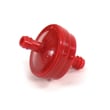
- Fuel filter 298090S (helps prevent debris from reaching the carburetor)
- Fuel tubing 1502028MA (replaces cracked or leaking fuel lines)
Why it matters
A snowblower that is maintained and stored correctly stays reliable during the first big storm. Most “early failures” come from fuel varnish, neglected lubrication, loose hardware, or rust, not from the machine simply being “worn out.”
Last updated: February 2026
How do I tell what year my Craftsman snowblower is?
For Craftsman model 536881500, the most reliable way to determine the year is to use the date of purchase on your receipt (the manual’s warranty is based on purchase date). If you do not have that, use the model and serial information from the ID label and compare it to the identification details shown in the 536881500 owner's manual.
Where to look for the ID label
On most Craftsman gas snow throwers, the model and serial label is typically found on one of these spots:
- On the frame near the engine cradle
- On the rear of the housing behind the engine
- Near the handle mounting area
- Under the top cover area (near the control panel)
How to narrow down the year (practical methods)
Use these steps in order; each one can help you pin down the build timeframe.
- Check your receipt or service paperwork: the purchase date is the best “year reference” for ownership and warranty.
- Record the full model number and serial number from the ID label (take a photo so nothing is missed).
- Compare parts and diagrams in the manual to what you see on the machine (for example, the 22-inch, 5HP configuration and assemblies shown for model 536.881500).
- Look for date codes on components (common on ignition parts, switches, and some fuel system pieces). These codes often indicate a manufacturing week and year.
- Match key assemblies if you suspect a major rebuild: chute, handle, and fuel tank layouts can help confirm you are working with the original configuration.
Quick reference: “year” vs “purchase date”
| What you have | What it tells you | Best use |
|---|---|---|
| Receipt / invoice date | Ownership year reference | Warranty and service history |
| Serial/date code | Manufacturing timeframe | Dating the machine |
| Model number (536881500) | Design family and parts match | Ordering correct parts |
Why it matters
Knowing the approximate year helps us match the correct Craftsman snowblower parts (fuel system, chute assembly, ignition components) and avoid ordering look-alike parts that do not fit your exact build.
Last updated: February 2026
Is it worth fixing a snowblower?
Yes, it’s usually worth fixing a Craftsman gas snow thrower model 536881500 when the problem is a normal wear item (fuel delivery, belts, cables, pulleys) and the total repair cost stays well below the price of a comparable new machine. If the engine has severe internal damage or the housing/frame is badly worn, replacement makes more sense.
Quick decision checklist
- Fix it when it starts and runs but has drive, chute, or auger performance issues.
- Fix it when the repair is a maintenance item (oil, spark plug, fuel system cleaning).
- Fix it when you can complete the repair safely and the machine is structurally solid.
- Replace it when the engine has low compression, heavy smoking, or repeated no-start after proper fuel and ignition checks.
- Replace it when major structural parts are cracked or bent (auger housing, frame) and multiple big parts are needed.
Common “worth fixing” repairs on this model
These are typical, high-value fixes that often restore performance quickly:
| Symptom | Likely area | Example part to check |
|---|---|---|
| Starts then dies, surges, or won’t stay running | Fuel delivery | Fuel filter 298090S, fuel lines, carburetor cleaning |
| Hard starting or intermittent shutoff | Ignition / safety | Switch 56992MA, spark plug, key, wiring |
| Poor throwing, vibration, or binding | Auger/impeller area | Shear pins (if equipped), bearings, auger condition |
| Drive issues (won’t move or slips) | Drive system | Belt, idler, brake pad clearance (per manual) |
Safety and “hidden cost” factors
We recommend using the 536881500 owner’s manual to follow the correct shutdown and service steps. The manual calls out key safety practices that directly affect whether a DIY repair is practical:
- Stop the engine before unclogging the auger/impeller or chute.
- Disconnect the spark plug wire before repairs or inspections.
- If the unit vibrates abnormally, stop and check immediately.
- Do not run the engine in enclosed areas due to carbon monoxide risk.
Why it matters
A snowblower that is maintained and stored correctly typically delivers better starting, stronger throwing, and fewer mid-storm breakdowns. The manual’s maintenance schedule (oil changes, tightening fasteners, spark plug checks) is the difference between a small repair and a costly failure.
Last updated: February 2026
What are common snow blower problems?
Common problems on the Craftsman 536881500 gas snow thrower include no-start conditions, clogging in the auger or discharge chute (especially with wet snow), poor throwing distance, loss of drive (won’t move), and abnormal vibration. Most issues trace back to fuel quality, belt wear, obstructions, or loose and worn moving parts.
Quick safety steps before troubleshooting
- Stop the engine and remove the key before leaving the operator position.
- Disconnect the spark plug wire before unclogging the chute or inspecting moving parts.
- If you hit a foreign object, stop and inspect for damage before restarting.
- If vibration is abnormal, stop immediately and find the cause.
- Never run the engine in an enclosed area; exhaust contains deadly carbon monoxide.
For model-specific operating and safety details, follow the 536881500 owner's manual.
Most common symptoms and what usually causes them
| Symptom | Most common causes | What to check first |
|---|---|---|
| Engine won’t start | Old fuel, restricted fuel flow, ignition issue | Fresh fuel, fuel line, ignition switch/key |
| Runs rough or stalls | Fuel restriction, water in fuel, dirty carburetor | Fuel filter, fuel tubing, fuel condition |
| Clogs in chute/auger | Wet packed snow, debris (stones/toys) | Clear area, use proper technique |
| Poor throwing distance | Chute deflector setting, clogging, worn drive components | Deflector position, chute clear |
| Excessive vibration | Loose hardware, damaged auger/impeller, foreign object impact | Inspect and tighten, check for damage |
Parts that commonly fix fuel and starting problems
If the engine is starving for fuel or surging, these model-matched parts are common fixes:
- Replace the fuel filter 298090S if fuel flow is restricted.
- Inspect and replace cracked or hardened fuel tubing 1502028MA.
- If the key won’t reliably enable ignition, test/replace the switch 56992MA.
Technique problems that look like “mechanical” problems
Wet, packed snow can clog even a healthy machine. The manual recommends backing off and using short, back-and-forth “jabs” to help the chute clear. Also, adjust the chute deflector: raise it for more distance, lower it for less distance and better control in wind.
Why it matters
Catching clogs, vibration, and fuel restrictions early prevents damage to the auger/impeller area and keeps your Craftsman 536881500 throwing consistently, especially in heavy or icy conditions.
Last updated: February 2026