

What is the average lifespan of a Kenmore washer?
A Kenmore washer typically lasts 10 to 15 years with normal household use. For Kenmore model 11082873820, lifespan depends most on load size, leveling, water quality, and routine maintenance; replacing wear parts early can help the washer reach the higher end of that range.
Typical lifespan ranges
Most Kenmore washers fall into these real-world averages:
- Top-load washers: 12 to 15 years
- Front-load washers: 10 to 12 years
- Heavy use (large family, daily loads): closer to 8 to 12 years
- Light use (few loads per week): often 12 to 15 years
| Washer type | Average lifespan | What usually ends it |
|---|---|---|
| Top-load | 12 to 15 years | Drive system wear, leaks, agitation issues |
| Front-load | 10 to 12 years | Bearings, door boot leaks, drain problems |
What shortens a washer’s life fastest
These are the most common lifespan killers we see in the field:
- Running overloaded or tightly packed loads
- Washer not level, causing repeated out-of-balance spinning
- Using too much detergent, leading to residue and extra strain
- Ignoring early symptoms like grinding, burning smell, or slow draining
- Letting small leaks continue until they damage bearings or the drive system
Parts that commonly wear out first (and why)
Replacing common wear parts can prevent bigger failures.
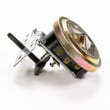
- Coupling 285753A: protects the motor and transmission by absorbing shock; it can crack or strip over time
- Water pump WP3363394: can leak or seize, leading to no-drain or loud pump noise
- Agitator dog 80040: can wear down and cause weak or one-direction agitation
Why it matters
A washer that is nearing end-of-life often costs more in water, energy, and repeat repairs. Catching early issues (drain noise, slipping agitation, vibration) helps you decide whether a simple part replacement makes sense before a larger drive or tub repair is needed.
Last updated: January 2026
How to hard reset kenmore washer?
To hard reset your Kenmore washer model 11082873820, we recommend disconnecting power for 2 minutes, then restoring power and running a quick cycle. This clears many control glitches and can stop false error behavior after a power surge.
Hard reset steps (works for most Kenmore top-load washers)
- Press Power/Cancel to stop the cycle.
- Unplug the washer (or switch the breaker off).
- Wait 2 minutes.
- Restore power.
- Lift and close the lid once, then select Rinse/Spin (or a short cycle) and press Start.
If the washer still will not start or keeps acting up
These checks often reveal a real mechanical issue that a reset will not fix:
- Confirm the outlet has power (test with a lamp) and the breaker is fully reset.
- Make sure the lid closes firmly; a bad lid switch can prevent agitation or spin.
- If it drains slowly or not at all, check for a clog or a failing pump such as the water pump WP3363394.
- If it fills but will not agitate, inspect common drive items like the coupling 285753A.
- If the agitator moves weakly or “ratchets,” worn agitator dog 80040 parts are a common cause.
Quick symptom-to-next-step guide
| What you see | Most likely area to check | Common related part |
|---|---|---|
| Won’t drain | Drain path, pump | Water pump |
| Won’t agitate, motor runs | Drive coupling | Coupling |
| Agitator slips or clicks | Agitator mechanism | Agitator dog |
Why it matters
A hard reset clears temporary control-board states, but repeated no-spin, no-agitate, or no-drain symptoms usually point to a lid switch, drain pump, or drive system problem. Fixing the root cause prevents repeat shutdowns and protects the motor and gearcase.
Last updated: January 2026
How to force a Kenmore Elite washer to drain?
For Kenmore washer model 11082873820, the fastest way to force a drain is to cancel the cycle and run a Drain/Spin (or Spin) cycle; if the tub still will not empty, manually drain through the hose and then check the drain pump area for a clog or failed pump.
Quick ways to force a drain
- Press Pause/Cancel (or turn the timer to Off) to stop the cycle.
- Select Drain/Spin (or Spin) and start the washer.
- If the lid must be closed to drain, make sure it is fully shut; a bad lid switch can prevent draining.
- If the washer hums but does not drain, suspect a blockage or a worn pump.
Manual drain (when the washer will not pump out)
- Unplug the washer.
- Turn off both water supply valves.
- Pull the washer forward and place towels and a shallow pan behind it.
- Lower the drain hose into a bucket (keep the bucket lower than the tub) to siphon water out.
- If water will not flow, the hose is likely kinked or clogged; straighten it and clear the obstruction.
What to check after it is drained
- Drain hose: kinks, crushed sections, lint or sock blockage.
- Pump inlet: coins, hair pins, small clothing items.
- Pump condition: cracked housing, seized impeller, loud grinding.
- Lid switch: if the washer will not drain or spin with the lid closed, test the switch.
| Symptom | Most likely cause | Common fix |
|---|---|---|
| Hums, no water movement | Pump jam or failed | Inspect/replace pump |
| Drains slowly | Partial clog in hose/pump | Clear blockage |
| Won’t drain and won’t spin | Lid switch issue | Replace switch |
Parts that commonly solve “won’t drain”
- Water pump WP3363394: the drain pump that moves water out of the tub during drain/spin.
- Switch W10820036: lid switch that can stop draining/spinning if it does not sense the lid closed.
Why it matters
Forcing a drain protects the drive system and prevents standing water from causing odors, leaks, and repeated “no drain” failures. Clearing a clog early also helps avoid burning out the pump motor.
Last updated: January 2026
What is the capacity of Kenmore washer model 11082873820?
We size Kenmore washer model 11082873820 by basket volume, but the exact cubic-foot capacity is not listed with the parts information for this model. Most Kenmore direct-drive top-load washers of this style run about 2.5 to 3.5 cu. ft., which fits everyday mixed loads when you load loosely.
How to estimate the right load size
Use these practical checks to avoid overloading and out-of-balance spinning:
- Load items loosely; do not pack or press clothes down.
- Keep the load below the top rim of the basket.
- For bulky items, wash one large item at a time (add a few small items to balance).
- If the washer struggles to agitate or the load barely moves, reduce the load size.
- If the washer bangs during spin, redistribute the load and try again.
Capacity guide (what typically fits)
| Load type | Typical fit for 2.5 to 3.5 cu. ft. top-load washers | Best practice |
|---|---|---|
| Everyday mixed laundry | Yes | Fill loosely; allow items to circulate |
| Towels | Yes | Mix sizes to reduce tangling |
| Queen comforter | Sometimes | If it floats and will not roll, use a larger machine |
| Heavy blanket | Often no | Overloading causes poor cleaning and vibration |
Why it matters
Capacity affects cleaning and spin balance. When a load is too large for the basket volume, agitation weakens, rinsing suffers, and the washer can go out of balance. If you are also seeing weak agitation on this model, worn agitator components such as the agitator dog 80040 are a common fix on many Kenmore top-load designs.
Last updated: January 2026