What should you not vacuum with a wet-dry vac?
You should not vacuum anything that can ignite, melt, clog the filter, or damage the hose and tank in your Shop-Vac QPS35 wet/dry vacuum. Avoid hot debris, hazardous fine dust, and sharp objects; these are the most common causes of motor damage and airflow loss.
Items to avoid (and why)
- Hot or burning debris (cigarette ash, embers, fireplace coals): can ignite debris in the tank and damage the filter.
- Fine powders (drywall dust, concrete dust, flour): can pass through or quickly clog filters and reduce cooling airflow to the motor.
- Large sharp debris (glass shards, nails, screws, metal offcuts): can puncture the hose, crack the tank, or cut the filter.
- Wet food, grease, and sticky sludge: can coat the inside of the hose and tank, causing odors and clogs.
- Large amounts of pet hair or stringy debris: can mat on the filter and choke airflow.
- Chemicals and solvents (gasoline, paint thinner, strong acids): can damage plastics and create unsafe fumes.
Quick decision guide
| Material you want to pick up | Safe with a wet/dry vac? | Best practice |
|---|---|---|
| Clean water (small spills) | Yes | Use the correct wet setup; empty tank promptly |
| Cold fireplace ash | Sometimes | Only when fully cold; use a fine-dust filter and clean it often |
| Drywall or concrete dust | No | Use a dust extractor or HEPA-rated system designed for fine dust |
| Broken glass / screws | No | Sweep first; vacuum only small remnants with extreme care |
Why it matters
A wet-dry vac relies on strong airflow to both pick up debris and help cool the motor. Materials that clog filters, puncture hoses, or introduce heat and fumes can shorten motor life and create a mess that is harder to clean.
Safer cleanup tips we recommend
- Let ash and debris cool completely before cleanup.
- Pre-clean sharp debris with a broom and dustpan.
- For fine dust, use the right filtration and clean or replace filters frequently.
- Empty the tank after wet pickup to prevent odors and corrosion.
- If you suspect an electrical issue after a tough job, use our guide: how to tell if a fuse is blown.
Last updated: February 2026
How do I change my Shop-Vac from dry to wet?
To switch a Shop-Vac QPS35 wet/dry vacuum from dry pickup to wet pickup, we make sure the correct filter setup is installed for liquids and that the tank is empty of dry debris. The key change is removing dry filters that can be damaged by water and confirming the float shutoff can move freely.
Steps to switch from dry to wet pickup
- Unplug the vacuum.
- Empty the tank and remove any dry dust or debris.
- Remove the dry-use filter (cartridge, paper, or HEPA style) and any dust bag if installed.
- Install the wet-use setup your vacuum uses (often a foam sleeve filter or no filter for larger liquid pickup, depending on design).
- Check that the float or shutoff assembly inside the lid moves freely; it must be able to rise to stop suction when the tank is full.
- Reinstall the lid securely and connect the hose for pickup.
What changes between dry and wet (quick comparison)
| Item | Dry pickup | Wet pickup |
|---|---|---|
| Filter | Cartridge or dry filter installed | Foam sleeve filter or wet-approved setup |
| Bag | Optional for fine dust | Not used |
| Tank prep | Empty, clean | Empty, clean, float checked |
| Risk if wrong | Poor suction, dust blow-by | Filter damage, clogging, motor moisture risk |
Why it matters
Using the wrong filter for wet pickup can ruin the filter, restrict airflow, and cause messy blow-by. Setting up the float shutoff correctly helps protect the motor by stopping airflow when the tank reaches its safe fill level.
Helpful tip for finding the right setup
Shop-Vac models can use different filter styles even when they look similar. We recommend confirming the exact model number (QPS35) from the data label before ordering filters or accessories through how to find your appliance model number (and what it means for parts).
Last updated: February 2026
What is the best wet and dry vacuum cleaner?
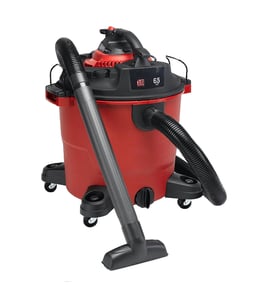
The best wet/dry vacuum depends on what you’re cleaning and where you’ll use it. For heavy-duty garage, workshop, and jobsite messes, a Shop-Vac style unit like the Shop-Vac QPS35 is the right type; for everyday floors, a wet/dry vacuum-mop combo is usually the better fit.
Choose the “best” by matching the vacuum to the job
- Workshop and renovation debris (sawdust, drywall dust): a corded shop vacuum with strong suction and a good filter
- Wet pickup (spills, small floods): a wet/dry shop vacuum with the correct wet setup (no paper filter)
- Hard floors in living spaces: a wet/dry vacuum-mop combo designed for sealed floors
- Car detailing: smaller tank, good crevice tools, and manageable hose length
- Allergy and fine dust concerns: high-efficiency filtration and tight seals
Quick comparison: shop vacuum vs. vacuum-mop combo
| Feature | Wet/dry shop vacuum (like QPS35 type) | Wet/dry vacuum-mop combo |
|---|---|---|
| Best for | Garage, shop, jobsite cleanup | Kitchens, bathrooms, sealed hard floors |
| Handles standing water | Yes | Usually limited |
| Fine dust control | Good with the right filter | Good, but different system |
| Maneuverability indoors | Bulkier | Easier for daily use |
What to look for in a heavy-duty wet/dry shop vacuum
- Tank capacity: most homeowners prefer mid-size tanks; pros often go larger
- Airflow and suction: higher performance helps with heavier debris and water pickup
- Filter system: a dry filter for dust; a wet configuration for liquids
- Hose diameter and tool set: larger hoses move chunks better; smaller tools help detailing
- Cord length and durability: important for garages and worksites
Why it matters
Buying the “best” wet/dry vacuum is really about avoiding the wrong style. A shop vacuum excels at messy, heavy cleanup and wet pickup; a vacuum-mop combo excels at routine hard-floor cleaning and convenience.
For model-specific parts and diagrams when you’re maintaining your Shop-Vac QPS35, we recommend starting with your model lookup on Sears PartsDirect.
Last updated: February 2026