Owner’s manual
 Error Codes


What is the advantage of a bottom mount fridge?
A bottom-mount refrigerator like the Jenn-Air JFC2089WEP11 keeps the fresh-food compartment at eye level, so you reach everyday items more easily and bend less often. The freezer stays below, which works well when you use refrigerated foods more than frozen foods.
- Fresh foods are easier to see and grab because shelves sit higher.
- Less bending for common tasks like getting milk, produce, and leftovers.
- Freezer storage is still roomy, typically using a lower door or pull-out drawer.
- Better organization for fresh items because the main compartment is the most accessible.
- Convenient for meal prep since most ingredients live in the refrigerator section.
| Refrigerator style | Fresh-food access | Freezer access | Best fit for |
|---|---|---|---|
| Bottom mount | Easiest (eye level) | Requires bending | Most households that use fresh food most often |
| Top freezer | Requires bending more | Easiest (higher) | Heavy freezer users |
| Side-by-side | Medium (narrower shelves) | Medium | Balanced use, tighter door swing areas |
Refrigerator ergonomics affect how often you bend, how quickly you find items, and how well you keep food visible. With a bottom-mount design, the section you open most often is positioned for faster access and easier organization.
For steady cooling and efficiency, we follow the spacing and location guidance in the JFC2089WEP11 owner's manual, including leaving clearance for ventilation and avoiding hot locations (like next to an oven).
Last updated: February 2026
Is it better to have a freezer on top or bottom of the refrigerator?
A bottom-freezer refrigerator like the Jenn-Air JFC2089WEP11 is usually the more convenient choice because the fresh-food section (what you use most) sits at eye and waist level, so you bend less. Top-freezer models can be slightly more energy-efficient and cost less, but day-to-day access is typically better with a bottom freezer.
| Feature | Bottom freezer (like JFC2089WEP11) | Top freezer |
|---|---|---|
| Fresh-food access | Best (most-used items are higher) | Requires more bending |
| Freezer access | Drawer style, easy to organize but you bend | Easy reach for freezer items |
| Energy use (typical) | Often slightly higher | Often slightly lower |
| Price (typical) | Often higher | Often lower |
- You want everyday items (milk, produce, leftovers) at comfortable height.
- You prefer wide refrigerator shelves and door bins for fresh food.
- You like freezer drawers for organizing bags, boxes, and bins.
- You frequently cook and access the refrigerator section many times per day.
- You use the freezer more than the refrigerator.
- You want a simpler layout with fewer moving parts (no freezer drawer slides).
- You are prioritizing lower upfront cost.
- You have limited kitchen space and need a more compact footprint.
Most households open the refrigerator section far more often than the freezer. With a bottom-freezer design, the items you reach for most are higher up, which reduces bending and makes it easier to keep temperatures stable by minimizing door-open time.
If your decision is driven by usability (door swing, alignment, drawer operation), we recommend checking the leveling and door alignment guidance in the JFC2089WEP11 owner's manual. Proper leveling helps doors seal correctly and keeps the freezer drawer tracking smoothly.
Last updated: February 2026
What are the disadvantages of a bottom freezer refrigerator?
Bottom-freezer refrigerators like the Jenn-Air JFC2089WEP11 keep fresh food at eye level, but the tradeoffs are higher purchase cost, more bending to reach frozen items, and drawer-style freezers that can be harder to organize. They can also be more sensitive to door alignment and sealing.
- More bending and lifting: You reach down for frozen foods, and heavy items often sit in the bottom drawer.
- Freezer organization can be tricky: Deep drawers can hide smaller items unless you use bins.
- Upfront cost is often higher: Bottom-mount designs typically cost more than basic top-freezer models.
- Freezer access is less convenient: If you use the freezer frequently, the lower position can feel less ergonomic.
- Door alignment and sealing matter more: If doors are not level, you can get air leaks, frost, or temperature swings.
Use the setup and alignment steps in the owner's manual to keep doors sealing correctly and temperatures stable.
- Confirm the refrigerator is level front-to-back and side-to-side.
- Make sure door bottoms align evenly with the top of the freezer drawer.
- Keep air vents inside the compartments unblocked.
- Wait 24 hours after temperature changes or first startup for full cooling.
- If you see moisture or frost near the door edges, inspect the gasket for gaps or folds.
| Feature | Bottom freezer | Top freezer |
|---|---|---|
| Fresh food access | Easier (eye level) | More bending |
| Freezer access | More bending | Easier |
| Organization | Deep drawer, needs bins | Shelves, easier visibility |
| Typical cost | Higher | Lower |
Most “bottom freezer problems” people experience are usability issues (bending, organization) plus performance issues caused by poor sealing or misalignment. Keeping the doors aligned and the gasket sealing well helps your Jenn-Air JFC2089WEP11 run efficiently and maintain consistent refrigerator and freezer temperatures.
Last updated: February 2026
What are common problems with Jenn-Air refrigerators?
Common problems we see on Jenn-Air refrigerators like model JFC2089WEP11 include warm temperatures (not cooling), water leaks, ice maker or dispenser issues, and doors that do not seal or close correctly. Many of these symptoms trace back to airflow, water supply, or temperature-sensing parts listed for this model in the JFC2089WEP11 owner's manual.
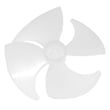
- Not cooling or uneven temps: dirty condenser area, failed evaporator fan, stuck air damper, or a bad temperature sensor
- Leaking water: clogged/iced drain, loose water line fitting, or a leaking inlet valve
- Ice maker not working: restricted water flow (filter), air in the line, or inlet valve problems
- Water dispenser not working: clogged filter, air in the line, frozen reservoir/line, or inlet valve issues
- Door not closing or poor seal: misalignment, worn gasket, or items blocking the door
- Compressor not running: control issue, temperature-sensing issue, or sealed-system related failure
If your symptom matches, these model-compatible parts are frequent solutions:
| Symptom | Common part to check/replace | What it affects |
|---|---|---|
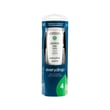
| Poor water flow, bad-tasting water, ice maker slow | Refrigerator filter EDR4RXD1 | Water supply to dispenser and ice maker |
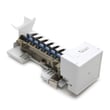
| Ice maker or dispenser not filling | Refrigerator water inlet valve assembly WPW10420083 | Controls water entering the refrigerator |
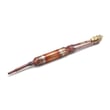
| Warm fridge section, freezing in fridge, uneven temps | Refrigerator damper control assembly WPW10594329 | Airflow from freezer to fresh food section |
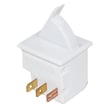
| Erratic temps, cycling issues | Refrigerator thermistor W10316760 | Temperature sensing for controls |
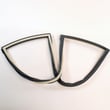
| Door sweating, frost, warm spots near door | Refrigerator door gasket W10443320 | Seals cold air in, keeps warm air out |
- Confirm controls are set to typical targets (about 37°F fresh food, 0°F freezer).
- Make sure vents inside the compartments are not blocked by food packages.
- If you have a dispenser, purge air after filter changes and after water has been shut off.
- Inspect door gaskets for gaps, tears, or areas that do not grip the cabinet.
- If you see water under the unit, check for a clogged defrost drain and inspect the water line connections.
Small issues like a restricted water filter or a door gasket leak can cause bigger problems, including temperature swings, frost buildup, and extra compressor run time. Catching the root cause early helps protect food and reduces wear on the cooling system.
Last updated: February 2026