Owner’s manual
 Error Codes



Can I replace fridge parts myself?
Yes. On the Jenn-Air JFC2089HES bottom-mount refrigerator, we can safely replace many user-serviceable parts ourselves (like light bulbs, door gaskets, handles, and some water and ice components) as long as we unplug the refrigerator first and follow the steps in the JFC2089HES owner's manual.
Good DIY replacements vs. pro-only repairs
Many repairs are straightforward because they involve accessible parts and basic hand tools. Others involve electrical diagnostics or the sealed refrigeration system and are best handled by a technician.
- Good DIY jobs: light bulbs (40 watts max), door gaskets, handles, shelves and bins, some ice maker and water line parts
- Usually pro-only: compressor and sealed system work, refrigerant leaks, complex wiring or control board diagnosis
- Always start by unplugging the power cord before disassembly
- Move it safely: never transport the refrigerator on its side; if it was laid on its back, let it sit upright about 30 minutes before plugging in
- Leveling matters: the manual calls for the front to be about 1/4 inch (6 mm) higher than the back for proper door closing
Quick DIY checklist (what we do first)
- Unplug the refrigerator.
- Confirm the model number is JFC2089HES so the part matches.
- Use the manual’s removal steps for the toe grille, hinge covers, and door/drawer removal when needed.
- Take photos of wire connectors and screw locations before removing parts.
- Restore power and verify operation after reassembly.
Common parts customers replace on this model
| Symptom or goal | Likely DIY part | Notes |
|---|---|---|
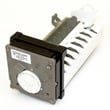
| No ice or poor ice production | Refrigerator ice maker D7824706Q | Turn off water supply before disconnecting lines. |
| Door not sealing, moisture or frost | Refrigerator door gasket W11368721 | A good seal helps temperatures stay stable. |
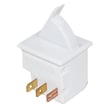
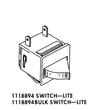
| Lights do not turn on when door opens | Refrigerator light switch W11396033 | Often a simple swap after unplugging. |
Why it matters
DIY-friendly repairs can restore cooling performance and reduce energy use. For example, the manual recommends cleaning condenser coils about every three months, and proper leveling helps doors close securely, which protects food temperatures.
Last updated: February 2026
How do I fix the icemaker on my JennAir refrigerator?
On the Jenn-Air JFC2089HES, most ice maker problems are caused by the shutoff arm being up (OFF), the ice bin not seated correctly, or the water supply being shut off. Start by lowering the wire shutoff arm, reinstalling the bin, and confirming the water supply is on.
Quick checks that fix most “no ice” issues
- Make sure the wire shutoff arm is down (ice maker ON).
- Pull the ice bin out and reinstall it fully; an unseated bin can interfere with ice dropping.
- Do not store food or drinks in the ice bin; items can block the shutoff arm and stop ice production.
- If cubes are clumping or taste stale, empty the bin, wash it in lukewarm water, and dry it completely.
- If the water supply was recently shut off, turn it back on and allow time for the ice maker to cycle.
Step-by-step: reset the ice maker operation (no tools)
- Raise the wire shutoff arm to turn the ice maker OFF.
- Remove the ice bin, empty it, then reinstall it.
- Turn the ice maker back ON by lowering the wire shutoff arm.
- If the water line was off, reconnect/turn on the supply and monitor the connection for leaks for 24 hours.
- Discard the first few batches of ice after restoring water or restarting the system.
For the exact locations and illustrations for your model, use the JFC2089HES owner's manual.
When it’s likely a part problem
If the shutoff arm is down and water is on but you still get no ice after several hours, a failed ice maker assembly or a water fill issue is common.
| Symptom | Most likely area | What to check first |
|---|---|---|
| No ice at all | Ice maker not cycling | Shutoff arm position; bin seated; consider replacing the ice maker |
| Small or hollow cubes | Low water fill | Water supply valve fully open; kinked line; inlet valve |
| Ice maker noisy but no cubes | Water not entering mold | Water supply; inlet valve; frozen fill tube |
If you need the replacement assembly for this model, match by ID: refrigerator ice maker D7824706Q.
Why it matters
The ice maker depends on two basics: the shutoff arm must be in the ON position, and the water supply must be steady. Fixing those first prevents unnecessary part replacement and gets ice production back faster.
Last updated: February 2026
What are common problems with JennAir refrigerators?
Common problems we see on the Jenn-Air JFC2089HES bottom-mount refrigerator include warm refrigerator temperatures, water leaks, ice maker or water flow issues, and louder-than-usual operating sounds. Many of these trace back to airflow restrictions, dirty condenser coils, door sealing problems, or water supply and filter restrictions.
Most common symptoms and what usually causes them
- Fridge warm, freezer cold: blocked air vents, a damper that is stuck, or weak evaporator airflow
- Runs too often: dirty condenser coils, frequent door openings, warm food loads, or poor door sealing
- Water inside or under the unit: clogged/iced drain path, poor water connection, or low water pressure issues
- Ice maker problems: low water pressure, freezer temperature too warm, or a frozen fill tube
- Noises that seem new: normal operating sounds, or a fan blade/motor issue if noise is persistent or scraping
Quick checks we recommend first (safe, no tools)
Use these steps before replacing parts:
- Confirm controls are set correctly (temperature settings matter)
- Make sure vents are not blocked by food packages (overcrowding reduces circulation)
- Reduce door-open time and check that drawers and bins are not preventing full door closure
- Inspect and clean door gaskets; a poor seal can cause long run times and temperature swings
- Clean condenser coils; dirty coils are a top cause of poor cooling and frequent running
Parts that commonly relate to these problems (when symptoms match)
If basic checks do not fix the issue, these model-matched parts are often involved:
| Symptom | Common part involved | Example from this model |
|---|---|---|
| Fridge section warm | Airflow/damper issue | Refrigerator electronic damper WPW10196393 |
| Loud fan noise or weak airflow | Fan blade or motor | Evaporator motor WPW10128551 |
| Ice maker not making ice | Ice maker assembly | Refrigerator ice maker D7824706Q |
| Slow water flow or water system issues | Valve or filter path components | Refrigerator water inlet valve assembly WP67006531 |
Why it matters
Cooling, leaking, and ice maker complaints often share the same root causes: restricted airflow, heat not being removed efficiently (dirty coils), or inconsistent water supply pressure. Fixing the underlying cause first prevents repeat failures and helps the refrigerator run more efficiently.
For model-specific operating sounds, control settings, cleaning guidance, and troubleshooting tables, follow the steps in the JFC2089HES owner's manual.
Last updated: February 2026
What are the most commonly replaced parts in a refrigerator?
In most refrigerators (including the Jenn-Air JFC2089HES), the parts we see replaced most often are wear-and-tear items that affect sealing, airflow, defrosting, lighting, and water delivery. These failures commonly show up as warm temperatures, frost buildup, leaks, or lights not working; the compressor is replaced less often but is a major repair.
Most common replacement parts (and what they affect)
- Door gaskets: poor sealing, moisture, frost, longer run times
- Evaporator fan parts: weak cooling in fresh food section, noisy operation
- Defrost parts: heavy frost on the evaporator, warm fridge, restricted airflow
- Temperature sensors (thermistors): erratic temperatures, short cycling
- Water system parts (valves, tubing unions, filter bypass/plates): no water, slow fill, leaks
- Light components (bulbs, switches): interior lights not working
Model-relevant examples for JFC2089HES
These are common service items we stock for this model:
| Symptom | Commonly involved part type | Example part for JFC2089HES |
|---|---|---|
| Door not sealing, sweating, frost | Door gasket | Refrigerator door gasket W11368721 |
| Warm fresh food section, airflow issues | Damper or evaporator fan | Refrigerator electronic damper WPW10196393 |
| Frost buildup, poor cooling | Defrost heater or defrost thermostat | Refrigerator defrost heater WP67002493 |
| No ice production | Ice maker | Refrigerator ice maker D7824706Q |
| Lights do not turn on | Light switch or bulb | JFC2089HES owner's manual |
Quick checks before you buy a part
- Confirm the symptom: warm fridge vs. warm freezer vs. both
- Check door closing and leveling: poor leveling can prevent a good seal
- Clean condenser coils: dirty coils can cause warm temps and long run times
- Look for frost patterns: heavy frost often points to a defrost or airflow issue
- Verify bulb type and wattage: many models use appliance bulbs up to 40 watts (see the manual)
Why it matters
Replacing the right part restores proper airflow and sealing, which improves temperature stability and energy efficiency. The manual also calls out routine care like cleaning door gaskets and condenser coils to help prevent repeat failures.
Last updated: February 2026
What is the life expectancy of a JennAir refrigerator?
A Jenn-Air refrigerator like model JFC2089HES typically lasts 15 years. With consistent maintenance (cleaning condenser coils, keeping door seals tight, and avoiding airflow blockages), it commonly reaches 15 to 20 years of service.
Typical lifespan and what affects it
Most bottom-mount refrigerators fall into a predictable range; the biggest difference is how hard the sealed system and fans have to work day to day.
- Typical range: 10 to 20 years
- Common real-world target: about 15 years
- Shortens lifespan: dirty condenser coils, warm room location, frequent door opening
- Extends lifespan: good airflow, stable temperatures, clean gaskets and coils
- High-wear items: ice maker, evaporator fan, door gaskets, defrost components
Maintenance that helps your JFC2089HES last longer
Your JFC2089HES owner’s manual recommends habits that reduce run time and improve cooling efficiency.
- Clean condenser coils every 3 months
- Clean door gaskets every 3 months so doors seal properly
- Avoid overcrowding; it reduces air circulation and makes the refrigerator run longer
- Do not line shelves with foil, wax paper, or paper towels (it restricts airflow)
- Keep the refrigerator out of direct sunlight and away from heat sources
Quick maintenance checklist
| Task | How often | Why it matters |
|---|---|---|
| Clean condenser coils | Every 3 months | Improves cooling performance and reduces compressor strain |
| Clean door gaskets | Every 3 months | Prevents air leaks that increase run time |
| Organize food for airflow | Ongoing | Helps temperatures stay stable and reduces cycling |
Parts that commonly need replacement over time
If the refrigerator is otherwise cooling well, replacing a worn component can add years of usable life.
- Refrigerator ice maker D7824706Q (no ice, leaking, or intermittent harvest)
- Refrigerator electronic damper WPW10196393 (fresh food section too warm or too cold)
- Evaporator motor WPW10128551 (poor airflow, warm refrigerator, noisy fan)
Why it matters
Once a refrigerator gets past 10 years, efficiency and reliability depend heavily on airflow and sealing. Simple upkeep like coil and gasket cleaning reduces compressor workload, which is the most expensive system to repair.
Last updated: February 2026
Why is the bottom freezer refrigerator not popular?
Bottom-freezer refrigerators like the Jenn-Air JFC2089HES are often less popular because they typically cost more than top-freezer models, the freezer drawer can be less convenient for people who use frozen foods frequently, and organizing items in a deep drawer can mean more “digging” to find what you need.
Common reasons shoppers choose other styles
- Higher upfront price than many top-freezer refrigerators.
- More bending and lifting for heavy frozen items (especially full baskets).
- Drawer-style freezer organization can hide items underneath others.
- Less “at-a-glance” visibility compared with side-by-side freezer shelves.
- Space planning: the freezer drawer needs clearance to pull out fully.
What bottom-freezer models do well
Bottom-freezer designs put fresh food at eye level, which many households prefer because the refrigerator section is opened most often.
Pros vs cons at a glance
| Feature | Bottom-freezer refrigerator | Top-freezer refrigerator |
|---|---|---|
| Fresh food access | Easier (less bending) | More bending |
| Frozen food access | Drawer, can require digging | Shelf access, more visible |
| Typical price | Often higher | Often lower |
| Organization style | Bins/baskets | Shelves and door bins |
Why it matters for everyday use
Popularity usually comes down to habits. If your household uses fresh foods more than frozen, a bottom-mount can feel more convenient. If you use the freezer constantly, a top-freezer or side-by-side can feel faster to load, sort, and grab items.
Tips to make a bottom freezer easier to live with
- Keep everyday frozen items in the top basket.
- Group foods in small bins (breakfast, snacks, meats, vegetables).
- Avoid overpacking; freezers run best when they are about two-thirds full.
- Keep doors open for the shortest time to help temperatures stay stable.
- Use the temperature adjustment guidance in the JFC2089HES owner’s manual to fine-tune cooling if either section seems warm.
Last updated: February 2026