Owner’s manual
 Error Codes



How to reset ice maker Whirlpool side by side?
To reset the ice maker on a Whirlpool WRS315SDHZ05 side-by-side refrigerator, we turn the ice maker OFF, restore power (or power-cycle the refrigerator), then turn the ice maker back ON and allow time for a new harvest cycle. Confirm the shutoff arm or ON/OFF switch is set correctly per the WRS315SDHZ05 owner's manual.
Quick reset steps (most effective)
- Make sure the freezer is cold enough for ice production (target 0°F to 5°F).
- Turn the ice maker OFF (raise the wire shutoff arm to OFF/up, or move the switch to OFF/right, depending on your ice maker style).
- Unplug the refrigerator (or switch the breaker OFF) for 1 minute.
- Restore power, then turn the ice maker ON.
- Wait 12 to 24 hours for normal ice production after a reset or after the ice maker has been off.
If it still will not make ice
These checks solve the most common “no ice after reset” situations.
- Confirm the household shutoff valve is fully open.
- Check the fill tube for ice blockage; a frozen fill tube often points to a water supply or valve issue.
- Listen for normal sounds: a brief buzz or click can occur when the water valve opens to fill the ice maker.
- Dump old or clumped ice and reseat the bin so it fully engages.
- If water is not entering the ice maker, the water inlet valve is a common failure point; see refrigerator water inlet valve WPW10179146.
What “OFF/ON” looks like on this model
The manual notes two common shutoff styles; your unit will use one of these.
| Ice maker control style | OFF position | ON position |
|---|---|---|
| Wire shutoff arm | Arm up | Arm down |
| Rocker/slide switch | Switch right | Switch left |
Why it matters
A reset clears a stalled harvest cycle and reinitializes the fill sequence. If the freezer temperature, water supply, or inlet valve is not right, the ice maker can appear “dead” even after a correct reset.
Last updated: February 2026
How long does a Whirlpool side-by-side last?
A Whirlpool side-by-side refrigerator typically lasts about 12 years. For your Whirlpool WRS315SDHZ05, consistent basics like correct temperatures, clean airflow, and good door sealing are what most directly extend service life; our WRS315SDHZ05 owner's manual covers the maintenance steps that matter most.
What affects lifespan the most
- Condenser airflow and cleanliness: dusty or greasy environments shorten component life.
- Door seal condition: warm air leaks force longer run times.
- Ice maker and water system health: leaks and low water flow strain valves and can cause icing.
- Stable temperatures: frequent warm-ups increase compressor run time.
- Leveling and alignment: helps doors close fully and prevents gasket wear.
Maintenance schedule we recommend
The manual notes there is no routine condenser cleaning in normal home environments, but if your home is dusty, greasy, or has heavy pet traffic, clean the condenser every 2 to 3 months (after unplugging the refrigerator). See the steps in the WRS315SDHZ05 owner's manual.
| Task | Typical frequency | Why it helps |
|---|---|---|
| Check door closing and gasket contact | Monthly | Reduces run time and frost risk |
| Clean condenser (dusty/pet homes) | Every 2 to 3 months | Improves efficiency and cooling stability |
| Replace water filter (if equipped) | About every 6 months | Protects water flow and ice quality |
| Verify temps (fresh food/freezer) | Monthly | Prevents overwork and food spoilage |
Parts that commonly drive “end of life” decisions
If cooling performance drops or the unit runs constantly, these are common repair areas on side-by-sides:
- Evaporator fan motor (air movement): refrigerator evaporator fan motor WP2315549
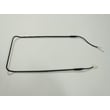
- Defrost heater (frost control): refrigerator heater WP2323198
- Compressor (sealed system): compressor W10233960
- Water inlet valve (ice/water supply): refrigerator water inlet valve WPW10179146
Why it matters
A refrigerator that runs longer and hotter than necessary wears out the compressor and fans faster. Simple upkeep (especially airflow and door sealing) is the most reliable way to reach or beat the typical 12-year lifespan.
Last updated: February 2026
What is the most common problem with a Whirlpool refrigerator?
Cooling complaints are the most common issue we see on Whirlpool refrigerators like model WRS315SDHZ05; they usually trace back to restricted airflow (dirty condenser coils, blocked vents, frost buildup) or a fan/defrost problem that prevents the refrigerator and freezer from holding steady temperatures. See the WRS315SDHZ05 owner’s manual for model-specific troubleshooting steps.
Most common symptoms (and what they usually point to)
- Refrigerator too warm, freezer OK: airflow restriction, evaporator fan issue, or frost on the evaporator
- Freezer too warm: condenser coils dirty, condenser fan/compressor issue, door not sealing
- Ice maker not making ice: water supply problem, inlet valve issue, ice maker assembly problem
- Noisy operation: many sounds are normal; clicking/buzzing can be the water valve cycling
- Water leaking or puddles: clogged/iced defrost drain, loose water line, filter housing leak
Quick checks we recommend first
- Confirm doors close fully and nothing blocks interior vents.
- Clean condenser coils and make sure the unit has proper airflow around it.
- Allow 24 hours after a new install or major temperature change for full stabilization.
- If connected to a water line, check for leaks and verify the supply valve is fully open.
- Listen for the evaporator fan; a failed fan often causes warm temps and uneven cooling.
Common parts involved on WRS315SDHZ05
| Problem area | What fails most often | Example model-matched part |
|---|---|---|
| Ice production | Ice maker module or fill system | Refrigerator ice maker assembly WPW10300022 |
| Water dispensing/ice fill | Valve not opening or restricted | Refrigerator water inlet valve WPW10179146 |
| Frost buildup/poor airflow | Defrost heat not clearing frost | Refrigerator heater WP2323198 |
| Warm temps, weak airflow | Evaporator fan not moving air | Refrigerator evaporator fan motor WP2315549 |
Why it matters
When airflow is restricted or the defrost system is not clearing frost, the refrigerator can run longer, temperatures drift warmer, and ice production drops. Catching the cause early helps prevent food spoilage and reduces strain on the compressor.
Last updated: February 2026