Owner’s manual
 Error Codes



How many cubic feet is my Kenmore refrigerator model 79571303012?
For Kenmore refrigerator model 79571303012, the capacity is typically in the 20 to 22 cubic feet range for this style of 795-prefix (LG-built) bottom-mount refrigerator. For the exact cubic feet rating for your specific unit, we recommend confirming it in the 79571303012 owner's manual.
Use these quick checks to confirm the official capacity without guessing:
- Look in the specifications section of the 79571303012 owner's manual (often listed as “capacity” or “total volume”).
- Check the model and serial tag inside the fresh food compartment; some versions list capacity on the label.
- If you still have the original sales paperwork, the capacity is usually printed near the model number.
- Compare your interior layout (shelf count, drawer configuration, ice maker location) to the diagrams in the manual.
Because the 795-prefix Kenmore bottom-mount platform commonly falls into a narrow size band, this range is a reliable expectation for planning space and storage.
| What you need | Typical value for this model family | Best place to confirm |
|---|---|---|
| Total capacity | 20 to 22 cu. ft. | 79571303012 owner's manual |
| Use case | Family, weekly grocery storage | Your shelf and drawer layout |
Knowing the cubic feet helps us match the right refrigerator parts and accessories (like shelves, drawers, and ice maker components), and it also helps when comparing replacement units or planning kitchen storage.
Last updated: February 2026
How to read Kenmore model numbers?
Kenmore model numbers are read left to right; the first 3 digits identify the manufacturer, and the remaining digits narrow down the series, features, and production variation. For Kenmore refrigerator model 79571303012, the 795 prefix indicates it was built by LG.
We use the full model number (not just the 3-digit prefix) to match the correct parts list, diagrams, and service information.
- Inside the fresh food compartment on a side wall
- On the ceiling of the refrigerator section near the light
- On the door frame behind the crisper drawers
- Sometimes on the back panel near the compressor area
For label location and how Kenmore formats the ID tag, check the 79571303012 owner's manual.
Most Kenmore model numbers follow this pattern:
- Prefix (first 3 digits): manufacturer code (who built it)
- Middle digits: product platform or series
- Last digits: feature set, color, engineering revision, or production run
| Prefix | Typical manufacturer | What it helps with |
|---|---|---|
| 795 | LG | Parts cross-references and component style |
| 106 | Whirlpool | Parts families and wiring layouts |
| 253 | Frigidaire/Electrolux | Error code families and common assemblies |
Using the complete model number prevents mismatches in key refrigerator parts such as:
- Ice maker assembly
- Water inlet valve
- Door gasket
- Evaporator fan motor
- Control boards
If you are troubleshooting a display or cooling issue, the Kenmore 795 model bottom freezer refrigerator error codes guide can help you interpret what the refrigerator is reporting before you replace parts.
Last updated: February 2026
How to tell if a Kenmore refrigerator compressor is bad?
A bad compressor in your Kenmore refrigerator model 79571303012 usually shows up as poor or no cooling even though the unit has power, along with repeated clicking (start attempts) or a compressor that runs nonstop and overheats. Confirm basics first, then test the sealed-system components.
- Verify the temperature settings and give the refrigerator 24 hours to stabilize after changes.
- Make sure the condenser coils are clean and the condenser fan is running.
- Listen for a repeating click every few minutes (often a start device/overload issue).
- Check for frost pattern problems: heavy frost on the evaporator can mimic compressor failure.
- Confirm the evaporator fan runs; no airflow can cause warm temps even with a good compressor.
- Refrigerator and freezer are both warm, but interior lights and controls work.
- Compressor is very hot to the touch and you hear frequent clicking.
- Compressor is running, but you get little to no cooling (possible weak compressor or sealed-system restriction).
- Compressor is silent and not running even though it should be cooling (could also be a start device or control issue).
| What you observe | Most likely cause | What we recommend next |
|---|---|---|
| Clicks, compressor tries to start then stops | Start device/overload or compressor locked rotor | Have a tech check start components and compressor amperage |
| Compressor runs constantly, poor cooling | Weak compressor or sealed-system restriction/leak | Sealed-system diagnosis (pressures, leak check) |
| Fans run, compressor never runs | Control issue, relay/overload, or compressor | Electrical checks at compressor terminals |
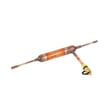
If testing confirms the compressor itself is the issue, the replacement for this model is the refrigerator compressor TCA35931726. Compressor replacement is a sealed-system repair; we recommend a qualified technician.
A compressor diagnosis affects cost and repair approach. Many “bad compressor” symptoms are actually airflow (fan), defrost, or start-device problems; ruling those out first prevents unnecessary sealed-system work.
For model-specific component locations and access steps, use the 79571303012 owner's manual.
Last updated: February 2026
How to tell what model Kenmore refrigerator?
To tell what model Kenmore refrigerator you have, locate the model/serial tag on the cabinet (not the door) and match the full model number exactly as printed. For Kenmore bottom-mount units like model 79571303012, the tag is typically inside the fresh food compartment along a side wall or near the ceiling.
Check these common locations first (use a flashlight and look for a white or silver sticker/plate):
- Inside the refrigerator section on the left or right interior wall
- On the ceiling of the fresh food compartment (near the light housing)
- Around the crisper drawer frame area (above or beside the crispers)
- On the cabinet face behind the door gasket area (door open, along the frame)
- Behind the lower kick plate or toe grille (front bottom)
Record the information exactly as shown on the tag.
| Item on tag | What it’s used for | Example |
|---|---|---|
| Model number | Ensures parts fit and diagrams match | 79571303012 |
| Serial number | Helps date the unit and confirm revisions | Varies |
| Manufacturing code (if shown) | Can affect part compatibility | Varies |
These quick checks prevent ordering the wrong refrigerator parts:
- Copy every digit; Kenmore model numbers are often 11 to 12 digits
- Do not use the number from the owner’s guide cover unless it matches the tag
- Do not use the “795.” prefix alone; use the full number (example: 79571303012)
- If the tag is worn, take a clear photo and zoom in to confirm characters
Kenmore refrigerators with similar styling can use different ice makers, door switches, and water inlet valves. Using the exact model number lets us match the correct diagrams and parts for your specific configuration.
For model-specific identification notes and labeling details, use the 79571303012 owner's manual.
Last updated: February 2026
What are the common problems with Kenmore Elite refrigerators?
Kenmore Elite refrigerators (including Kenmore model 79571303012) most often have cooling problems, ice maker or water dispenser issues, and water leaks. In many cases, the root cause is airflow restriction, a defrost system problem, a failing fan motor, or a water supply component that is clogged or not opening correctly; our 79571303012 owner's manual helps confirm the correct checks for your exact configuration.
- Not cooling or warm temperatures: dirty condenser coils, blocked vents, evaporator fan not running, frost buildup from a defrost failure
- Freezer cold but fridge warm: iced-over evaporator, damper/airflow issue, blocked return vents
- Ice maker not making ice: frozen fill tube, low water pressure, inlet valve not opening, ice maker module failure
- Water leaking or puddles: clogged defrost drain, cracked drain tube, loose water line connections
- Door not closing or poor seal: worn gasket, hinge/bushing wear, door alignment issues
- Set temps to typical targets: 37°F fresh food and 0°F freezer.
- Make sure air vents are not blocked by food packages.
- Listen for the evaporator fan (inside freezer) and condenser fan (near compressor) running.
- If you see ice on the freezer back wall, suspect a defrost system issue.
- For leaks, check the drain area and look for ice or debris in the drain path.
| Symptom | Common part to inspect | Example part for this model |
|---|---|---|
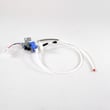
| Ice maker not filling | Water inlet valve | Refrigerator water inlet valve assembly AJU55759303 |
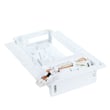
| Ice maker not producing | Ice maker assembly | Lg refrigerator ice maker assembly model AEQ72909603 AEQ72909603 |
| Puddles under/inside | Drain system | Refrigerator drain tube 5251JA3003D |
| Frost buildup | Defrost heater/sensor | Refrigerator defrost heater 5300JB1100J and refrigerator defrost sensor assembly 6615JB2005C |
Cooling and leak symptoms often share the same root causes: restricted airflow, frost from defrost failure, or a blocked drain. Fixing the underlying issue protects the compressor and helps prevent repeat ice maker and water dispenser problems.
For display beeps or fault indicators, use Kenmore 795 model bottom freezer refrigerator error codes to match the code to the most likely failure.
Last updated: February 2026
What is the advantage of a bottom mount fridge?
A bottom-mount refrigerator like Kenmore 79571303012 keeps the fresh-food section at eye level, so you reach everyday items more easily and bend less often. The freezer stays in the lower drawer, which helps many households organize frozen foods separately from daily-use groceries.
- Less bending for fresh food: milk, produce, and leftovers sit higher up.
- Faster meal prep: you can see and grab common items without crouching.
- Better fresh-food organization: shelves and crispers are easier to view at once.
- Freezer drawer storage: large bins can hold bulky frozen items more neatly.
- Good fit for families: frequent fridge access is more comfortable over time.
| Feature | Bottom-mount refrigerator | Top-freezer refrigerator |
|---|---|---|
| Most-used compartment height | Fresh food at eye level | Fresh food lower, freezer at eye level |
| Bending/crouching | Less for daily items | More for daily items |
| Freezer access | Pull-out drawer style | Swing door, shelves |
| Best for | People who use fridge more than freezer | People who use freezer often |
Even within bottom-mount designs, layout details vary by model. We recommend confirming these in the 79571303012 owner's manual:
- Shelf and bin adjustability
- Crisper and pantry drawer configuration
- Freezer basket arrangement
- Door swing clearance and leveling guidance
Most households open the refrigerator compartment far more than the freezer. With a bottom-mount design, the items you use most are positioned where your eyes and hands naturally go, which reduces strain and makes it easier to keep food visible and organized.
Last updated: February 2026
What's the average lifespan of a Kenmore refrigerator?
Most Kenmore refrigerators, including bottom-mount models like 79571303012, typically last 12 to 15 years with normal use. Regular maintenance (cleaning condenser coils, keeping door gaskets sealing, and fixing cooling issues early) is what most often determines whether you land closer to 10 years or closer to 15.
| Appliance type | Typical lifespan | What usually ends it first |
|---|---|---|
| Kenmore refrigerator (overall average) | 12 to 15 years | Sealed system or compressor wear, control failures |
| Bottom-mount refrigerator | 12 to 15 years | Evaporator fan issues, defrost problems, door seal leaks |
| Well-maintained unit | 15 years | Normal wear after years of heat and vibration |
- Vacuum condenser coils and the grille area regularly to reduce compressor run time.
- Keep doors closing tightly; a weak gasket forces longer cooling cycles.
- Set stable temps (about 37°F fresh food, 0°F freezer) to avoid overworking the system.
- Don’t block air vents with food packages; airflow protects the evaporator and fan.
- Replace failing parts early (fans, sensors, inlet valve) before they stress the sealed system.
- Worth repairing: warm temps caused by airflow issues, a noisy fan, or a defrost problem.
- Leaning end-of-life: repeated cooling loss, heavy frost returning quickly, or frequent long run times even after cleaning coils.
- Water and ice symptoms: slow ice production or no ice often points to a supply or valve issue, not the compressor.
If your ice maker is the main problem, we commonly see fixes involving the lg refrigerator ice maker assembly model AEQ72909603 or the refrigerator water inlet valve assembly AJU55759303 on this model.
A refrigerator that is nearing the end of its typical lifespan often costs more to keep stable because small issues (door leaks, dirty coils, weak fans) compound into longer run times, temperature swings, and food spoilage risk. Using the maintenance schedule in the 79571303012 owner's manual helps you get the full service life from your Kenmore.
Last updated: February 2026
Why does my Kenmore fridge have water pooling inside the bottom?
Water pooling inside the bottom of your Kenmore 79571303012 bottom-mount refrigerator is most often caused by a clogged defrost drain; defrost meltwater can’t reach the drain pan and overflows under the crisper drawers. Door gasket leaks or an ice maker water leak can also create puddles.
- Unplug the refrigerator and remove the lower bins and drawers.
- Look for a thin ice sheet or standing water on the refrigerator floor.
- Flush the drain opening with hot water using a turkey baster.
- Clear debris from the drain hole with a zip tie or pipe cleaner (don’t use sharp tools).
- Check the back drain tube for kinks or blockage.
For step-by-step access and panel removal, follow the 79571303012 manual.
Warm, humid air leaking past the gasket creates excess condensation that runs down and pools.
- Inspect the gasket for gaps, tears, or hardened sections.
- Clean the gasket and the cabinet sealing surface.
- Make sure shelves or drawers aren’t preventing full door closure.
A slow drip can run down interior surfaces and collect under drawers.
- Check for wetness around the ice maker fill area.
- Inspect the rear water line connection for seepage.
- Look for drips at the valve and outlet tubing.
| What you notice | Most likely cause | Typical location |
|---|---|---|
| Puddle after defrosting | Defrost drain clogged | Under crispers, center floor |
| Moisture at front edge | Door gasket or alignment | Near door, along bottom lip |
| Wet area near ice maker | Supply leak | Back wall, ice maker side |
If you find a damaged drain path, a common match for this model is the refrigerator drain tube 5251JA3003D.
Standing water leads to odors, drawer damage, and ice buildup that can restrict airflow and affect cooling performance.
Last updated: February 2026