Error Codes



How do I tell what model my Kenmore dryer is?
Your Kenmore dryer’s model number is printed on the appliance’s ID label; for your unit, it should read 11087862100. The label is usually inside the door opening, on the door frame, or on the back panel, and using the exact model number ensures you get the right parts and diagrams.
Where to find the model number label
Check these common spots on Kenmore dryers:
- Inside the dryer door opening on the frame (most common)
- On the back panel of the cabinet
- Along the door opening edge near the lint screen housing
- On the lower front area behind the kick panel (some designs)
What the model number looks like (and why it matters)
Kenmore model numbers are typically a long string of digits. For this dryer, the correct format is:
| What to look for | Example for this dryer | Why it matters |
|---|---|---|
| Model number | 11087862100 | Matches the correct parts list and diagrams |
| Serial number | (varies) | Helps identify production run for service history |
Quick tips to avoid mix-ups
- Copy the model number exactly as printed (no spaces).
- Use the full number, not just the first three digits.
- If the label is worn, take a photo and zoom in to confirm characters.
Why it matters
Kenmore uses different manufacturers and designs across model families; the exact model number (like 11087862100) is what keeps you from ordering a similar-looking part that will not fit, such as a belt, door switch, or blower wheel.
Helpful next step
If you are identifying the model because the dryer is showing a code or not running correctly, use our error-code reference for Kenmore electronic-control 110-series dryers: Kenmore 110 series electronic control model dryer error codes.
Last updated: February 2026
What is the average lifespan of 11087862100?
A Kenmore dryer like model 11087862100 typically lasts 13 years with normal household use and basic maintenance. Keeping airflow strong (clean lint system and venting) and fixing wear parts early helps you reach that lifespan.
What affects lifespan most
- Vent restriction and overheating from lint buildup
- Worn drum support parts (belt, idler pulley, seals)
- Motor strain from a tight drum, bad rollers, or a jammed blower wheel
- Ignition and gas valve wear on gas models
- Heavy loads and frequent over-drying cycles
Maintenance that adds years
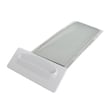
- Clean the lint screen every load; replace a torn or warped screen such as screen W10874409.
- Vacuum lint from the lint chute and inside the cabinet periodically.
- Keep the vent run short and unobstructed; strong airflow prevents heat damage.
- Stop using the dryer if you hear squealing, thumping, or scraping; those are early wear warnings.
Common “end-of-life” symptoms vs fixable issues
| Symptom | Often caused by | Typical fix |
|---|---|---|
| Drum will not turn | Broken belt or seized idler | Replace belt/idler |
| Loud squeal | Idler pulley or drum support wear | Replace worn support parts |
| Runs but no heat | Igniter, coils, sensor, fuse | Diagnose and replace failed part |
| Burning smell | Lint restriction or slipping belt | Clean venting, inspect drive |
Why it matters
Most dryer failures that shorten lifespan start as airflow or friction problems. Addressing them early protects the motor, drum, and heating system, which are the most expensive repairs.
Last updated: March 2026
What replacement parts are most commonly needed for the 11087862100?
For Kenmore dryer model 11087862100, the most commonly replaced parts are the drive system components (belt and idler pulley) and heat/ignition safety parts (thermal fuse, igniter, and gas valve coils on gas models). These parts wear with normal use.
Most common replacement parts for this model
- Belt 341241 (drum drive belt)
- Dryer idler pulley WP691366 (keeps belt tension)
- Fuse WP3392519 (thermal safety fuse that can open if airflow is restricted)
- Dryer igniter 279311 (gas ignition)
- Dryer valve coil kit 279834 (gas valve coils that can fail intermittently)
Quick symptom-to-part guide
| What you notice | Likely part to check | Notes |
|---|---|---|
| Drum will not tumble, motor runs | Belt, idler pulley | Belt can break; idler can seize and shred belt |
| Dryer will not start | Door switch, thermal fuse | Door switch is a common no-start cause |
| Runs but no heat (gas) | Igniter, valve coils, radiant sensor | Coils often fail after warming up |
| Loud rumble or vibration | Blower wheel, drum/baffle issues | Inspect for cracks or looseness |
Why these parts fail
- Belts and idlers wear from heat and friction.
- Thermal fuses open when venting is clogged or the lint path is restricted.
- Gas ignition components cycle on and off repeatedly, which drives normal wear.
Before you order
- Confirm the symptom first; many “no heat” calls are actually restricted venting.
- Match parts to model 11087862100 to ensure fit.
- Use our troubleshooting steps in gas dryer wont heat troubleshooting video if your dryer runs but will not heat.
Last updated: March 2026