Owner’s manual
 View engine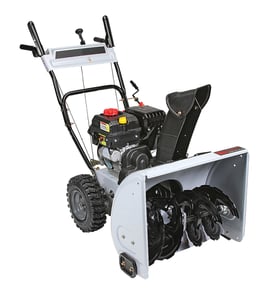



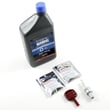
Is sae 30 the same as 5W30 for snowblower?
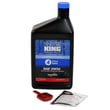
No. On the Craftsman snow thrower model 536884791, the operator guidance calls for SAE 5W-30 engine oil; SAE 30 is a single-weight oil and does not flow as easily in cold starts, which can make starting and lubrication worse in snowblower temperatures. See the 536884791 owner's manual.
What to use for this Craftsman 536884791
The manual lists these key specs for the engine:
- Engine oil type: 5W-30
- Oil capacity: 20 oz
- Cold-weather option: 0W-30 can help starting in very low temperatures
- Oil level checks: before starting and about every 5 hours of use
| Oil label | What it means | Best use case on a snowblower |
|---|---|---|
| SAE 30 | Single viscosity (thicker when cold) | Warmer temps; not ideal for winter starts |
| 5W-30 | Multi-viscosity (flows better cold, protects hot) | Normal snowblower operation |
| 0W-30 | Even better cold flow than 5W-30 | Very cold starts (around 20°F and below) |
Quick guidance if you are deciding between SAE 30 and 5W-30
- Use 5W-30 for typical winter operation.
- Consider 0W-30 if your snowblower is hard to start in extreme cold.
- Avoid SAE 30 for cold-weather starting because it can be too thick at startup.
- Check the dipstick level often; multi-viscosity oils can increase oil consumption in warmer conditions.
Why it matters
Cold-start lubrication is everything on a snowblower. Oil that is too thick at startup can delay lubrication to internal engine parts, increase wear, and make recoil or electric starting harder.
Last updated: January 2026
How do I tell what year my snowblower is?
To tell what year your Craftsman snow thrower model 536884791 is, we use the engine’s manufacture date code (often stamped on the engine shroud or valve cover). That code typically includes the year and can be decoded into an exact build date.
Where to find the date information
Most owners get the best results by checking these locations:
- Engine identification label or stamped code on the blower housing/shroud
- Valve cover area (common on many small engines)
- Recoil starter housing area
- Frame tag on the snowblower (helps confirm the unit model, but the engine code dates the engine)
- The documentation for your unit in the 536884791 owner’s manual
How to decode the engine code (common format)
A common small-engine date code example looks like 99011556:
- First 2 digits: year (example 99 = 1999)
- Next 2 digits: month (example 01 = January)
- Next 2 digits: day (example 15 = 15th)
- Remaining digits: factory/sequence info
Quick example table
| Example code | Interpreted build date | What it tells you |
|---|---|---|
| 99011556 | Jan 15, 1999 | Engine manufacture date |
| 030822xx | Aug 22, 2003 | Engine manufacture date |
Why it matters
Knowing the engine manufacture year helps you match the right maintenance parts and service intervals, especially wear items like belts, spark plugs, and friction-drive components. It also helps when you are troubleshooting starting or drive problems after long storage.
Helpful tip while you are checking the machine
If you are already inspecting the unit for tags and codes, also look for belt wear or glazing. On this model, common wear parts include the snowblower drive belt 1733324SM and the auger belt 37X120MA.
Last updated: January 2026
What is the most common problem with snow blowers?
The most common problem we see on gas snow blowers like the Craftsman 536884791 is a no-start or hard-start condition caused by fuel and ignition issues (old fuel, carburetor moisture/icing, or a worn spark plug). Close behind are performance problems like chute clogging or the auger/drive not working due to belt wear or misadjustment; see the owner's manual for model-specific checks.
Most common issues (and what they look like)
- Won’t start or starts then dies: stale fuel, moisture in carburetor area, fouled spark plug
- Weak throwing or chute clogs: wet snow, packed discharge, low engine speed (not at full throttle)
- Auger won’t turn or won’t throw snow under load: stretched/worn auger belt, idler pulley needs adjustment
- Unit won’t drive forward: worn ground drive belt or drive system out of adjustment
- Abnormal vibration: often follows striking a foreign object; stop and inspect before continuing
Quick checks we recommend first
- Safety first: shut the engine off, let all moving parts stop, and disconnect the spark plug wire before clearing jams or inspecting belts.
- Run at proper speed: for best performance, operate at full throttle while throwing snow.
- Inspect belts and tension: squealing or loss of throwing power in deep snow often points to auger belt stretch or idler adjustment.
- Check spark plug condition and gap: many 5-HP class engines use a .030 in plug gap; replace if fouled.
- Post-use freeze-up prevention: after each job, wipe snow/moisture from the carburetor/starter area and cycle controls to reduce sticking.
Common symptom-to-fix guide
| Symptom | Most likely cause | What to do next |
|---|---|---|
| Won’t start | Fuel/ignition issue | Refresh fuel, inspect/replace spark plug, dry/wipe carburetor area |
| Squeals in deep snow | Auger belt slipping | Adjust belt tension; replace if worn using auger belt 37X120MA |
| Won’t move | Drive belt slipping | Inspect/replace using snowblower drive belt 1733324SM |
| Vibrates abnormally | Impact damage or loose parts | Stop, disconnect plug wire, inspect and repair before restarting |
Why it matters
Catching belt stretch, plug wear, and moisture buildup early prevents sudden loss of drive/throwing power and reduces the chance of damage from jams or vibration.
Last updated: January 2026
How long does a gas-powered snow blower last?
A gas-powered snow blower typically lasts 10 to 15 years with normal residential use and consistent maintenance. For the Craftsman 536884791 (5-HP snow thrower), regular oil checks, lubrication, and off-season storage steps from the 536884791 owner's manual help you reach that lifespan.
Typical lifespan by type
| Snow blower type | Typical lifespan | What usually limits life |
|---|---|---|
| Gas-powered | 10 to 15 years | Fuel system issues, belt wear, corrosion |
| Electric (corded/battery) | 5 to 10 years | Motor/electronics, battery aging |
| Robotic | 8 to 20 years | Battery, drive components, sensors |
What makes a gas snow blower last longer
We see the longest life when owners stay ahead of wear items and storage care.
- Check engine oil before starting and about every 5 hours of continuous use
- Use the recommended oil viscosity (commonly 5W-30 for this model)
- Remove packed snow and slush after each use to prevent frozen controls and auger binding
- Tighten loose fasteners and replace worn parts promptly
- Do proper end-of-season storage (clean, lubricate, protect bare metal, stabilize or drain fuel)
Parts that commonly wear out first
These parts are normal wear items; replacing them on time prevents bigger failures.
- Ground drive belt (loss of self-propel, slipping): snowblower drive belt 1733324SM
- Auger drive belt (auger stops turning under load): auger belt 37X120MA
- Idler pulley and springs (belt tension problems)
- Spark plug (hard starting, misfire)
- Shear pins (auger stops after hitting ice or debris)
Why it matters
A snow blower that is maintained and stored correctly starts easier, throws snow farther, and avoids expensive damage from stale fuel, low oil, or frozen components. That is what typically separates a 5-year machine from a 15-year machine.
Last updated: January 2026