Installation guide
 Owner’s manual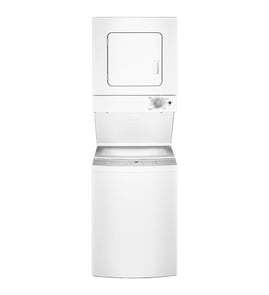



How to remove front panel from Kenmore stackable washer?
On the Kenmore 41793862200 stacked laundry center, the removable “front panel” called out in the installation instructions is the dryer front access panel; you remove two screws, lower the panel to release the bottom tabs, then lift it off. For the washer cabinet front, access is typically gained from the top after removing the top panel.
Dryer front access panel removal (model-specific)
Use this when you need access for gas connections, the safety cover, or internal dryer service.
- Unplug the laundry center.
- If it is a gas model, shut off the gas supply valve.
- Remove the two screws securing the front access panel to the dryer cabinet.
- Lower the panel until the bottom tabs disengage from the cabinet.
- Pull the panel away and set it aside.
- If needed, remove the screws securing the dryer safety cover and remove the cover.
Reference: installation guide
Washer front panel access (what usually applies)
On stacked laundry centers like the 41793862200, the washer “front panel” is not typically a quick-remove service door. Most service access starts by removing the top panel and then removing front fasteners/clips from above.
- Unplug power and turn off both water faucets.
- Pull the unit forward enough to work safely.
- Remove the top panel fasteners (rear screws are common).
- Look down the inside front corners for screws/clips holding the washer front panel.
- Disconnect any wiring you must move (label connectors before separating).
- Lift the panel up and out once fasteners are released.
For control and lid-lock behavior during operation, see: 41793862200 owner’s manual
Quick comparison: “front panel” terms
| What you mean | Where it is | How it typically comes off |
|---|---|---|
| Dryer front access panel | Lower front of dryer section | 2 screws, drop to release bottom tabs |
| Washer front panel | Full washer cabinet front | Usually removed after top panel is off |
Why it matters
Removing the correct panel prevents broken tabs, stripped screws, and wiring damage; it also helps you reach the right components faster when troubleshooting leaks, no-drain issues, or dryer service.
Last updated: February 2026
What are the most common issues with 41793862200?
For the Kenmore 41793862200 stacked laundry center, the most common issues are washer draining problems, dryer not heating or taking too long to dry, dryer drum noise or poor tumbling, and door or start problems. Our owner's manual helps confirm normal operation and maintenance steps.
Common symptoms and what usually causes them
- Washer will not drain or drains slowly: clogged pump filter area (if equipped), blocked drain hose, or a failing pump such as the washer drain pump 137221600.
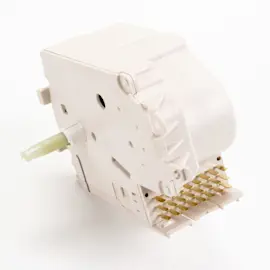
- Dryer runs but does not heat: gas ignition or valve issues (gas models), airflow restriction, or timer/control problems.
- Dryer takes too long to dry: restricted venting, lint buildup, or a damaged/missing lint screen like the dryer lint filter 5304516871.
- Loud squealing, thumping, or scraping in dryer: worn drum support parts such as the dryer drum bearing 131825900 or the dryer drum glide 137513300.
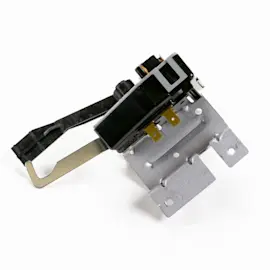
- Door will not stay closed or dryer will not start: door catch/strike alignment or a failed start circuit component such as the start switch 134399700.
Quick checks we recommend before replacing parts
- Confirm airflow: clean the lint screen every load; check the vent for kinks, crushing, or heavy lint.
- Listen for the noise pattern: squeal often points to bearing or glide wear; thump can indicate drum support wear.
- Check for standing water: if the washer tub holds water, inspect the drain hose routing and look for pump blockage.
- Verify door closure: make sure the door fully latches and the strike lines up.
Symptom-to-part cheat sheet
| Symptom | Most likely area | Example part on this model page |
|---|---|---|
| Washer not draining | Drain pump, drain path | Washer drain pump (ID 137221600) |
| Long dry times | Venting, lint screen | Dryer lint filter (ID 5304516871) |
| Dryer noise | Drum support | Drum bearing (ID 131825900), drum glide (ID 137513300) |
| Won’t start | Start/door circuit | Start switch (ID 134399700) |
Why it matters
Catching airflow restrictions, drain problems, and drum-support wear early prevents bigger failures like overheating, leaks, belt or motor strain, and repeated shutdowns.
Last updated: March 2026
What is the capacity of the Kenmore 41793862200 washer?
The Kenmore 41793862200 washer has a 3.9 cu. ft. washer capacity (wash basket volume). That capacity helps you choose the right load size so the washer cleans well, spins smoothly, and avoids out-of-balance vibration. For model-specific operating guidance, use the 41793862200 owner's manual.
What 3.9 cu. ft. means for load size
A 3.9 cu. ft. front-load washer in a stacked laundry center handles typical family loads when you load it correctly.
- Load items loosely; do not pack the drum tight
- Mix large and small items to improve balance during spin
- Keep bulky items (towels, jeans) to a reasonable quantity per load
- If the washer thumps or walks, pause and redistribute the load
- Use HE detergent and follow the fill line to reduce oversudsing
Quick reference
| Spec | Value | Why it matters |
|---|---|---|
| Washer capacity | 3.9 cu. ft. | Helps prevent overloading and poor cleaning |
| Appliance type | Stacked laundry center | Washer and dryer share one vertical cabinet |
Setup details that affect real-world performance
Even with the correct capacity, installation issues can make loads seem “too big” because the unit vibrates or drains slowly.
- Level the laundry center so the washer can spin at full speed
- Confirm both hot and cold faucets are fully open
- Verify the drain hose is not kinked or crushed
- Follow standpipe height and drain requirements during installation
For spacing, leveling, venting, and drain standpipe requirements, follow the 41793862200 installation guide.
Why it matters
Using the right capacity keeps water flow, tumbling action, and spin performance in the normal range; overloading commonly causes poor rinsing, longer dry times, and out-of-balance shutdowns.
Last updated: February 2026