 Owner’s manual




What is the most common problem with the Maytag dryer?
For the Maytag PDET910AYW dryer, the most common issues we see are no heat, won’t start, or poor drying, and they’re often tied to airflow restrictions (lint screen or venting) that can overheat the dryer and open a safety fuse. Use the troubleshooting section in the PDET910AYW dryer manual to match symptoms to checks.
- Dryer runs but doesn’t heat: restricted venting, failed heating circuit parts
- Dryer won’t start: door not fully closed, power supply issue, failed drive circuit component
- Drying takes too long: clogged lint screen, crushed/long vent run, blocked outside hood
- Noisy operation: worn drum support rollers, blower wheel issues, drum seals/glides wearing
- Stops mid-cycle or overheats: airflow restriction leading to a thermal safety opening
- Clean the lint screen before every load and confirm it seats fully
- Check the outside vent hood; make sure it opens freely and is not blocked
- Inspect the vent run for kinks, crushing, or heavy lint buildup (rigid 4-inch metal duct is best)
- Avoid overloading; bulky loads need room to tumble
- Verify power at the outlet and reset the breaker if needed
If airflow is good but the dryer still won’t heat or won’t run, these model-compatible parts are common suspects:
| Symptom | Common part to test/replace | Example compatible part for this model |
|---|---|---|
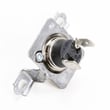
| Won’t run after overheating event | Thermal safety fuse | Dryer thermal fuse, 352-degree f WP40113801 |
| Runs but no heat (electric heat models) | Heating element | Heat element WPY503978 |
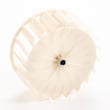
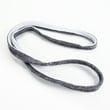
| Runs but weak airflow/noise | Blower wheel | Speed queen dryer blower wheel 56000 |
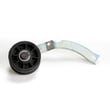
| Runs but drum won’t tumble | Drum belt | Dryer drum belt WP40111201 |
Most “common dryer problems” trace back to airflow. Poor venting can cause long dry times, overheating, nuisance shutdowns, and repeated failure of safety components. Fixing airflow first helps protect the motor, heater, and controls.
Last updated: January 2026
What is the average lifespan of a Maytag dryer?
We can’t confirm an “average lifespan” for the Maytag PDET910AYW from model-specific documentation because Maytag typically doesn’t publish a fixed service-life number for individual dryer models. What we can say for PDET910AYW is that consistent airflow and routine care (as outlined in the PDET910AYW use & care manual) are the biggest factors in how long it runs reliably.
The PDET910AYW manual focuses on safe operation, maintenance, and troubleshooting rather than a guaranteed lifespan. Key care items it calls out include:
- Clean the lint screen before or after each load
- Keep the exhaust opening area free of lint and dust
- Have the interior and exhaust duct cleaned periodically
- Inspect and clean the exhaust system about once a year
Even without a published lifespan, we typically see dryers last longer when heat and airflow stay in the normal range.
Common “life-shorteners” to avoid:
- Restricted venting (crushed duct, long runs, clogged hood)
- Running overloaded loads repeatedly
- Skipping lint screen cleaning
- Ignoring slow-drying symptoms (often airflow-related)
| Symptom | More likely cause | What to do first |
|---|---|---|
| Long dry times | Venting or lint buildup | Clean lint screen, check duct and outside hood |
| No heat | Heat circuit or safety device | Verify cycle/heat setting, then diagnose components |
| Stops mid-cycle | Overheating from poor airflow | Correct venting, then test safety devices |
If overheating has occurred and the dryer won’t heat or won’t run, a safety device may need testing; one compatible example for this model is the dryer thermal fuse, 352-degree f WP40113801.
A dryer that exhausts properly dries faster and runs cooler, which reduces stress on the drive motor, heating element, thermostats, and drum support parts.
Last updated: January 2026
Is 6.7 cubic feet a big dryer?
A 6.7 cu. ft. dryer is generally considered a large-capacity full-size dryer. For Maytag model PDET910AYW, we can’t verify the drum capacity from the model’s available use and care manual, so treat 6.7 cu. ft. as a general size reference, not a confirmed spec.
Most dryer capacities are commonly described like this:
| Capacity range | Common label | Typical use |
|---|---|---|
| 3.4 to 4.4 cu. ft. | Compact | Small loads, tight spaces |
| 5.0 to 6.0 cu. ft. | Standard | Most households |
| 6.5 to 7.4 cu. ft. | Large | Bulky items, family loads |
| 7.5+ cu. ft. | Extra-large | Very large loads, frequent laundry |
Even if a dryer is “large,” real-world performance depends on airflow, heat, and how the load tumbles. The PDET910AYW guidance focuses on loading and venting basics; see the PDET910AYW use & care manual.
- Don’t overload; one washer load should equal one dryer load
- Separate heavy items from lightweight items for more even drying
- Reposition bulky items (blankets/comforters) during the cycle
- Clean the lint screen before or after each load
- Inspect and clean the exhaust system periodically (the manual recommends annual inspection/cleaning)
These are common causes across Maytag dryers:
- Restricted venting (crushed duct, long run, too many elbows)
- Lint buildup in the exhaust duct or outside hood
- Heat system issue (on electric models, the heating circuit can include a thermal fuse, thermostat, and heating element)
If you’re troubleshooting a no-heat condition, one safety device that’s often checked is the dryer thermal fuse, 352-degree f WP40113801.
When the drum is packed too tightly, clothes can’t tumble and air can’t move through the load; that leads to damp spots, wrinkles, and longer cycle times even if the dryer is considered “large.”
Last updated: January 2026





