Installation guide
 Owner’s manual


How much does it cost to replace a heating element in a Kenmore dryer?
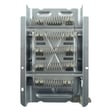
For Kenmore dryer model 11067652600, replacing the heating element typically costs $50 to $350 total. The part itself is usually $20 to $120+, and professional labor commonly adds $100 to $250, depending on access, diagnostics, and local rates.
Typical cost breakdown
- DIY (part only): usually $20 to $120+
- Service call/diagnosis (if used): often $75 to $150
- Labor (element replacement): often $100 to $250
- Total with a technician: commonly $150 to $350
For this model, a common replacement part is the dryer element 279838. For wiring damage at the heater terminals, the dryer heating element wire kit 279457 is also commonly needed.
| Repair approach | What you pay for | Typical total |
|---|---|---|
| DIY replacement | Heating element (and any damaged connectors) | $20 to $150 |
| Technician repair | Diagnosis + labor + parts | $150 to $350 |
What can raise the price
A heating element failure is often related to airflow or heat control issues. These items can add cost if they also need replacement:
- Restricted venting (cleaning or vent repair)
- Blown thermal safety parts (often caused by overheating)
- Heat cycling problems from a thermostat issue
- Burned wires or loose terminals at the heater
Quick checks before you buy parts
We recommend these basics first because they can prevent repeat failures:
- Confirm the dryer has the correct power supply; electric dryers can run but not heat if a supply leg is missing
- Check for a crushed or blocked vent; restricted airflow can overheat the heater circuit
- If the dryer shows an L2 code during the initial diagnostic, address the home power supply issue first
- If the dryer shows an AF code, correct the vent restriction first
These checks and codes are covered in the 11067652600 installation guide.
Why it matters
A new heating element can fail early if the dryer is overheating from poor airflow or if the power supply is incorrect. Fixing the root cause first protects the new element and restores normal drying times.
Last updated: February 2026
How do I tell what model my Kenmore dryer is?
Your Kenmore dryer’s model number is printed on the model and serial label; on model 11067652600, that label is located at the top inside the dryer door well. Once you have the full model number, we can match the correct parts, diagrams, and specifications.
Where to look for the model number label
Check these common Kenmore dryer label locations (start with the door opening):
- Top inside the dryer door well (most common for Kenmore 110-series dryers)
- Inside the door opening on the cabinet frame
- On the back panel of the dryer cabinet
- Near the lint screen housing (varies by design)
For the exact label location and how it’s shown in the diagrams, use the 11067652600 owner’s manual.
What to write down (and why)
Record the information exactly as shown on the label:
- Model number (example format: 110.xxxxxxxxx)
- Serial number (helps identify production run details)
- Purchase date (useful for maintenance history)
Quick reference
| Item on label | What it’s used for | Tip |
|---|---|---|
| Model number | Correct part fit and diagrams | Copy every digit (no spaces) |
| Serial number | Version details and service identification | Take a clear photo |
| Purchase date | Maintenance and ownership records | Save with your receipt |
Why it matters
Kenmore dryers share similar styling across many years, but parts like a dryer drum belt, heating element, timer, or electronic control board can change by model. Using the exact model number prevents ordering the wrong replacement part.
Last updated: February 2026
How do I know if my Kenmore dryer thermal fuse is blown?
If your Kenmore dryer model 11067652600 won’t start, or it runs but has no heat, a blown thermal fuse or thermal cut-off is a common cause. We confirm it by unplugging the dryer and checking the fuse for continuity with a multimeter.
Common signs before you test
Look for these symptoms first:
- Dryer won’t run at all (no motor)
- Drum turns but there’s no heat
- Cycle stops early after a short run
- You recently had poor airflow (clogged vent, crushed duct, heavy lint)
How to test the thermal fuse (definitive)
Use the safety and access steps in the 11067652600 installation guide before removing any panels.
- Unplug the dryer or switch off the breaker
- Locate the fuse (often on the blower housing or heater housing)
- Pull at least one wire off the fuse terminal
- Set the meter to continuity or ohms
- Probe the two fuse terminals
| Meter result | What it means | Next step |
|---|---|---|
| Beep or ~0 ohms | Fuse is good | Check other heat or start components |
| No beep, OL, or infinite | Fuse is blown | Replace the fuse and correct airflow |
Fix the airflow problem (so it doesn’t blow again)
A thermal fuse opens when the dryer overheats; restricted venting is the usual reason.
- Clean the lint screen and the lint screen housing
- Clean the vent duct all the way to the outside hood
- Make sure the vent hose is not kinked or crushed
- Check the outside damper flap for sticking or blockage
- Confirm the dryer has enough clearance behind it
Why it matters
Overheating can keep taking out safety devices and can shorten the life of the heating system, including the heating element.
Last updated: February 2026
What is the code f26 on a Kenmore dryer?
On Kenmore dryer model 11067652600, F26 is treated as a control sensing a door not closed or a door-switch circuit issue. The quickest fix is to confirm the door fully latches, then check the door switch and its wiring connection.
What to do first (no tools)
- Open the door and close it firmly until you hear and feel the latch click.
- Remove any laundry caught between the door and the front panel.
- Power-cycle the dryer: unplug for 1 minute, then try a Timed Dry cycle.
- If the code returns, verify the basics (power supply, door closed) listed in the 11067652600 installation guide.
Parts and areas to inspect
If the door is closing normally but F26 keeps coming back, focus on the door-switch circuit.
- Door switch: check for a loose connector or damaged terminals at the switch
- Door strike and latch alignment: a misaligned strike can prevent the switch from actuating
- Harness wiring near the door opening: look for pinched or broken wires
A common replacement part for the door-switch circuit on this model is the dryer door switch WP3406105.
Symptom-to-cause guide
| What you notice | Most likely cause | What we recommend |
|---|---|---|
| Dryer starts only if you push on the door | Latch/strike misalignment | Inspect strike, tighten screws, realign door if needed |
| F26 comes and goes | Loose connection at door switch | Reseat connector at the switch; check for corrosion |
| Dryer will not start and shows F26 | Failed door switch | Replace the door switch and recheck operation |
Why it matters
The door switch is a safety interlock. If the control does not detect a closed door, the dryer will stop or refuse to start to prevent operation with the door open.
Last updated: February 2026