Owner’s manual
 Error Codes



How to remove bottom grill from KitchenAid refrigerator?
On KitchenAid refrigerator model KRFF302ESS01, the bottom grill (base grille) is held in place with two screws. Remove those screws, then grasp the grille and pull it straight toward you to take it off; reinstall by aligning the holes and re-fastening the screws per the KRFF302ESS01 owner’s manual.
Steps to remove the base grille
- Unplug the refrigerator (recommended for safety while working near wiring and moving parts).
- Locate the base grille at the very bottom front of the cabinet.
- Remove the two screws securing the grille.
- Set the screws aside so you can reuse them.
- Grasp the grille with both hands and pull it toward you to remove.
Reinstalling the base grille
- Align the grille mounting holes with the cabinet holes.
- Reinstall and tighten the two screws.
- Confirm the grille sits flush and does not rattle.
| Task | Tool you’ll typically use | What to watch for |
|---|---|---|
| Remove base grille screws | Screwdriver (varies by screw head) | Do not strip the screw heads |
| Leveling adjustment (if needed) | 1/4-inch hex driver | Turn both sides evenly for door closing |
| Clean behind grille | Vacuum with soft brush | Avoid bending fins or damaging wiring |
Why it matters
We remove the base grille to access the leveling screws and front roller area for door alignment and closing adjustments, and to clean the condenser area when the home is dusty, greasy, or has heavy pet traffic.
Last updated: January 2026
What is the advantage of a bottom mount fridge?
A bottom-mount refrigerator like the KitchenAid KRFF302ESS01 puts the fresh-food compartment at eye level, so we reach everyday items with less bending. The freezer stays below, which is convenient if we access frozen foods less often.
Key benefits you will notice day to day
- Easier access to fresh foods (less stooping for produce, milk, leftovers)
- Better organization for frequently used items at eye and chest height
- Freezer drawer can hold bulky frozen items and slides out for visibility
- Often feels more ergonomic for back and knee comfort
- Door alignment and closing can be tuned so the heavier top doors seal well (see the leveling steps in the KRFF302ESS01 owner's manual)
What changes compared with a top-freezer design
| Feature | Bottom-mount fridge | Top-freezer fridge |
|---|---|---|
| Fresh-food access | Most convenient | Requires more bending |
| Freezer access | Lower drawer, pull-out | Upper door, easier reach |
| Storage style | Wide shelves plus freezer bins | Traditional freezer shelves |
| Typical user preference | Fresh-food focused households | Frozen-food focused households |
Setup tips that help you get the most from a bottom-mount
A bottom-mount design works best when the cabinet is level and has proper airflow.
- Leave ventilation clearance around the refrigerator (sides, top, and back)
- If installed next to a wall, allow hinge-side clearance so doors can swing open
- Avoid installing near heat sources (oven, radiator)
- Use a dedicated grounded outlet (do not use an extension cord)
- If doors do not close smoothly, adjust the front leveling screws so the cabinet tilts slightly to the rear
Why it matters
When fresh food is easiest to reach, we open the doors for less time and keep temperatures steadier. That helps food stay fresher and can reduce unnecessary compressor run time.
Last updated: January 2026
Does KitchenAid make a 33 inch wide refrigerator?
Yes. KitchenAid makes 33-inch wide refrigerators, and your KitchenAid model KRFF302ESS01 is in that 33-inch class (a common fit for standard 33-inch refrigerator cutouts while still offering full-size fresh food and freezer storage).
How to confirm fit in your kitchen
We recommend verifying the exact cabinet opening and clearance requirements before you buy or swap models. The most important measurements are width, depth (including handles), height, and door-swing clearance.
- Measure the cabinet opening width at the front and back
- Check height clearance to the top cabinet or soffit
- Confirm depth clearance for doors and handles
- Allow space for ventilation around the refrigerator
- Verify water line routing if you use an ice maker or water filter
Reference the KRFF302ESS01 owner’s manual for the model-specific location requirements and installation clearances.
33-inch wide: what “33-inch” usually means
Most 33-inch refrigerators are designed to fit a 33-inch opening, but the actual cabinet width can be slightly under 33 inches to allow for installation clearance.
| What you measure | What to expect | Why it matters |
|---|---|---|
| Cabinet opening width | 33 inches nominal | Ensures the refrigerator slides in without binding |
| Refrigerator cabinet width | Slightly under 33 inches | Provides side clearance |
| Door swing clearance | Varies by layout | Prevents doors from hitting walls or cabinets |
Why it matters
Choosing the correct width prevents installation headaches, improves airflow for efficient cooling, and helps the doors seal properly so temperatures stay stable and food stays fresh.
Related parts and features to keep in mind
If your 33-inch KitchenAid refrigerator includes water and ice features, these parts commonly affect performance and fit-related service needs:
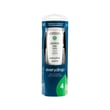
- Whirlpool refrigerator water filter F2WC9I1 for water quality and flow
- Refrigerator ice maker assembly W10884390 if ice production is slow or inconsistent
- Whirlpool refrigerator door gasket, right (gray) W10830162 if doors do not seal after leveling
Last updated: January 2026
What is the most common problem with a KitchenAid refrigerator?
For KitchenAid model KRFF302ESS01, the most common issues we see are ice maker problems (slow or no ice) and cooling complaints (warm fridge, frost buildup, or temperature swings). These symptoms are often tied to airflow restrictions, water supply issues, or defrost drainage problems.
Most common symptoms and what they usually point to
- No ice or slow ice production: clogged water filter, low water pressure, or a failing ice maker
- Fridge not cold enough: dirty condenser coils, evaporator fan issue, or door not sealing
- Frost on the back wall or in the freezer: defrost system problem or door left ajar
- Water leaking or puddles: defrost drain restriction or water line/valve seepage
- Noisy operation: fan blade rubbing ice, worn fan motor, or items vibrating inside
Quick checks you can do first (KRFF302ESS01)
- Confirm temperatures are set correctly (typical targets: 37°F fresh food, 0°F freezer).
- Check door closure and gasket contact all the way around.
- If ice or water is weak, replace the filter and purge air from the water system.
- Clean condenser coils and make sure airflow around the cabinet is not blocked.
- Look for frost buildup that could be interfering with the evaporator fan.
Use the troubleshooting steps and specifications in the KRFF302ESS01 owner’s manual.
Parts that commonly relate to these problems
| Symptom | Common part involved | What it affects |
|---|---|---|
| No ice / intermittent ice | Refrigerator ice maker assembly W10884390 | Ice harvest and fill cycles |
| Weak water flow / poor ice fill | Whirlpool refrigerator water filter F2WC9I1 | Water flow and filtration |
| Warm temps / noise from freezer | Refrigerator evaporator fan blade WP2169142 | Air circulation across evaporator |
| Leaking or no water to ice maker | Refrigerator water inlet valve assembly WPW10420083 | Water supply to dispenser/ice maker |
Why it matters
Ice maker and cooling problems can look similar, but they have different root causes. Starting with airflow (fans, frost, coils) and water supply (filter, valve, pressure) helps you avoid replacing the wrong part and gets temperatures stable faster.
If you want a step-by-step filter procedure, follow how to replace the water filter in a KitchenAid refrigerator.
Last updated: January 2026