Owner’s manual
 Error Codes


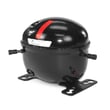
What is the bottom part of a refrigerator called?
On the Kenmore 79571602011 bottom-mount refrigerator, the “bottom part” people usually mean is the compressor area (the sealed-system components located at the lower rear, behind the base cover). This is where the compressor and condenser-related parts help move heat out of the refrigerator.
What parts are typically in the bottom area?
Depending on what you are looking at (front base cover vs. back lower panel), the bottom area can include:
- Compressor (the main pump for the sealed refrigerant system)
- Condenser coil (releases heat to the room)
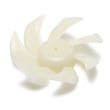
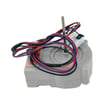
- Condenser fan (moves air across the condenser area)
- Drain tube and drain pan area (handles defrost water)
- Wiring and control components near the lower rear
If you are identifying parts or accessing panels safely, use the 79571602011 owner's manual.
Common “bottom part” terms (quick guide)
| What you see or mean | Common name | What it does |
|---|---|---|
| Black metal can at lower back | Compressor | Circulates refrigerant to cool the fridge |
| Tubing/coil near compressor | Condenser coil | Dumps heat from the sealed system |
| Front lower grille/panel | Base cover (toe grille) | Covers the lower area and vents airflow |
| Water under fridge | Drain system | Routes defrost water away |
When the bottom area is the problem
These symptoms often point to the compressor or condenser area:
- Refrigerator not cooling or weak cooling
- Loud humming, clicking, or repeated start attempts
- Excess heat at the lower rear of the cabinet
- Dust buildup on condenser vents or coil
Model-matched parts that relate to the bottom area include the refrigerator compressor TCA38091801 and the refrigerator condenser coil ACG73784701.
Why it matters
Knowing the correct name helps you order the right Kenmore parts and follow safe access steps. The bottom rear area can contain moving fan blades and electrical components, so we always recommend disconnecting power before inspecting or cleaning.
Last updated: February 2026
What are the common problems with Kenmore Elite refrigerators?
Common Kenmore Elite refrigerator problems include warm temperatures (cooling failure), ice maker not making ice, water leaks/puddles, unusual fan noise, lights not working, and doors not sealing. On Kenmore model 79571602011, many of these symptoms trace back to airflow restrictions, dirty condenser coils, drain clogs, or fan and control issues; our 79571602011 owner's manual troubleshooting section is the fastest way to match symptoms to checks.
Most common symptoms and what usually causes them
- Not cooling or weak cooling: dirty condenser coils, blocked air vents, evaporator fan problems, or sealed system/compressor issues
- Ice maker problems: water supply issue, frozen fill tube, ice maker assembly fault, or dispenser/control problem
- Water leaking or puddles: clogged defrost drain, cracked drain tube, or water line connection issue
- Noisy operation: evaporator fan motor, condenser fan motor, or the unit not level (vibration/rattling)
- Lights not working: door left open too long, loose/burned-out bulb, or door switch issue
Quick checks we recommend first (safe DIY)
- Confirm temperatures: set refrigerator to about 37°F and freezer to about 0°F.
- Clean condenser coils: dirty coils are a top cause of poor cooling and long run times.
- Check door seal and door closing: warm air leaks cause frost, moisture, and temperature swings.
- Listen for fans: evaporator fan noise or no airflow points to a fan or ice buildup issue.
- Look for drain clogs: water under crispers or on the freezer floor often indicates a blocked drain.
Parts that commonly relate to these problems on model 79571602011
| Symptom | Common part area | Example part for this model |
|---|---|---|
| Lights do not work | Door sensing | Refrigerator door switch 6600JB1010A |
| Warm temps, poor cooling | Air movement | Lg refrigerator evaporator fan motor 4681JB1027C |
| Leaks/puddles | Defrost drain path | Refrigerator drain tube 5251JA3003D |
| No ice | Ice maker module | Ice maker assembly (AEQ72909602) - refrigerator ice maker part by lg AEQ72909602 |
Why it matters
Catching airflow and maintenance issues early (like dirty coils or a clogged drain) prevents longer compressor run times and helps stabilize temperatures, which protects food quality and reduces nuisance problems like leaks and frost.
Last updated: February 2026
How do I tell what model Kenmore fridge I have?
For Kenmore refrigerator model 79571602011, the model and serial number are printed on an identification label inside the fresh food (refrigerator) compartment, on the right-hand side wall. Use that exact model number when ordering parts or checking specifications in the 79571602011 owner's manual.
Where to look for the model number label
Check these common label locations first (most customers find it in the refrigerator compartment):
- Inside the refrigerator compartment on the right-hand side wall (primary location)
- On the inside wall near the crisper area (varies by configuration)
- Inside the freezer compartment side wall (less common)
- Behind the base grille or kick plate area (some designs)
How to read the model number correctly
Kenmore model numbers are easy to misread. Use these tips so you capture the exact characters:
- Write it exactly as shown, including all digits (example: 79571602011)
- Look for a separate serial number on the same label
- If there is a color code or suffix, record it too (some manuals show model families like 795.7160*)
- Take a clear photo of the label before you start shopping for parts
Why it matters
The model number determines the correct fit for parts like an ice maker, door switch, or compressor. For example, parts listings for 79571602011 include items such as the refrigerator door switch 6600JB1010A and the ice maker assembly AEQ72909602, which can differ across similar-looking Kenmore refrigerators.
Quick reference
| What you need | Where to find it | What to do with it |
|---|---|---|
| Model number | ID label inside refrigerator compartment (right side wall) | Use it to match parts and diagrams |
| Serial number | Same ID label | Use it for service history and warranty records |
| Manual model family | Manual cover may show 795.7160* | Use the exact label model for ordering |
Last updated: February 2026
What is the advantage of a bottom mount fridge?
A bottom-mount refrigerator like Kenmore model 79571602011 keeps the fresh-food section at eye level, so you reach everyday items with less bending and faster visibility. The freezer stays below, which works well when your household uses the refrigerator compartment more often than the freezer.
Key advantages in daily use
- Fresh food is easier to see and grab because shelves and drawers are higher.
- Less bending for common tasks like getting milk, produce, and leftovers.
- Better organization for refrigerated foods since the main compartment is the most accessible.
- Energy-saving habits are easier because you can find items faster and keep the door open for less time.
- Freezer storage is still roomy with a pull-out drawer style layout on many bottom-mount designs.
How this layout can help performance and convenience
Bottom-mount designs pair well with good airflow and shelf organization. Your manual also notes that organizing similar foods together and adjusting shelves helps you find items faster and reduces door-open time.
| Feature | Bottom-mount benefit | Best for |
|---|---|---|
| Fresh-food access | Eye-level viewing and retrieval | Daily cooking, snacks, produce use |
| Ergonomics | Less bending for refrigerator items | Families, frequent fridge use |
| Door-open time | Faster item location can reduce open time | Energy-conscious households |
Tips to get the most out of a bottom-mount refrigerator
- Adjust shelves to fit tall items and keep frequently used foods front-and-center.
- Avoid overpacking; blocked vents reduce consistent cooling.
- Keep door gaskets clean so doors seal tightly.
- Level the refrigerator so doors close properly (front slightly higher than rear is common).
- Clean condenser coils on schedule to support efficient cooling.
Why it matters
Most households access refrigerated foods far more than frozen foods. With a bottom-mount layout, we keep the most-used space (fresh food) in the most comfortable reach zone, which improves convenience and can support better day-to-day efficiency.
For model-specific use and care details, follow the 79571602011 owner's manual.
Last updated: February 2026
How to read Kenmore model numbers?
Kenmore model numbers are read left to right: the first 3 digits identify the manufacturer, and the remaining digits narrow down the design series and feature variations. For Kenmore refrigerator model 79571602011, the 795 prefix indicates it was built by LG; use the full model number when ordering parts.
Where to find the model and serial number on this refrigerator
For Kenmore 79571602011, the identification label is located on the right-hand side of the refrigerator compartment. We recommend confirming the full model number there before you buy a part or schedule service (see the 79571602011 owner's manual).
Common places to check on refrigerators:
- Right wall inside the fresh food (refrigerator) compartment
- Ceiling area inside the fresh food compartment
- Behind the crisper drawers (on the liner wall)
- Side wall near the temperature control housing
- Back exterior panel (less common on newer designs)
How the number helps you get the right parts
Kenmore uses the model number to match the correct door parts, ice maker components, and electrical controls. Even one digit off can point to a different shelf layout or wiring harness.
| Model number section | What it tells you | Example on this unit |
|---|---|---|
| First 3 digits (prefix) | Who manufactured it for Kenmore | 795 = LG-built |
| Remaining digits | Series and configuration details | 71602011 |
Why it matters
Using the exact model number helps us match parts that must fit precisely, such as an ice maker assembly, door switch, or temperature sensor. It also helps you pull the correct troubleshooting steps and diagrams from the manual.
Last updated: February 2026
How to tell cubic feet of Kenmore refrigerator by model number?
For Kenmore model 79571602011, the most accurate way to get cubic feet is to look up the capacity in the specifications section of the 79571602011 owner's manual or on the model and serial number label inside the refrigerator compartment. Model numbers help narrow the series, but the spec label confirms the exact capacity.
Fast ways to find the capacity (best to least)
- Check the model and serial number label inside the fresh food section (often on a side wall or near the crisper area).
- Look in the specifications/features section of the 79571602011 owner's manual.
- If you still cannot locate it, measure interior space and estimate (useful for planning, not for exact specs).
How to estimate cubic feet (if you need a quick number)
If you cannot access the label or manual right away, you can estimate capacity by measuring the usable interior.
- Measure width x height x depth (in inches) of the refrigerator compartment.
- Do the same for the freezer compartment.
- Add the two volumes and convert to cubic feet.
| What to do | Formula | Notes |
|---|---|---|
| Convert cubic inches to cubic feet | (W x H x D) ÷ 1728 | 1728 in³ = 1 ft³ |
| Total capacity estimate | Fridge ft³ + Freezer ft³ | Shelves/ducts reduce usable space |
Why the model number alone is not enough
Kenmore model numbers like 795.7160* identify a model family (your manual covers “795.7160*”), but capacity can vary by configuration and revision. The rating label and manual specs match your exact build.
Related troubleshooting tip (when you are already checking labels)
While you are locating the label, it is a good time to note the exact model and serial for parts and service. For example, cooling issues often trace back to airflow or fan problems; our how to fix your evaporator cooling fan guide helps you spot common symptoms.
Last updated: February 2026
Why is the bottom of my Kenmore refrigerator leaking water?
Water at the bottom of your Kenmore 79571602011 refrigerator is usually caused by defrost water missing the drain path (clogged/iced drain) or a water supply connection that is seeping. We focus first on the defrost drain and drain tube, then confirm the water line fittings are dry and tight using the steps in the 79571602011 owner's manual.
Most common causes (and what to check first)
- Defrost drain clogged or frozen: Water backs up and can spill into the fresh food section, then run down to the bottom.
- Drain tube restricted or out of position: Water cannot reach the drain pan consistently.
- Water line connection seepage: A slow drip at the compression nut/ferrule or valve connection can track down and look like a “bottom leak.”
- Drain pan shifted: During a defrost cycle, water is supposed to run into the drain pan; if it is not positioned correctly, water can miss it.
Quick troubleshooting steps (10 to 20 minutes)
- Confirm the source: Dry everything, then watch for fresh water after the next door opening, dispenser use, or defrost cycle.
- Check for a defrost-cycle leak pattern: If puddles appear after several hours (not immediately after dispensing water), suspect the defrost drain.
- Inspect the drain path: Look for ice or debris at the drain opening inside the refrigerator/freezer area.
- Inspect the rear water line connection: The manual notes to check for leaks at water line connections and tighten any that seep.
- Verify the drain tube condition: If it is split, brittle, or loose, replace it with the exact part.
Parts that commonly fix “water at the bottom”
| Symptom you see | Most likely area | Part that may help (if damaged) |
|---|---|---|
| Water under crisper drawers | Defrost drain/drain tube | Refrigerator drain tube 5251JA3003D |
| Water near back wall/floor | Water line connection | Compression nut/ferrule seating (no part listed here) |
| Water only after defrost | Drain pan/drain routing | Drain tube and drain pan positioning |
Why it matters
A recurring leak can lead to ice buildup, odors, and floor damage. Fixing the drain path early also helps your refrigerator run more efficiently because airflow and defrost performance stay consistent.
Helpful reference
- Use the water line connection and leak-check guidance in the 79571602011 owner's manual.
Last updated: February 2026
What's the average lifespan of a Kenmore refrigerator?
Most Kenmore refrigerators, including bottom-mount models like 79571602011, last 10 to 15 years. With consistent care (especially keeping airflow clear and cleaning condenser coils), it’s common to reach the upper end of that range before major sealed-system repairs become more likely; see the 79571602011 owner's manual.
Typical lifespan by major system
These ranges reflect what we see most often across Kenmore refrigerators under normal household use.
| Component or system | Typical lifespan | What usually ends it |
|---|---|---|
| Compressor and sealed system | 10 to 15 years | Loss of cooling, high repair cost |
| Evaporator and condenser fans | 8 to 12 years | Noise, warm temps, poor airflow |
| Ice maker and water system | 5 to 10 years | Slow/no ice, leaks, clogs |
| Door gaskets and switches | 5 to 10 years | Frost, sweating, lights issues |
What extends the life the most
We focus on the maintenance items that directly reduce heat load and prevent temperature swings.
- Clean the condenser coils regularly (dust buildup makes the compressor run hotter and longer).
- Keep air vents inside the fresh food and freezer sections unblocked (blocked vents cause temperature and moisture problems).
- Confirm doors seal tightly; fix gaps quickly to prevent frost and long run times.
- Set stable temperatures and avoid frequent large adjustments; allow time for temps to stabilize after changes.
- Address unusual noises early (often tied to fan motors or airflow restrictions).
Quick signs your refrigerator is nearing end-of-life
These symptoms usually mean the refrigerator is working harder than it should, or a major system is weakening.
- Food temperatures drift even after 24 hours of stable settings
- Compressor runs almost constantly and the cabinet feels unusually warm
- Repeated frost buildup or moisture issues from poor airflow
- Loud grinding or squealing from the evaporator area (fan-related)
- Cooling loss that returns briefly after unplugging, then fails again
Why it matters
A refrigerator that’s past its typical lifespan can still run, but efficiency drops and the chance of a high-cost cooling failure rises. Preventive care (coils, airflow, seals) helps you avoid food spoilage and delays major repairs.
Last updated: February 2026
How many cubic feet is my Kenmore refrigerator model 79571602011?
The cubic-foot capacity for Kenmore refrigerator model 79571602011 is given in the specifications section of the product literature for the 795.7160* model group. The fastest way to get the exact number for your unit is to check the specs pages in the 79571602011 owner's manual.
How to find the exact cubic feet (quick steps)
Use these reliable spots that match how this model is documented:
- Open the 79571602011 owner's manual and look for “Specifications” or “Product specifications”
- Check the model and serial label inside the fresh food compartment (commonly on the right-hand side wall)
- Look for a capacity line that may be split into refrigerator and freezer sections
- If you still have it, check the original sales paperwork for “Total capacity”
What you will typically see in the specs
Capacity is usually listed in one of these formats:
| How capacity is shown | What it means |
|---|---|
| Total capacity (cu. ft.) | Combined refrigerator plus freezer volume |
| Refrigerator capacity + freezer capacity | Two numbers that add up to the total |
| Usable capacity | Storage volume after shelves and bins are accounted for |
Why it matters
Cubic feet helps us compare storage space across Kenmore bottom-mount refrigerators and can also affect expectations for temperature recovery after door openings and how much airflow space you should leave around food.
Last updated: February 2026
How to tell if a Kenmore refrigerator compressor is bad?
If your Kenmore refrigerator model 79571602011 is warm and you hear repeated clicking near the compressor, the compressor system may not be starting or pumping. Before assuming the compressor is bad, confirm the unit is not in defrost or Demo mode and that airflow is good; see the 79571602011 owner's manual.
Quick checks that often mimic a “bad compressor”
- Verify the power cord is fully plugged in and the breaker is on.
- Wait about 30 minutes if the refrigerator is in a defrost cycle.
- Make sure Demo (Demonstration) Mode is off (Demo disables cooling while lights and display still work).
- Check condenser airflow; clean dust from the condenser area and confirm the condenser fan runs.
- Listen for the evaporator fan; no airflow inside can cause warm temps even if the compressor runs.
Normal sounds vs. warning signs
The manual explains that some clicking and refrigerant noises are normal; repeated clicking with no cooling is not.
| What you notice | Likely meaning | Next step |
|---|---|---|
| Occasional soft click | Control switching on/off | Monitor temps for 24 hours |
| Longer run times than an older fridge | High-efficiency operation | Limit door openings |
| Loud click every few minutes, little cooling | Start/overload or compressor not starting | Check airflow; schedule service |
| Hums briefly then clicks off | Overload tripping | Service diagnosis needed |
Strong signs the compressor system is failing
- Both fresh food and freezer stay warm after 24 hours
- Compressor is very hot and repeatedly clicks off
- Condenser fan runs but temperatures do not improve
Parts commonly involved in compressor-start problems
- Refrigerator compressor TCA38091801 (compressor)
- Refrigerator compressor overload protector 6750CL0001D (start/overload protection)
Why it matters
A true compressor or sealed-system failure affects both compartments and often causes clicking, overheating, and nonstop running. Ruling out defrost, Demo mode, and fan airflow prevents unnecessary major repairs.
Last updated: February 2026