





How do you know if a thermal fuse is blown on an Amana dryer?
On the Amana dryer model LE8517W2-PLE8517W2, a blown thermal fuse commonly shows up as a dryer that will not start, or a dryer that runs with little to no heat; the sure way to know is a continuity test with a multimeter (no continuity means the fuse is blown).
Common symptoms of a blown thermal fuse
- Dryer will not start (no motor run)
- Motor hums but drum will not turn
- Dryer runs but produces no heat (some designs)
- Cycle ends early because the dryer overheats and shuts down
- Burning smell or very hot cabinet (often caused by restricted airflow)
How we recommend testing it (quick, accurate)
- Unplug the dryer (and shut off gas if you have a gas model).
- Access the thermal fuse (typically on the blower housing or exhaust duct area).
- Pull at least one wire off the fuse terminal.
- Set your multimeter to continuity or lowest ohms.
- Test across the fuse terminals.
What the meter reading means
| Meter result | What it means | What to do next |
|---|---|---|
| Beep or ~0 to 1 ohm | Fuse is good | Keep troubleshooting heat/airflow issues |
| No beep or OL/infinite | Fuse is blown | Replace the fuse and fix the overheating cause |
Fix the cause first (or the new fuse can blow again)
A thermal fuse usually opens because the dryer overheated. Before running the dryer again, we focus on airflow and lint buildup.
- Clean the lint screen and the lint screen housing
- Check the vent hose for kinks, crushing, or long runs
- Clear lint from the blower area and exhaust ducting
- Confirm the outside vent hood opens freely
- Avoid overloading; heavy loads restrict airflow
For airflow-related drying and overheating problems, use our guide: dryer takes a long time to dry.
Why it matters
The thermal fuse is a safety device; when it blows, it is preventing unsafe temperatures. Restoring proper venting and airflow helps protect the heating system, motor, and wiring.
Last updated: February 2026
Who makes Amana gas dryers?
Amana gas dryers (including model LE8517W2-PLE8517W2) are made by Whirlpool Corporation. Whirlpool owns the Amana brand and manufactures Amana-branded laundry appliances as part of its broader family of appliance brands.
What this means for parts and repairs
Because Whirlpool is the manufacturer behind Amana dryers, many replacement parts and service procedures align with Whirlpool-built dryer designs.
Common Whirlpool-built gas dryer components you may see on this model include:
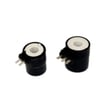
- Gas valve coils (open the gas valve during ignition)
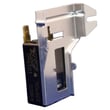
- Radiant/flame sensor (confirms burner flame/heat)
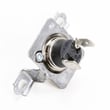
- Cycling thermostat (regulates drum temperature)
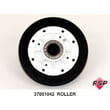
- Drum support and sealing components (reduce noise and air leaks)
If your Amana gas dryer is not heating, these Whirlpool-style parts are often involved:
Quick brand relationship overview
| Brand on the dryer | Who owns/makes it | Why it matters |
|---|---|---|
| Amana | Whirlpool Corporation | Parts, wiring layouts, and burner systems often match Whirlpool-built platforms |
| Maytag | Whirlpool Corporation | Many shared design families and service approaches |
| KitchenAid | Whirlpool Corporation | Shared manufacturing and engineering resources |
Helpful next steps if you are troubleshooting a gas Amana dryer
- Confirm the dryer is getting gas (gas shutoff valve fully open).
- Clean the lint screen and check airflow; poor venting can mimic a heat failure.
- If the igniter glows but the burner will not stay lit, check the gas valve coils and radiant sensor.
- If the dryer heats briefly then stops, check the cycling thermostat and vent restriction.
- Use our step-by-step guide: gas dryer wont heat troubleshooting video.
Why it matters
Knowing Whirlpool makes Amana gas dryers helps you troubleshoot faster and choose compatible replacement parts for the burner, thermostat, and drum support systems used on Whirlpool-built platforms.
Last updated: February 2026
Why is my Amana dryer getting hot but not drying clothes?
If your Amana dryer model LE8517W2-PLE8517W2 is getting hot but clothes stay damp, the dryer is usually not moving enough air through the drum. Start with the lint screen and venting; then check for a weak blower, crushed ducting, or a cycling thermostat issue that shortens heat time.
Quick checks that fix most “heats but won’t dry” problems
- Clean the lint screen with hot water and a soft brush (fabric softener residue can block airflow).
- Confirm strong airflow at the outside vent hood while the dryer runs.
- Inspect the entire vent run for kinks, crushed flex vent, lint buildup, or a stuck vent flap.
- Keep vent length as short and straight as possible; long runs slow drying.
- Avoid overloading; heavy loads need more airflow and tumbling space.
Airflow and heat system parts to inspect
Even when the heater works, these issues keep moisture from leaving the drum:
| What you notice | Most likely cause | What to check next |
|---|---|---|
| Dryer is hot, clothes still damp, cycle seems normal | Restricted venting | Vent hose, wall duct, outside hood |
| Dryer is hot, drying is very slow, drum sounds “whooshy” or weak | Blower/duct problem | Internal ducting and blower housing; consider the duct D510705P if yours is damaged |
| Heat seems to cycle off too soon | Temperature control issue | Cycling thermostat and related wiring; consider the thermostat WPW10116735 if it fails testing |
If this is a gas dryer: common “heat starts then fades” cause
On gas models, the burner can ignite at first and then stop re-igniting as the dryer runs. A common cause is weak gas valve coils. If you see the flame drop out and not come back, replacing the coil 279834 is a typical fix.
Why it matters
Drying performance depends on airflow more than temperature. Poor venting traps humid air in the drum, which makes clothes stay wet, increases run time, and can overheat components like thermostats.
For step-by-step diagnostics, use our dryer takes a long time to dry guide.
Last updated: February 2026
Why is my Amana dryer leaking water from the bottom?
Water leaking from the bottom of your Amana dryer model LE8517W2-PLE8517W2 is almost always condensation or a venting issue, not a water supply leak. Focus on airflow first; restricted exhaust traps humid air, which condenses and drips down into the cabinet base.
Most common causes to check
- Lint buildup in the lint screen housing, blower area, or exhaust outlet
- Crushed, kinked, or disconnected vent behind the dryer
- Long vent run or too many elbows reducing airflow
- Cold metal ducting causing heavy condensation (especially in cool spaces)
- Outside vent hood stuck closed or clogged with lint
Quick troubleshooting steps
- Unplug the dryer; let it cool.
- Pull the dryer forward and inspect the vent connection for gaps and kinks.
- Run the dryer for 2 to 3 minutes with the vent disconnected; airflow at the outlet should be strong.
- Clean the full vent run to the outside; confirm the exterior flap opens freely.
- If the laundry room is humid, improve ventilation and avoid overloading (overloads create more moisture).
For a step-by-step airflow and vent restriction check, we follow the same process in dryer takes a long time to dry.
Where the water appears and what it points to
| Where you see water | Most likely cause | What to do first |
|---|---|---|
| Back/bottom near vent outlet | Loose vent, crushed vent, or duct condensation | Reseat vent, replace crushed flex, shorten run |
| Front/bottom under door area | Poor airflow causing internal condensation | Clean lint path and venting |
| Under center of cabinet | Condensation dripping inside from restricted exhaust | Clean venting, check blower outlet |
Parts that can contribute (when heat or airflow is abnormal)
If the dryer also has weak heat or inconsistent cycling, these model-compatible parts are commonly involved:
- Thermostat WPW10116735 (temperature cycling control)
- Sensor WP338906 (radiant sensor used in many gas heat systems)
- Coil 279834 (gas valve coil kit used in many gas dryers)
Why it matters
A bottom leak is a strong sign of restricted venting. Fixing airflow improves dry times, reduces overheating stress on thermostats and sensors, and helps prevent moisture damage around the dryer.
Last updated: February 2026





