

How to identify a Kenmore washer model?
Your Kenmore washer model number is printed on the appliance’s model and serial tag; for Kenmore washers it often starts with 110 (like 11028892791). On most top-load Kenmore washers, we find it under the lid near the tub opening or on the rim of the cabinet.
Where to look on a Kenmore washer
Check these common locations in this order:
- Under the lid, around the tub opening (top-load models)
- On the back panel near the power cord entry
- Along the cabinet frame near the control console
- Inside the lid area on a sticker or metal plate
- On the lower front cabinet edge (less common)
What the model number looks like (and what to write down)
For accurate parts matching, copy the model number exactly as shown.
- Include every digit (and any letters, if present)
- Keep the full length (often 10 to 12+ characters)
- Avoid using only the “110” prefix; the remaining digits matter
- Record the serial number too; it helps confirm production variations
| What you see on the tag | What it means | Use it for |
|---|---|---|
| Model number (example: 11028892791) | Exact washer identity | Finding correct parts and diagrams |
| Serial number | Production code/date info | Verifying compatible revisions |
| Type/voltage (if listed) | Electrical rating | Installation and troubleshooting |
Why it matters
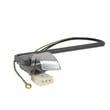
Kenmore model numbers can look similar, but small differences change which parts fit. Using the exact model number helps us match the right items the first time, such as a washer lid switch WP3949238 or washer drain pump WP3363394.
Last updated: February 2026
Is it worth repairing a Kenmore washing machine?
Yes; repairing a Kenmore washer is worth it when the fix restores reliable wash and spin for less than about half the cost of a comparable new washer, especially for proven models like Kenmore 11028892791 where common failures are straightforward part replacements.
Quick decision checklist
- The washer fills, agitates, drains, and spins after the repair (not just “runs”).
- The problem matches a common wear item (lid switch, drain pump, motor coupling, clutch).
- The tub and cabinet are solid (no severe rust-through or major structural damage).
- You are not stacking multiple major repairs at once (for example: gear case plus motor plus basket).
- The repair cost is predictable (part plus 1 to 2 hours labor for many top-load fixes).
Common repairs that are usually worth it on model 11028892791
These are frequent, high-impact fixes that often bring the washer back to normal operation:
- No spin or intermittent operation: replace the washer lid switch WP3949238.
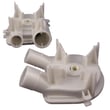
- Won’t drain or leaves water behind: replace the washer drain pump WP3363394.
- Agitates poorly or “ratcheting” in the agitator: replace the agitator dog 80040 (often paired with an agitator cam service).
- Loud spin or weak spin: inspect the clutch and drive block; replace as needed.
Cost-to-value comparison
| Situation | Typical outcome | Repair value |
|---|---|---|
| Single failed wear part (switch, pump, coupling) | Restores normal cycle | High |
| Multiple drive-train parts needed (clutch + gear case) | Can restore performance but adds cost | Medium |
| Major tub/basket damage or repeated leaks | Risk of more failures | Low |
Why it matters
A washer that cannot spin or drain turns into longer dry times, higher utility use, and repeat loads. Fixing the root cause (often a switch, pump, or coupling) prevents secondary issues like odor, out-of-balance loads, and motor strain.
What we recommend before you decide
- Write down the exact symptom (won’t spin, won’t drain, agitates weakly, leaks).
- Check for simple causes first: lid closing firmly, drain hose not kinked, load not overloaded.
- Price the likely part and compare it to replacement cost; if the repair is under about 50%, repair it.
Last updated: February 2026
What is the average lifespan of a Kenmore washer?
A Kenmore washer typically lasts 10 to 15 years. For your Kenmore 11028892791 washer, reaching the high end of that range usually comes down to load size, good drainage, and fixing small wear items early (before they strain the drive system).
Typical lifespan and what affects it
Most washers land in the same general window, but these factors move the needle the most:
- Overloading (stresses the motor, clutch, and gear case)
- Out-of-balance spinning (wears suspension and drive components faster)
- Slow or incomplete draining (can lead to repeated strain and odors)
- Hard water and detergent buildup (reduces cleaning performance and can cause residue)
- Delayed repairs (a small slip or leak can become a major failure)
Common wear items that can shorten washer life
On many Kenmore top-load designs like model 11028892791, these parts are frequent culprits when performance drops:
- Washer lid switch WP3949238 (won’t spin or drain if the lid safety circuit fails)
- Washer drain pump WP3363394 (slow drain, no drain, or noisy draining)
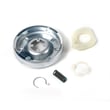
- Coupling 285753A (motor runs but washer won’t agitate or spin)
- Clutch 285785 (weak spin, burning smell, or poor basket engagement)
- Agitator dog 80040 (agitator slips or only agitates in one direction)
Quick “life-extending” checklist
Use these habits to keep the washer running longer:
- Keep loads evenly distributed; wash bulky items with a few towels for balance.
- Use the right amount of detergent; too much causes buildup and extra rinsing strain.
- If you hear grinding, squealing, or repeated banging, stop and correct the cause.
- Check hoses and the standpipe for good flow so the pump is not fighting restrictions.
- Address “no spin” or “no drain” symptoms early; they often start as intermittent issues.
Symptom-to-part guide (fast reference)
| Symptom | Most likely area | Example part to check |
|---|---|---|
| Won’t spin/drain | Lid safety circuit | Washer lid switch WP3949238 |
| Won’t drain or drains slowly | Pump or drain path | Washer drain pump WP3363394 |
| Motor runs but no agitation/spin | Drive coupling | Coupling 285753A |
| Weak spin or slipping | Clutch/drive | Clutch 285785 |
Why it matters
A washer can “still run” while quietly wearing out the drive and suspension. Catching early signs (slipping agitation, slow drain, weak spin) helps prevent bigger repairs like a gear case replacement and keeps your Kenmore 11028892791 closer to that 10 to 15 year lifespan.
Last updated: February 2026
What is the most expensive part to replace on a washing machine?
On a Kenmore washer like model 11028892791, the most expensive repairs are typically major drive or tub components, or the electronic timer/control; these parts can cost hundreds of dollars and often come with higher labor because the machine must be heavily disassembled.
Most expensive parts (typical on washers)
These are the repairs that most often drive the highest total cost (part plus labor):
- Outer tub or tub-related assemblies (leaks, bearing wear, severe corrosion)
- Transmission/gear case (agitation or spin failures, loud grinding)
- Drive motor (won’t agitate or spin, overheats, hums)
- Timer/control (won’t advance cycles, intermittent operation)
Examples from Kenmore 11028892791 parts
| Component type | Example part for this model | Why it gets expensive |
|---|---|---|
| Gear case / transmission | Gear case 3360629 | High part cost; labor-intensive teardown |
| Tub assembly component | Outer tub 3361596 | Large assembly; leak-related disassembly |
| Drive motor | Washer drive motor WP3352287 | Higher part cost; may require cabinet and pump removal |
| Timer/control | Washer timer WP3951769 | Costly component; diagnosis time adds labor |
Quick way to decide: repair vs. replace
We use these practical checkpoints before investing in a high-dollar part:
- If the washer has multiple symptoms (leak plus no-spin), total repair cost climbs fast.
- If the failure is in a major assembly (tub or gear case), labor is usually significant.
- If the issue is a common wear item (coupling, lid switch, pump), repair is usually a better value.
- If you hear grinding during spin, suspect gear case or tub/bearing related components.
- If it won’t drain, check the pump and drain path first.
Why it matters
The “most expensive part” is not always the best first guess. Accurate diagnosis prevents replacing a high-cost component when a simpler part (like a coupling, lid switch, or drain pump) is actually causing the symptom.
Last updated: February 2026