Owner’s manual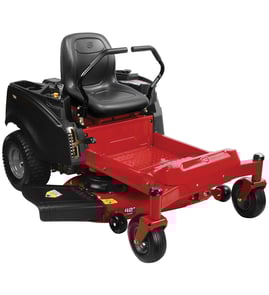



What is the difference between a front engine and rear engine riding mower?
A front-engine riding mower puts the engine up front, which typically improves traction and makes it better suited for towing light attachments. A rear-engine riding mower places the engine behind the operator; it is usually best for basic mowing and tight storage, not heavy hauling. For operating and safety guidance on your Husqvarna MZ6128-966502301, use the owner's manual.
Quick comparison
| Feature | Front-engine riding mower | Rear-engine riding mower |
|---|---|---|
| Engine location | In front of the operator | Behind the operator |
| Typical best use | Mowing plus light towing | Primarily mowing |
| Traction and balance | Often better for pulling | Often less ideal for pulling |
| Maneuverability | Good | Good; often compact |
How this affects real-world use
- Towing and hauling: Front-engine designs generally handle tow-behind carts and light yard tools more confidently.
- Mowing performance: Both can cut well; rear-engine models are commonly chosen for straightforward mowing.
- Handling: Rear-engine units can feel different because more weight sits behind you.
- Storage: Rear-engine riders are often shorter overall, which can help in smaller sheds.
- Terrain: Regardless of engine placement, follow safe slope limits and mowing direction guidance in your manual.
Why it matters
Choosing the right layout helps you match the mower to your yard work. If you plan to pull accessories regularly, a front-engine rider is typically the better fit. If your priority is routine mowing and compact storage, a rear-engine rider is often the practical choice.
Last updated: February 2026
Is 500 hours a lot for a Husqvarna riding mower?
For a Husqvarna MZ6128-966502301 zero-turn riding lawn mower, 500 hours is not “a lot”; it is a normal mid-life milestone. It is also a major maintenance checkpoint in the service schedule, so condition and service history matter more than the hour number alone.
What 500 hours means on this model
The owner's manual calls out 500-hour items such as hydraulic oil service and other inspections. If those services are up to date, 500 hours typically indicates a mower that is well into regular use but still very viable.
At 500 hours, we focus on:
- Hydraulic system service (oil change interval is listed at 500 hours)
- Belt condition and pulley wear
- Deck level and blade drive components
- Steering control feel and tracking
- Engine maintenance items (oil, filters, plugs) per schedule
Quick checklist before you judge the hours
Use this as a practical “buy/keep” checklist for a 500-hour mower:
- Starts easily hot and cold; no excessive smoke
- Hydro drive pulls evenly left to right; no surging
- Deck engages smoothly; no abnormal vibration
- Belts are not glazed, cracked, or slipping
- No hydraulic oil seepage around pumps, hoses, or transaxles
- Hour meter works consistently (this model includes an hour meter)
Typical hour ranges (helpful benchmark)
Hours are only one piece of the story, but these ranges help set expectations.
| Usage level | Typical hours | What it usually implies |
|---|---|---|
| Light residential | 0 to 300 | Mostly routine maintenance |
| Moderate residential | 300 to 700 | Wear items start to add up |
| Heavy use | 700 to 1,500 | More frequent repairs and rebuild-type work |
Why it matters
On the MZ6128-966502301, the 500-hour mark lines up with scheduled maintenance that protects expensive drive components (hydraulic pumps and transaxles). Staying on schedule is the difference between “500 hours and strong” and “500 hours and worn out.”
Last updated: February 2026
Is a Husqvarna MZ6128-966502301 a commercial mower?
Yes. The Husqvarna MZ6128-966502301 is built as a high-capacity zero-turn riding lawn mower for mowing large areas efficiently, and it fits light commercial use (as well as demanding residential use) when it’s maintained and operated per the owner's manual.
What “commercial” means for this mower
We treat “commercial” as a mix of durability, deck construction, productivity, and serviceability. For the MZ6128-966502301, the operator manual’s technical data points to a heavy-duty, high-output design.
Key indicators:
- 61-inch cutting width with a 3-blade deck
- 11-gauge fabricated deck construction
- Hydrostatic transmission controlled by steering levers
- Productivity listed at about 4 acres per hour
- Listed weight around 770 lb (varies by configuration)
Quick spec snapshot (MZ6128-966502301)
| Item | What to expect |
|---|---|
| Cutting width | 61 in |
| Cutting height range | About 1 to 4-1/2 in |
| Deck type | 11-gauge fabricated |
| Blades | 3 |
| Productivity | About 4 acres/hour |
How to decide if it’s right for your work
Use these practical guidelines to match the mower to your workload:
- Light commercial: weekly routes, larger properties, and consistent seasonal use
- Not ideal for heavy commercial fleets: daily, all-day mowing without downtime or scheduled service intervals
- Best results: keep blades sharp, deck clean, and follow the service journal intervals in the manual
Why it matters
Choosing the right duty class protects the hydro drive system, deck spindles, and engine from premature wear. A mower that matches your acreage and mowing frequency cuts cleaner, runs cooler, and lasts longer.
Last updated: February 2026
How much oil for Husqvarna MZ6128-966502301?
For the Husqvarna MZ6128-966502301 zero-turn riding lawn mower, the engine uses a pressure lubrication system with an oil filter; the exact oil capacity depends on the specific Briggs & Stratton engine configuration and is listed in the owner's manual.
How to find the correct oil capacity (fast)
Use these steps so you fill to the correct level without overfilling:
- Park on a level surface and let the engine cool.
- Pull the dipstick, wipe it clean, reinsert fully, then check the level.
- Add oil in small amounts (a few ounces at a time), then recheck.
- Stop when the oil reaches the full mark on the dipstick (not above it).
- After an oil and filter change, run the engine briefly, shut it off, wait 1 to 2 minutes, then recheck and top off.
Oil type and fuel notes for this model
The manual’s technical data confirms this mower uses a Briggs & Stratton 28 HP engine with pressure lubrication and an oil filter. Use the oil viscosity and service interval specified in the owner's manual for your temperature range.
| What you’re doing | What changes | What stays the same |
|---|---|---|
| Checking oil level | No parts removed | Dipstick reading is the target |
| Oil change only | Drains old oil | Final level is still set by dipstick |
| Oil + filter change | Filter holds some oil | Final level is still set by dipstick |
Why it matters
Correct oil level protects the hydrostatic drive and engine by keeping lubrication stable. Too little oil accelerates wear; too much oil can cause foaming, smoking, and leaks.
Last updated: February 2026