Owner’s manual


What is the lifespan of a Kenmore dryer?
A Kenmore dryer like model 11062952100 typically lasts 10 to 13 years. With consistent airflow maintenance (lint screen and vent cleaning) and avoiding chronic overheating, it’s common for this style of electric dryer to reach 15 to 20 years of service.
- Airflow and venting: restricted venting overheats the heater and safety fuses.
- Load habits: frequent overloading strains the drive motor and drum support system.
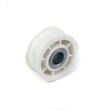
- Wear parts: rollers, idler pulley, and drum seals wear gradually and get noisy.
- Heat system condition: heating element and temperature sensors cycle constantly.
- Cleaning schedule: lint buildup inside the cabinet shortens component life.
Use the 11062952100 owner's manual for the exact care steps and safety guidance.
| Task | How often | Why it matters |
|---|---|---|
| Clean lint screen | Every load | Keeps airflow strong and drying times normal |
| Clean vent duct to the hood | Every 3 to 6 months | Prevents overheating and long dry times |
| Remove lint from inside the dryer (qualified service) | About every 2 years | Reduces heat stress on wiring and components |
| Check for unusual thumping after non-use | First few minutes of a cycle | Roller flat spots can thump, then improve |
If your dryer is noisy, slow to dry, or shutting down on heat, these model-compatible parts are common fixes:
- Dryer thermal fuse WP3390719 (opens if the dryer overheats)
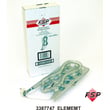
- Dryer heating element WP3387747 (restores heat when the element fails)
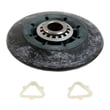
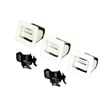
- Support kit WPW10314173 (helps address rumbling from worn drum support rollers)
A dryer that takes longer to dry is not just inconvenient; it usually indicates restricted airflow or a heat-control issue. Fixing airflow early helps protect high-cost components like the drive motor, heater circuit, and wiring.
Last updated: January 2026
How do I tell if my dryer heating element is bad?
If your Kenmore dryer model 11062952100 runs but clothes stay damp and you do not feel heat during a timed, high-heat cycle, the heating circuit needs testing. A failed heating element often shows no continuity (open circuit) when checked with a multimeter.
- Confirm you are using a heat cycle (not Air/Fluff).
- Run the dryer for 5 minutes, then open the door and feel for heat (a basic heat check described in the 11062952100 owner's manual).
- Make sure the vent is not crushed or kinked; restricted airflow can mimic a bad element.
- Verify the dryer is plugged into a grounded outlet and the breaker is not tripped.
- If the dryer is new to you or recently serviced, a brief “first heat” odor can be normal.
- Unplug the dryer (electric shock hazard).
- Access the heater terminals (panel access varies; follow the 11062952100 owner's manual).
- Set a multimeter to ohms/continuity.
- Test across the element terminals.
| Meter result | What it usually indicates | What to do next |
|---|---|---|
| Continuity present | Element is not open | Check airflow and safety devices |
| No continuity (open/infinite) | Element coil is broken | Replace the element |
| Visible burn/break in coil | Element is damaged | Replace the element |
If you need the replacement part for this model, use the dryer heating element WP3387747.
A dryer can tumble with no heat even when the element is good. Common heat-stopping parts include:
- Dryer thermal fuse WP3390719 (opens if the dryer overheats)
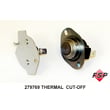
- Thermal cut-off components (often fail with severe vent restriction)
- Temperature sensor issues such as a thermistor
Running with poor airflow or a tripped safety device can overheat the heater housing and repeatedly blow fuses. Fixing venting and confirming the heating circuit prevents repeat failures and restores normal dry times.
Last updated: January 2026
How to hard reset a Kenmore dryer?
To hard reset your Kenmore dryer model 11062952100, unplug it (or switch off the breaker) for 1 to 5 minutes, then restore power and try a timed dry cycle. If it still will not run or heat, the problem is usually power, airflow, or a safety device, not the timer reset.
- Turn the Cycle Selector (timer) to OFF.
- Unplug the dryer or turn both dryer breakers off.
- Wait 1 to 5 minutes.
- Restore power.
- Close the door firmly.
- Select a Timed Dry cycle and press PUSH TO START.
- If you stopped the dryer by opening the door, close it and press PUSH TO START again.
Most “needs a reset” complaints are caused by one of these conditions:
- House power issue (tripped breaker, blown fuse, loose cord connection)
- Door not fully closed or start button not pressed firmly
- Restricted venting causing overheating and shutdown
- Failed safety device such as a thermal fuse
- Confirm the dryer has full power at the outlet and the breakers are fully reset.
- Clean the lint screen and verify strong airflow at the outside vent hood.
- Make sure the timer is set to an active cycle (not OFF) and the door is latched.
| Symptom | Most common checks | Parts often involved |
|---|---|---|
| Won’t start | Power, door closed, timer not OFF | Door switch, timer, motor |
| Runs but no heat | Airflow, cycle selection | Heating circuit parts |
| Stops mid-cycle | Vent restriction, overheating | Thermal protection parts |
If you suspect overheating or a sudden no-start condition after a hot cycle, check the dryer thermal fuse WP3390719 and correct any vent restriction before running the dryer again.
A hard reset only clears a temporary control or timer state. If airflow is restricted or a thermal safety device opens, the dryer can keep failing until the venting and the root cause are fixed. For model-specific operating steps (timer settings, PUSH TO START behavior, and troubleshooting), use the 11062952100 owner's manual.
Last updated: January 2026
Is it worth replacing the heating element in a dryer?
Yes, it’s usually worth replacing the heating element in your Kenmore dryer model 11062952100 when the dryer still runs but won’t heat, because the repair cost is typically far less than replacing the whole dryer and it often restores normal drying performance.
Replacing the heating element is a good call when the rest of the dryer is in solid shape and the no-heat problem is isolated to the heat circuit.
- The drum tumbles normally but clothes stay cold or damp
- You have good airflow at the outside vent hood (not a vent restriction)
- The cycle settings are correct (not set to Air Dry or Air Fluff)
- The dryer is otherwise quiet and stable (no major drum or motor issues)
- You want to extend the life of the appliance for a relatively modest parts cost
Before buying a heating element, we recommend ruling out the most common non-part failures noted in the troubleshooting guidance.
- Clean the lint screen and confirm strong exhaust airflow
- Check for a crushed or kinked vent and correct it
- Verify the dryer is not set to an unheated cycle
- Confirm the house fuses or breaker are OK (many electric dryers can run with one leg of power missing and still produce no heat)
- If the dryer overheated previously, inspect the safety cutoffs
If the element failed due to overheating or restricted airflow, replacing related safety parts at the same time helps prevent repeat failures.
| Symptom | Common related part to check | Example part for this model |
|---|---|---|
| Runs but no heat | Thermal fuse | Dryer thermal fuse WP3390719 |
| Overheats or cycles heat oddly | Thermistor | Dryer thermistor WP8577274 |
| Element terminals look burnt | Wiring/terminal damage | Dryer heating element wire kit 279457 |
| No heat and poor airflow | Venting/duct restriction | (clean/repair venting) |
A failed heating element is often a straightforward fix, but airflow problems can cause overheating that trips safety devices or damages wiring. Addressing venting and safety cutoffs protects the new element and improves drying efficiency.
For model-specific cycle guidance, operating tips, and troubleshooting steps, use the 11062952100 owner’s manual.
Last updated: January 2026