Owner’s manual
 Error Codes


How many cubic feet is my Kenmore Elite washer?
Your Kenmore Elite washer model 11024962301 is a top-load, agitator-style washer marketed as King Size capacity, which typically falls in the about 3.5 to 4.0 cubic feet range for this design. For the exact capacity specification for your unit, check the 11024962301 owner's manual.
We recommend using the model-specific spec section in the manual because capacity can vary by basket design and model series.
- Look for “capacity”, “basket volume”, or “King Size capacity” in the specifications pages
- Check the model/serial tag under the lid to confirm you are matching the correct model number
- If the manual lists multiple stock numbers, match your washer’s stock/model identifiers
- If you are comparing to a new washer, compare tub capacity (cu. ft.) rather than just “large” or “extra large” labels
Most Kenmore (Whirlpool-built) top-load washers with a traditional agitator and porcelain basket land in a narrower capacity band than modern high-efficiency impeller models.
| Washer type | Typical capacity range | Notes |
|---|---|---|
| Traditional top-load with agitator (like 11024962301) | 3.5 to 4.0 cu. ft. | Often labeled “King Size” or similar |
| High-efficiency top-load with impeller | 4.5 to 5.5 cu. ft. | No center agitator; larger usable volume |
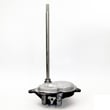
Capacity affects how much laundry you can wash per load, how well items circulate around the agitator, and how likely you are to see out-of-balance issues. Knowing the correct cubic feet also helps when choosing replacement parts that relate to the basket and drive system, such as the basket W10389328.
Last updated: February 2026
How to force a Kenmore Elite washer to drain?
To force-drain a Kenmore Elite washer model 11024962301, we use the drain and spin portion of the cycle when possible; if the washer will not run, we manually drain the tub and then clear the most common drain restrictions (hose, pump, lid switch) before restarting. See the 11024962301 owner's manual for the exact control sequence.
- Try a drain/spin step first: Set the timer (cycle selector) to a spin or drain/spin position, then pull the knob (or start the cycle) and listen for the drain pump.
- If it will not run: Unplug the washer and bail water into a bucket, then use a wet/dry vacuum on the standpipe or drain hose to pull water out.
- If it drains slowly: Straighten the drain hose and clear the standpipe; then retry drain/spin.
Most no-drain complaints on this style of Kenmore top-load washer come down to a blockage, a failed pump, or a safety switch issue.
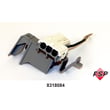
- Confirm the lid is fully closed; a bad lid switch can stop drain/spin. Consider the washer lid switch assembly WP8318084.
- Check the drain hose for kinks, pinches, or a clog at the standpipe.
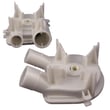
- Listen for the pump: humming with no water movement often points to a jammed or failing pump. Consider the washer drain pump WP3363394.
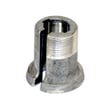
- If the washer agitates but will not spin and drain, inspect the drive system; a worn coupling can prevent proper operation. Consider the washer motor coupling 285753A.
| What you notice | Most likely cause | What we do next |
|---|---|---|
| Pump runs, water barely moves | Clog or restricted hose/standpipe | Clear hose and standpipe, retry drain/spin |
| Loud hum, no draining | Pump jam or failed pump | Check for obstruction, replace pump if needed |
| No sound in spin/drain | Lid switch or timer/control issue | Verify lid switch operation, then control diagnostics |
A washer that cannot drain will usually not spin out water, which leaves clothes soaking wet and can strain the drain pump and drive components. Restoring proper draining protects the basket, motor, and clutch system.
Last updated: February 2026
How to reset Kenmore washer model 11024962301 top loader?
To reset your Kenmore Elite washer model 11024962301, unplug it for 5 minutes to clear the control, then plug it back in and select a fresh cycle. This reset fixes many “won’t start,” stuck-cycle, and control glitch symptoms.
- Turn the cycle selector to Off.
- Unplug the washer from the wall outlet.
- Wait 5 full minutes (this lets the control fully discharge).
- Plug the washer back in.
- Lift and close the lid once, then choose a cycle and press start (if your model has a start control).
These checks solve the most common “no start” and “stops mid-cycle” complaints on top-load Kenmore 110-style washers.
- Confirm the outlet has power (try a lamp or phone charger).
- Make sure the lid closes firmly; a failed lid switch can prevent agitation and spin.
- Set the timer knob firmly into a cycle (some mechanical timers need a positive click).
- Check for a drain problem; if the tub is full of water, the washer may not advance to spin.
- Reduce the load and redistribute items if the basket is off-balance.
| Symptom | Common cause | Example part for 11024962301 |
|---|---|---|
| No agitation/spin with lid closed | Lid switch not closing electrically | Washer lid switch assembly WP8318084 |
| Hums, won’t drain, won’t spin | Drain pump jammed or failed | Washer drain pump WP3363394 |
| Agitates poorly or slips | Drive coupling worn | Washer motor coupling 285753A |
A proper power reset clears a confused control state and helps you avoid unnecessary part replacement. If the reset does not restore operation, the next most productive step is checking lid-switch and drain function because both can stop the washer from advancing.
For cycle and control details specific to this washer, use the 11024962301 owner’s manual.
Last updated: February 2026
What does OE mean in a Kenmore Elite washer?
On a Kenmore Elite washer, OE means the washer detected a drain problem; the tub is not emptying fast enough, so the cycle may stop or won’t advance. For model 11024962301, start with the drain hose and pump area, then confirm normal operation steps in the 11024962301 owner's manual.
- Cancel the cycle and unplug the washer for 1 minute, then retry Drain/Spin.
- Check the standpipe or laundry sink for a slow household drain (water backing up can trigger OE).
- Inspect the drain hose for kinks, crushing, or an airtight seal in the standpipe (it needs an air gap).
- Look for a clog at the pump inlet (coins, socks, lint) and clear it.
- If the washer won’t drain and you hear a hum, the pump may be jammed; the washer drain pump WP3363394 is the common replacement.
| Symptom | Most likely cause | Related part for 11024962301 |
|---|---|---|
| Hums but won’t drain | Pump impeller jammed or failed | Washer drain pump WP3363394 |
| Won’t drain and won’t spin | Lid switch not sensing closed lid | Washer lid switch assembly WP8318084 |
| Drains slowly, intermittent | Hose restriction or internal hose issue | Washer inner drain hose WPW10358149 |
A true OE drain error leaves water in the tub, which prevents proper spin and can cause wet loads, longer cycle times, and repeated stopping. Fixing the drain restriction early also helps protect the motor coupling and drive system from extra strain.
- Use the right amount of HE detergent; oversudsing can slow draining.
- Empty pockets to reduce debris reaching the pump.
- Avoid overloading; heavy loads can trap items against the tub outlet.
- Periodically check the drain hose routing behind the washer.
Last updated: February 2026
What is the average lifespan of a Kenmore washer?
A Kenmore washer typically lasts 10 to 15 years. For the Kenmore Elite 11024962301, consistent care (correct load size, proper detergent use, and routine cleaning) helps you reach the upper end of that range; heavy overloading and chronic out-of-balance use shorten it.
| Washer type | Typical lifespan | What most often ends it early |
|---|---|---|
| Top-load, direct-drive style (common Kenmore 110 models) | 10 to 15 years | Drain issues, drive wear, lid switch problems |
| Front-load washer | 10 to 14 years | Door boot leaks, bearing wear, drain pump clogs |
- Keep loads balanced; avoid washing single heavy items by themselves.
- Use the correct water level and cycle settings for the fabric and load size.
- Do not overload; strain on the drive system and suspension adds up.
- Check pockets and reduce lint and debris that can clog draining.
- Address small leaks or slow draining quickly to prevent bigger failures.
These are frequent wear items on many Kenmore top-load washers; replacing them when symptoms show up can extend service life:
- Washer drain pump WP3363394: slow drain, standing water, grinding or humming during drain.
- Washer lid switch assembly WP8318084: won’t spin, won’t start, stops when lid is closed.
- Washer motor coupling 285753A: motor runs but tub does not agitate or spin, burning rubber smell.
A washer that is draining and spinning correctly runs cooler, vibrates less, and puts less stress on the gear case, basket drive, and suspension. That reduces repeat breakdowns and helps you get the full 10 to 15 years.
For model-specific operating and care guidance (cycle selection, water level, and feature use), follow the 11024962301 owner's manual.
Last updated: February 2026
What model is my Kenmore Elite washer?
Your Kenmore Elite washer’s model number is printed on the model and serial number plate. On Kenmore Elite 11024962301 top-load washers, that plate is typically located under the lid; we use that exact model number to match the correct parts, diagrams, and 11024962301 owner's manual.
Check these common label locations first (in this order):
- Under the washer lid, around the tub opening (most common for this style)
- On the back of the control panel
- On the side of the main cabinet near the bottom edge
- If you have a front-load washer instead: behind the door or on the door jamb
For Kenmore washers, the model number is usually a long number string (often 10 to 12 digits). Record these items exactly as shown on the plate:
- Model number (example: 11024962301)
- Serial number
- Any prefix/suffix characters (if present)
| What you see on the label | What it means | What to do next |
|---|---|---|
| 110.XXXXXXXXXX | Kenmore-built model family | Use the full number after 110 |
| 11024962301 | Exact model identifier | Use it to select parts and diagrams |
| Serial number only | Not enough to match parts | Keep looking for the model line |
Kenmore Elite washers can look similar across multiple model series, but parts like the lid switch, drain pump, and drive components vary by model. Using the exact model number helps us match the right replacement part the first time.
Last updated: February 2026
When was Kenmore Elite made?
Kenmore Elite is a premium Kenmore product line that has been produced across multiple years and generations, not a single “made in” year. For the Kenmore Elite washer model 11024962301, the exact production date is tied to the unit’s serial number and the model and serial tag under the lid; we use that tag to identify the manufacturing timeframe.
We date this washer by reading the model and serial number plate and matching the serial format to the manufacturer’s date code.
- Lift the lid and locate the model and serial number plate (commonly under the lid area).
- Write down the full serial number exactly as shown.
- Check the identification section in the 11024962301 owner's manual for where the tag is located and how it’s formatted.
- If the tag is worn, take a clear photo in good light and copy the characters carefully.
- Use the serial to determine the month and year the washer was built.
“Kenmore Elite” is a line name used on higher-feature Kenmore appliances. Your 11024962301 is a top-load, agitator-style washer with features like multiple water level settings, multiple wash speeds, and a porcelain basket (features vary by series). Those design families were sold over multiple years, so the serial number is the reliable way to pin down the build date.
| What you have | What it tells you | Best use |
|---|---|---|
| Model number (11024962301) | Design family and parts compatibility | Ordering parts like a lid switch or drain pump |
| Serial number | Manufacturing month and year | Dating the washer and confirming revisions |
Knowing the build date helps us match the correct revision of parts and instructions, especially for common wear items like the washer lid switch assembly WP8318084 or washer drain pump WP3363394. It also helps when troubleshooting symptoms that changed across production runs.
Last updated: February 2026