 Owner’s manual


Can you replace the springs on a dishwasher door?
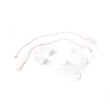
Yes. On Kenmore dishwasher model 66517579201, you can replace the door springs; they’re serviceable parts that help counterbalance the door so it opens smoothly and stays at the position you expect.
Before you start (safety and access)
We recommend following the basic safety precautions in the owner's manual and doing these prep steps first:
- Turn off power to the dishwasher at the breaker.
- Turn off the water supply valve under the sink.
- Open the door and remove dishes so the door is lighter.
- Protect your hands; door springs are under tension and can pinch.
- Use a towel or work gloves when handling the spring or cable.
How to replace dishwasher door springs (typical process)
Most Kenmore undercounter dishwashers use a spring and link or cable system on each side. The exact routing varies, but the replacement flow is consistent:
- Remove the toe panel to access the lower sides of the frame.
- Note how the spring hooks into the frame and the door hinge/link.
- Unhook the spring from the link/cable, then unhook it from the frame.
- Install the new spring in the same holes/slots as the original.
- Repeat on the other side; replace springs as a pair for even tension.
- Test the door movement; it should not slam shut or fly open.
Parts that are commonly involved
If the spring system hardware is worn, you may need more than just the spring. These parts are listed for model 66517579201:
| What it affects | What you may notice | Example part on this model |
|---|---|---|
| Door balance | Door drops fast or won’t stay open | Dishwasher door spring WP8270020 |
| Spring connection | Spring slips off or door feels uneven | Link 8194001 |
| Door hinge movement | Door binds or sits crooked | Dishwasher door hinge W11612302 |
Why it matters
A properly tensioned door protects the hinges and latch alignment, and it helps prevent damage from a door that slams or won’t stay open during loading.
Last updated: February 2026
How to hard reset a Kenmore dishwasher?
On Kenmore model 66517579201, the most reliable “hard reset” is to cancel the current cycle and let the dishwasher fully drain, then restart a new cycle. Use the control’s Cancel/Drain function and wait about 2 minutes for the drain to finish (if needed), then select your cycle and press START. See the owner's manual for the exact button names on your console.
Quick reset steps (recommended)
- Press Cancel/Drain once.
- Close the door and let the dishwasher run its drain (about 2 minutes if it needs draining).
- When the drain ends, select a new cycle and any options.
- Check that the detergent dispenser is filled correctly for the new cycle.
- Press START.
If the dishwasher is unresponsive
If the controls are frozen or the dishwasher will not start after canceling:
- Turn OFF power at the household breaker for 1 minute, then turn it back ON.
- Make sure the door is closed tightly and latched.
- Confirm the kitchen circuit breaker is not tripped.
- If the motor overloaded, it can reset itself within a few minutes.
What “Cancel/Drain” does (and why it matters)
Canceling clears the current cycle and options so you can start fresh. It also drains standing water when needed, which prevents starting a new cycle with leftover water and helps avoid poor wash results.
| Reset method | What it fixes | Typical time |
|---|---|---|
| Cancel/Drain reset | Wrong cycle selected, stuck mid-cycle, needs draining | ~2 minutes |
| Breaker power reset | Frozen controls, no response to buttons | ~1 minute |
When a reset will not solve it
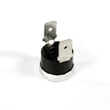
A reset will not correct mechanical issues like a door latch problem or a failed switch. If the door will not latch or the dishwasher stops when you close the door, checking the dishwasher door switch WP8269209 is a common next step.
Last updated: February 2026
Is it worth repairing a Kenmore dishwasher?
Yes, repairing a Kenmore dishwasher like model 66517579201 is usually worth it when the problem is a single failed part and the tub is in good shape; a targeted repair can restore reliable operation and avoid the cost and hassle of replacement. Use the owner's manual to confirm troubleshooting steps and safe service practices.
When repair is the better choice
Repair typically makes sense when you have one clear symptom and the dishwasher otherwise runs normally.
- The dishwasher fills and drains but cleans poorly (often a wash system or circulation issue)
- The door will not latch or the unit stops mid-cycle (door latch or switch problems)
- You see a small leak at the door or vent area (gasket or seal wear)
- The unit is in good cosmetic condition and fits your existing cabinet opening
- You can replace a common service part without major disassembly
Common repair parts for this model
| Symptom | Part that often fixes it | Example part on this model page |
|---|---|---|
| Not filling or fills slowly | Water inlet valve | Dishwasher water inlet valve WP8531669 |
| Stops when door moves or will not start | Door switch | Dishwasher door switch WP8269209 |
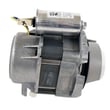
| Poor wash, weak spray | Circulation pump/motor | Motor WPW10757217 |
| Door drops open or will not stay balanced | Door spring | Dishwasher door spring WP8270020 |
When replacement is the better choice
Replacement is the smarter long-term move when the dishwasher has repeated failures or multiple major systems are involved.
- Multiple leaks (especially from the tub or inner door area)
- Repeated motor, pump, or electronic control failures
- Heavy corrosion, cracked plastic components, or chronic odor from internal damage
- Repair cost approaches the value you would get from a newer, more efficient unit
Why it matters
A dishwasher repair is most cost-effective when it addresses one root cause (for example, a failed inlet valve or door switch). Chasing symptoms with multiple parts can cost more than it saves, so we recommend using the troubleshooting section in the owner's manual before ordering.
Last updated: February 2026
What are common problems with Kenmore dishwashers?
Common problems with the Kenmore 66517579201 dishwasher include not starting, not filling, poor cleaning, not draining, leaks, and long run times. Many of these issues trace back to door-latch problems, the overfill float sticking, low water supply, detergent/label clogs, or worn components.
Most common symptoms and what usually causes them
- Won’t start or stops mid-cycle: door not fully latched, power issue, or motor overload reset
- Won’t fill: overfill protection float stuck or water shutoff valve closed
- Poor cleaning: clogged spray paths, labels/debris in the pump, low incoming water temperature, or low water pressure
- Not draining or water left in tub: cycle not complete, drain path restriction, or pump-related issue
- Detergent left in dispenser: caked/lumpy detergent or cycle interruption
- Spots/film or poor drying: low water temperature, empty rinse aid, or overloaded racks
Quick checks we recommend first (fast, no parts)
- Confirm the door closes tightly and latches; then reselect the cycle.
- Verify the dishwasher has power (breaker/fuse) and the water shutoff valve is on.
- Press the overfill protection float down and make sure it moves freely; clear anything underneath.
- Use only dishwasher detergent (no soap); excessive suds can slow wash action.
- Avoid washing bottles/cans with paper labels; loose labels can clog the pump or spray arm.
Parts that commonly solve these problems
| Symptom | Common part to check/replace | Example from this model’s parts |
|---|---|---|
| Won’t start | Door latch/switch components | Dishwasher door switch WP8269209 or latch bolt 8193882 |
| Won’t fill | Water inlet valve, float system | Dishwasher water inlet valve WP8531669 |
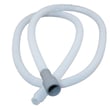
| Not draining | Drain hose restrictions/leaks | Dishwasher drain hose 8269144A |
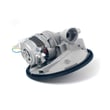
| Poor wash circulation | Circulation pump/motor | Motor WPW10757217 or dishwasher pump and motor assembly W10782773 |
Why it matters
Dishwashers depend on correct fill level, proper water temperature (about 120°F entering the dishwasher), and unobstructed spray and drain paths. A stuck float, low pressure (typically 20 to 120 psi), or label/debris clogs can quickly turn into poor cleaning, standing water, or cycle interruptions.
For model-specific operating notes, troubleshooting steps, and safety guidance (including hot vent steam during drying), use the owner's manual.
Last updated: February 2026







