

How to get KitchenAid replacement parts?
For KitchenAid dishwasher model KUDI01ILBL1, we get the right replacement part by matching the model number to the exact part listing, then confirming the part name and ID before ordering. This helps ensure fit and function for items like racks, seals, pumps, and drain hoses.
Step-by-step: order the correct part
- Find your model number on the dishwasher (typically on the tub frame near the door).
- Use the model number KUDI01ILBL1 to pull up the correct parts list.
- Identify the failed part by location and symptom (leak, no drain, poor cleaning, door not latching).
- Match the part by part name and part ID (not just a similar-looking photo).
- Order the part and keep the packaging until the repair is complete.
Common KUDI01ILBL1 parts customers replace
Here are examples of model-matched parts you can order when they fit your symptom:
| Symptom | Part to check | Example model-matched part anchor |
|---|---|---|
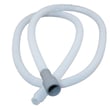
| Dishwasher won’t drain | Drain hose, pump | Dishwasher drain hose 8269144A |
| Leaking at the door | Door seal/gasket | Gasket W11196317 |
| Poor wash or grinding noise | Chopper, pump and motor | Dishwasher chopper assembly W10083957V |
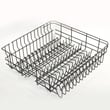
| Rack won’t roll smoothly | Rack wheels/rollers | Dishwasher dishrack wheel WP8268743 |
Why it matters
Dishwashers often have multiple versions of similar parts across close model series. Using the exact KUDI01ILBL1 parts list prevents ordering a seal, spray arm, or motor that mounts differently or uses different connectors.
Helpful DIY resources
If you are troubleshooting before ordering, these guides help narrow the part you need:
Last updated: February 2026
How to identify a KitchenAid dishwasher model?
To identify your KitchenAid dishwasher model, we look for the rating label on the inside edge of the door on model KUDI01ILBL1. That label lists the model number and serial number, which you will use to match the correct parts and diagrams.
Where to find the model and serial number
Open the dishwasher door and check these common label locations:
- Along the left inside door frame (most common)
- Along the right inside door frame
- On the top edge of the inner door
- On the tub frame just inside the opening
What to write down (and why)
Record the information exactly as shown on the label:
- Model number (example: KUDI01ILBL1)
- Serial number (helps confirm production series)
- Any engineering code or additional digits/letters near the model
Why it matters
Even small model-number differences can change which parts fit, especially for door hardware, racks, and seals.
Quick check: model number vs. serial number
| Item | What it tells us | When you need it |
|---|---|---|
| Model number | Which diagrams and parts fit your dishwasher | Always, before ordering parts |
| Serial number | Production run details that can affect part revisions | When a part has multiple versions |
If the label is hard to read
Try these steps to make the characters clearer:
- Wipe the label gently with a damp cloth and dry it
- Use a flashlight at an angle to reduce glare
- Take a close-up photo and zoom in
- Copy the model number first, then the serial number
Related help for KitchenAid dishwashers
If you are identifying the model because the dishwasher is showing a code, use our error-code references for KitchenAid units:
Last updated: February 2026
What are the commonly replaced parts in a dishwasher?
In a KitchenAid dishwasher like model KUDI01ILBL1, the most commonly replaced parts are the wash and drain components (spray arm, pump/motor, drain hose), door sealing and latching parts, and rack hardware. These parts wear from heat, detergent, vibration, and food debris over time.
Most common dishwasher parts that get replaced
- Wash system parts that clog or wear (spray arm, chopper, pump/motor)
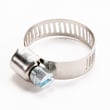
- Drain parts that kink or leak (drain hose, clamps)
- Door sealing parts that cause leaks (door seal, vent gasket)
- Door closing parts that stop the unit from running (latch/hinge)
- Rack parts that break or rust (dishrack, wheels)
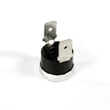
- Electrical protection parts (fuse)
Model KUDI01ILBL1 examples you can match to symptoms
| Symptom | Likely part area | Example part for this model |
|---|---|---|
| Not cleaning well, weak spray | Wash circulation | Dishwasher spray arm WPW10320510 |
| Grinding, poor wash, debris left | Chopper/filtering | Dishwasher chopper assembly W10083957V |
| Not draining, water left in tub | Drain path | Dishwasher drain hose 8269144A |
| Leaking at the door | Door sealing | Gasket W11196317 |
| Dead, no response | Power protection | Fuse 8193762 |
| Rack won’t roll smoothly | Rack hardware | Dishwasher dishrack wheel WP8268743 |
Quick checks before you buy a part
- Clean the sump area and remove any broken glass or labels.
- Spin the spray arm by hand; it should turn freely and not wobble.
- Inspect the drain hose routing for kinks and a proper high loop.
- Look for tears, flattening, or gaps along the door seal.
- Check rack wheels and rails for cracks and missing stops.
Why it matters
Replacing the right part restores wash pressure, prevents leaks, and protects the motor and control components from water damage. On KUDI01ILBL1, wash performance issues often trace back to the spray arm or chopper, while leaks commonly trace to door sealing and vent gaskets.
For troubleshooting by fault pattern, we use the KitchenAid he dishwasher error codes guide.
Last updated: February 2026
What is the average lifespan of a KitchenAid dishwasher?
A KitchenAid dishwasher like model KUDI01ILBL1 typically lasts 10 to 14 years. Lifespan depends most on how often it runs, water quality, and whether key wear items (seals, drain hose, pump components) are kept in good condition.
What affects lifespan the most
- Hard water and scale buildup can shorten pump, motor, and spray performance.
- Overloading can strain racks, wheels, and wash circulation.
- Small leaks (door seal, vent gasket) can lead to corrosion and electrical issues.
- Poor draining can overwork the pump and leave standing water.
- Skipped maintenance (cleaning, checking spray arms) reduces cleaning and increases wear.
Maintenance that helps you reach the high end of the range
- Run a dishwasher cleaner monthly (or more often with hard water).
- Keep the drain path clear and inspect the drain hose for kinks or soft spots.
- Check that spray arms spin freely and holes are not clogged.
- Address leaks early by inspecting door and vent sealing surfaces.
- Avoid blocking the detergent dispenser and avoid oversized items that stop arm rotation.
Common “wear parts” to watch (and why)
| Symptom | Likely area to inspect | Example part for this model |
|---|---|---|
| Water on floor at the front | Door sealing | Gasket W11196317 |
| Musty odor or standing water | Drain path | Dishwasher drain hose 8269144A |
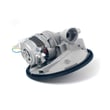
| Loud grinding, weak wash | Wash system | Dishwasher pump and motor assembly W10782773 |
| Moisture around vent area | Vent sealing | Dishwasher vent gasket WP8269259 |
Why it matters
If we keep the wash system moving water efficiently and prevent leaks, we reduce stress on the motor, wiring, and controls. That is what most often separates a 10-year dishwasher from a 14-year dishwasher.
Last updated: February 2026
What is the most common problem with a KitchenAid dishwasher?
The most common issues we see on KitchenAid dishwashers like model KUDI01ILBL1 are poor cleaning (food left on dishes) and draining problems (water left in the bottom). Both are usually caused by restricted water flow, a clogged chopper/filter area, or a partially blocked drain path.
Most common symptoms and what they usually point to
- Dishes still dirty: spray arm holes blocked, chopper area clogged, weak circulation
- Standing water after the cycle: drain hose restriction, drain path blockage, pump issue
- Leaks at the door: worn door seal or gasket not sealing evenly
- Won’t start or stops mid-cycle: power supply issue, door latch problem, control issue
- Poor drying: venting issue, rinse aid or heat/dry system problem
Quick checks we recommend first (no parts needed)
- Confirm water supply is fully on and hot water is available at the sink.
- Clean the sump area (remove debris around the chopper and intake).
- Inspect spray arm holes and clear mineral buildup.
- Check the drain hose routing for kinks and make sure the high loop/air gap is correct.
- Run a cleaning cycle with a dishwasher cleaner to reduce grease and odor buildup.
Parts that commonly solve these problems on KUDI01ILBL1
If cleaning or draining issues persist after the checks above, these model-matched parts are common fixes:
| Problem you notice | Common part to inspect/replace | What it does |
|---|---|---|
| Dirty dishes, weak wash | Dishwasher pump and motor assembly W10782773 | Drives wash water through the spray system |
| Grinding, poor cleaning | Dishwasher chopper assembly W10083957V | Chops food debris to prevent recirculation clogs |
| Not draining well | Dishwasher drain hose 8269144A | Carries drain water to the disposer/drain |
| Door leaking | Gasket W11196317 | Seals the door to prevent water escaping |
Why it matters
When wash water flow or draining is restricted, the dishwasher can leave soil on dishes, redeposit debris, and strain the pump. Catching a clog early often prevents bigger repairs and helps cycles finish normally.
Helpful DIY guides
- Dishwasher not cleaning dishes video
- Dishwasher not draining video
- KitchenAid he dishwasher error codes
Last updated: February 2026