


Which is better, .080 or .095 trimmer line?
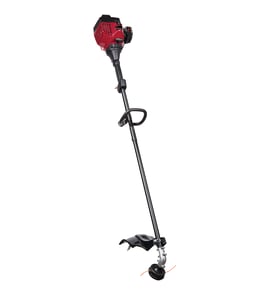
For the Craftsman 358797260 32-cc brushwacker, .095 trimmer line is better when you want maximum durability and faster cutting in thicker weeds; .080 is better for lighter trimming where you want easier line feed and less load on the engine.
Quick comparison
| Trimmer line size | Best for | Tradeoff |
|---|---|---|
| .080 inch | Light grass, edging, detail trimming | Wears faster in heavy weeds |
| .095 inch | Thick weeds, fence lines, longer runtime per spool | More drag; can bog a small engine if overworked |
How to choose the right line for your yard
- Choose .095 if you regularly hit thick weeds, woody stems, or rough edges (rocks, chain link, curbs).
- Choose .080 if you mostly trim maintained grass and want smoother handling.
- If your trimmer head feeds poorly or the engine feels strained, step down to .080.
- If you are breaking line constantly, step up to .095.
- Keep the line length reasonable; overextending line increases drag and reduces RPM.
What to check on the trimmer before switching sizes
Even though the 358797260 is a 32-cc gas trimmer, the cutting head and spool still have limits. Before you commit to thicker line, check these basics:
- The trimmer head label or spool markings for maximum line diameter
- Condition of the air filter (a restricted filter reduces power); replace with air filter 530027530 if it is dirty or damaged
- Fuel mix freshness and correct ratio (old fuel makes any line feel “too heavy”)
- Cutting head wear (worn eyelets can cause frequent line breaks)
Why it matters
Line diameter changes cutting load. A thicker line can cut tougher growth and last longer, but it also increases drag, which can reduce RPM and make a trimmer feel underpowered if the head is not designed for it.
Last updated: January 2026
Who makes the best .095 trimmer line?
For the Craftsman 358797260 32-cc brushwacker, a high-quality .095-inch trimmer line from a major outdoor power brand is the best choice because it resists breakage and feeds consistently; Oregon .095-inch “Supertwist”-style line is a common top performer for heavy weeds and edging.
What to look for in .095 trimmer line
- Twisted or serrated profile: typically cuts cleaner and stays quieter than round line.
- Durability: look for line marketed for “heavy duty” trimming and thick weeds.
- Consistent diameter: reduces jamming and uneven feed.
- Heat resistance: helps prevent fusing in the trimmer head during long runs.
- Right length per spool: larger spools reduce downtime if you trim often.
Quick comparison: common .095 line shapes
| Line shape | Best for | Tradeoffs |
|---|---|---|
| Round | General trimming, light grass | Wears faster in thick weeds |
| Twisted | Heavy weeds, cleaner cut | Can wear faster on fences/rock |
| Square/star | Aggressive cutting | Often louder, can increase vibration |
Fit and performance tips for the 358797260
- Use .095-inch only if your trimmer head is rated for it; some heads run best with .080 or .085.
- If the line won’t feed, check for a dirty or worn head and confirm you are winding in the correct direction.
- If the engine bogs down with .095, shorten the cutting swath and avoid full-throttle contact with thick brush.
Why it matters
The “best” .095 line is the one that matches your trimming conditions and your trimmer head’s capacity; the right line reduces breakage, improves cut quality, and helps your Craftsman trimmer run smoother.
If you are already servicing the trimmer, replacing a clogged filter can also improve power and throttle response; see the air filter 530027530.
Last updated: January 2026
How to replace a line trimmer head?
On the Craftsman 358797260 (32-cc brushwacker), replacing the trimmer head usually means locking the shaft, unthreading the old head (often reverse-threaded), then threading the new head on and tightening it securely. After installation, confirm the head spins true and feeds line correctly.
Before you start (safety and setup)
- Shut the engine off and let it cool.
- Disconnect the spark plug boot to prevent accidental starting.
- Wear gloves; the cutting shield and head edges can be sharp.
- Clean grass and debris from the head area so you can see the lock hole and threads.
Steps to replace the trimmer head
- Lock the drive shaft: Look for a small shaft-lock hole in the gearbox/head area; insert a screwdriver, pin, or Allen key until it seats and prevents rotation.
- Remove the old head: Turn the head to loosen it. Many gas trimmer heads use left-hand (reverse) threads, so loosening can be the opposite direction of standard bolts.
- Inspect mounting parts: Check for damaged threads, missing washers/spacers, or a bent shaft.
- Install the new head: Thread it on by hand first to avoid cross-threading, then tighten while the shaft is locked.
- Test: Reconnect the spark plug boot, start the trimmer, and verify there is no wobble and the line advances normally.
Quick direction guide (most common)
| What you are doing | Typical thread style | Typical turn direction |
|---|---|---|
| Loosening/removing the head | Left-hand (reverse) | Clockwise |
| Tightening/installing the head | Left-hand (reverse) | Counterclockwise |
Why it matters
A head installed on the wrong threads or not fully tightened can wobble, strip the shaft, and damage the gearbox. Locking the shaft and starting the threads by hand prevents most installation problems.
Parts that are commonly involved
If you find missing or damaged mounting hardware, these model-listed parts may be relevant depending on your exact head/gearbox setup:
- Spacer 530027511 (used to set spacing and alignment)
- Washer 530016240 (helps distribute clamping force)
- Shield plate 530027615 (protects the operator and helps control debris)
Last updated: January 2026