Installation guide
 Owner’s manual


What size is a Kenmore Model 11068837700 dryer?
The Kenmore dryer model 11068837700 is a standard 27-inch class dryer. The installation guide lists the cabinet dimensions as 43 1/2 in. high, 27 in. wide, and 29 1/4 in. deep (depth is the cabinet footprint; allow extra room for venting). See the installation guide for the full clearance diagram.
Dimensions and space you should plan for
These measurements help you confirm fit in a laundry room, closet, or recessed alcove.
- Width: 27 in. (68.6 cm)
- Height: 43 1/2 in. (110.5 cm)
- Depth: 29 1/4 in. (74.3 cm)
- Behind-dryer clearance (typical): plan at least 5 in. for the exhaust vent and elbow
- Floor requirement: sturdy, level floor; max slope 1 in. under the entire dryer
Clearance quick guide (typical)
The cabinet size is only part of the fit. Venting and door swing usually determine the real space needed.
| What you are measuring | What to allow | Why |
|---|---|---|
| Cabinet width | 27 in. | Confirms the dryer “class size” |
| Cabinet depth | 29 1/4 in. | Confirms footprint before venting |
| Space behind dryer | 5 in. minimum (most installs) | Makes room for vent and elbow |
| Side/rear spacing | 0 in. tested; extra recommended | Easier install and less noise transfer |
Why it matters
Correct sizing prevents crushed venting (poor airflow and long dry times), makes servicing easier, and helps the door open fully in a closet or recessed installation.
Related setup tips for this model
- Keep the dryer level so automatic sensor cycles work correctly.
- Avoid installing where temperatures drop below 45°F; cycles can run longer.
- Make sure the location supports proper exhaust routing.
- If your floor slope exceeds 1 in., use an extended feet kit as described in the installation guide.
Last updated: February 2026
How do I tell what model my Kenmore dryer is?
For Kenmore dryer model 11068837700, the model number is printed on the model and serial number label located at the top inside the dryer door well. Write down the full model number and serial number exactly as shown; we use that information to match the correct parts and instructions in the owner's manual.
Where to find the model number label
On Kenmore dryers like 11068837700, check these common spots in this order:
- Top inside the dryer door well (most common for this model)
- Along the door opening or door frame area
- Back panel or side panel (less common, but possible)
- Inside the control console area (only if the label is missing elsewhere)
What to record (and why)
Record the details below before ordering parts or troubleshooting:
- Model number (example: 11068837700)
- Serial number (unique to your dryer)
- Purchase date (if available)
- Fuel type (gas or electric, if your laundry area has both)
Why it matters
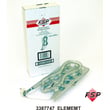
The model number ensures we show parts that actually fit your dryer, such as the correct dryer heating element WP3387747 or dryer door switch WP3406107. The serial number helps identify production details that can affect part variations.
Quick check: model number vs. serial number
| Item | What it does | Used for |
|---|---|---|
| Model number | Identifies the exact dryer design | Correct parts diagrams and fit |
| Serial number | Identifies your specific unit | Production run details and service records |
If the label is hard to read
Use these practical tips:
- Wipe the label gently with a damp cloth to remove lint and residue
- Take a clear photo and zoom in to read small characters
- Copy letters and numbers carefully (for example, 0 vs O, 1 vs I)
- If part of the label is missing, match what you can to the format and confirm using the installation guide
Last updated: February 2026
What are common problems with Kenmore dryers?
Common problems on Kenmore dryers like model 11068837700 include no heat, not starting, long dry times from poor airflow, the drum not turning, and unusual noises. Most issues trace back to venting and lint buildup, power supply problems, or normal wear items such as rollers, idlers, and heating components (see the owner's manual).
Most common symptoms and what usually causes them
- Dryer runs but no heat: tripped breaker or blown fuse (electric dryers often use 2), failed heater, or a heat safety device opening due to overheating
- Dryer will not start: door not fully closed, start switch issue, timer/control issue, or power supply problem
- Long dry times or overheating: restricted exhaust vent, crushed duct, lint buildup in ducting or housing
- Drum not turning: worn belt system parts, seized drum support rollers, or a failing motor
- Squealing, thumping, or rumbling: worn drum rollers, idler pulley wear, or small items caught at drum edges
Model 11068837700 checks we recommend first
The manual for this dryer calls out a few high-impact basics that solve a lot of “common problems” quickly.
- Clean the lint screen before each load
- Use the straightest vent path possible
- Seal vent joints with clamps (avoid duct tape and screws that protrude into the vent)
- Clean the exhaust vent at least every 2 years (more often with heavy use)
- If the dryer runs but does not heat on an electric setup, check both household fuses/breakers
Parts that commonly fix these problems
If troubleshooting points to a worn or failed component, these are common replacements for this model:
| Symptom | Common part to check/replace | Example part on this model page |
|---|---|---|
| No heat | Heating element | Dryer heating element WP3387747 |
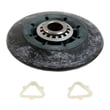
| Squealing or rumbling | Drum support roller(s) | Support WPW10314173 |
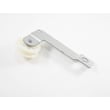
| Squealing or drum not turning smoothly | Idler pulley | Dryer idler pulley 279640 |
| Dryer will not start when door closes | Door switch | Dryer door switch WP3406107 |
| Overheating or temperature issues | Thermistor | Dryer thermistor WP8577274 |
Why it matters
Airflow and lint control are the difference between a dryer that dries fast and one that overheats, trips safety devices, or wears out drum and blower components early. Good venting also helps prevent repeated “no heat” complaints caused by overheating.
Last updated: February 2026