 Installation guide
 Owner’s manual



What is the average lifespan of a GE dishwasher?
GE dishwashers, including model GDT225SSL0SS, typically last 10 to 12 years with normal household use and basic maintenance. Consistent cleaning, correct detergent use, and fixing small leaks or drain issues early can push service life closer to the high end.
What affects lifespan the most
- Water quality (hard water speeds mineral buildup on spray arms and filters)
- How often you run it (multiple cycles daily adds wear to the pump and controls)
- Filter and spray arm maintenance (clogs reduce cleaning and strain the wash system)
- Proper installation (leveling, drain routing, and secure mounting reduce leaks and vibration)
- Using the right detergent and rinse aid (prevents excess suds and filming)
For model-specific care steps and cleaning intervals, follow the GDT225SSL0SS owner’s manual.
Simple maintenance that helps you reach 10 to 12 years
- Clean the filter assembly regularly (monthly is a solid baseline for most homes)
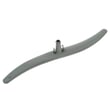
- Keep spray arm jets clear and make sure arms rotate freely
- Run hot water at the sink until it is hot before starting a cycle (helps wash performance)
- Avoid overloading; keep tall items from blocking the detergent dispenser and spray arms
- Address draining problems quickly (air gap, disposer plug, drain hose routing)
Common “end-of-life” symptoms vs fixable issues
| Symptom | Often fixable? | What it usually points to |
|---|---|---|
| Dishes gritty or not clean | Yes | Clogged filters, blocked spray arms, low water temp |
| Won’t drain | Yes | Drain hose/air gap/disposer restriction |
| Dead/no response | Sometimes | Power issue, control fuse, user interface/control board |
| Leaks at door | Sometimes | Door seal/gasket wear, alignment, loading issues |
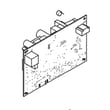
If you’re troubleshooting a no-power or dead-control situation on this model, the machine control fuse WD21X25696 is one of the components commonly checked during diagnosis.
Why it matters
Knowing the typical lifespan helps you decide whether to invest in a repair (like a drain pump, water inlet valve, or control component) or plan for replacement, especially once the unit is past the 10-year mark.
Last updated: January 2026
Does a GE dishwasher have a filter that needs to be cleaned?
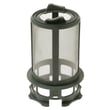
Yes. The GE GDT225SSL0SS dishwasher uses a filter assembly that we recommend inspecting and cleaning periodically (about monthly, or sooner if wash performance drops or dishes feel gritty); the steps are outlined in the GDT225SSL0SS owner’s manual.
How to clean the filter on GE GDT225SSL0SS
- Turn the dishwasher off and let it cool.
- Remove the bottom rack.
- Remove the lower spray arm.
- Twist the filter assembly counterclockwise and lift it out.
- Remove the filter plate, then separate and rinse the filters with warm, soapy water.
- Reinstall: filter plate first, then filter assembly; twist clockwise until it locks. Reinstall the lower spray arm and bottom rack.
Cleaning tips that prevent damage
- Use warm water and mild dish soap.
- Use a soft brush or sponge for stuck-on soil.
- Avoid scouring pads or stiff brushes that can scratch filter surfaces.
- Make sure nothing falls into the sump opening before reinstalling.
- Seat and lock the filters fully; a loose filter can reduce cleaning performance.
When should we clean it?
We treat these as the most common triggers on this model:
- Monthly as routine maintenance
- Right away if dishes feel gritty
- Right away if you notice odors or standing debris at the bottom
| What you notice | Likely cause | What to do |
|---|---|---|
| Grit on glasses | Filter needs cleaning | Clean and reinstall filter correctly |
| Poor cleaning | Clogged filter or spray arm jets | Clean filter; rinse spray arms |
| Odor | Food debris trapped | Clean filter; run a cleaner cycle |
Why it matters
A clean filter helps the wash pump circulate water properly, keeps food particles from redepositing on dishes, and reduces odor buildup. It is one of the fastest maintenance steps to restore normal wash performance.
If you find the filter is cracked or won’t lock back in place, match it to the correct replacement for this model, such as the fine filter WD12X24656 or coarse filter WD12X26378.
Last updated: January 2026
Is it worth repairing a GE dishwasher?
Repairing a GE dishwasher like model GDT225SSL0SS is worth it when the problem is a common wear item or a straightforward fix and the total repair cost stays well below the price of a comparable replacement. If the unit is around 10 years old or older and needs major electronic parts, replacement often makes more sense.
Quick decision checklist
- If it’s cleaning poorly, draining slowly, or leaking slightly, repair is usually the better value.
- If the tub is damaged or multiple major systems are failing, replacement is usually the better value.
- If the repair is mostly labor (diagnosis plus a small part), repair is usually worth it.
- If the repair requires multiple visits or several expensive parts, replacement is often smarter.
- If you like the fit/finish and it matches your kitchen, repair can be the easiest path.
Common “worth repairing” scenarios on GDT225SSL0SS
These are typical issues where a repair is often cost-effective:
- Not draining due to a failed drain pump: consider dishwasher drain pump WD19X24651.
- Not filling or filling slowly due to a valve issue: consider dishwasher water inlet valve WD15X24711.
- Poor wash performance from clogged or damaged filtration: consider fine filter WD12X24656 and coarse filter WD12X26378.
When replacement may be the better choice
Major electronic failures can push the repair cost up quickly, especially on older units:
| Situation | Typical direction | Why |
|---|---|---|
| One failed mechanical part (pump, valve, hose) | Repair | Parts are usually reasonable and the fix is direct |
| Repeated leaks or multiple symptoms | Lean replace | Often indicates multiple worn components |
| Control or UI problems | Lean replace | Electronics can be a higher-cost repair |
If you’re troubleshooting a no-start or control issue, the GDT225SSL0SS owner’s manual includes reset and basic checks (door closed, wall switch on, control lock status).
Why it matters
A dishwasher repair decision is mostly about total cost and risk. A targeted repair can restore performance and extend service life, while a major repair on an older dishwasher can lead to more follow-on failures.
Last updated: January 2026
What is the most common problem with a GE dishwasher?
On the GE GDT225SSL0SS dishwasher, the most common problems we see are drainage issues (water left in the bottom), poor cleaning, and “won’t start” complaints. The quickest model-specific fixes usually come from the troubleshooting and cleaning steps in the GDT225SSL0SS owner’s manual.
Most common symptoms and what they usually mean
- Water standing in the tub: filter assembly needs cleaning, air gap or disposer restriction, drain hose routing issue
- Dishes not clean or feel gritty: clogged filters, spray arm jets blocked, low incoming water temperature, loading issue
- Won’t start or beeps: door not fully closed, control lock enabled, power interruption
- Spots or film: hard water, rinse aid empty, low water temperature
Quick checks we recommend first (no parts)
- Cancel correctly: press and hold Start for 3 seconds, then close the door so it drains.
- Clean the filter assembly monthly; gritty dishes are a common clue.
- Verify incoming hot water is at least 120°F before starting.
- Check the air gap (if installed) and make sure the disposer inlet is clear.
- Confirm large items are not blocking the detergent dispenser or spray arms.
Parts that are commonly involved on this model
If cleaning and drain-path checks do not solve it, these model-matched parts are often involved:
| Symptom | Part that may be involved | Model-matched example |
|---|---|---|
| Won’t start | Door latch not engaging | Dishwasher door latch WD12X24644 |
| Won’t drain | Drain pump not pumping out | Dishwasher drain pump WD19X24651 |
| Poor cleaning or debris recirculating | Filter damaged or not sealing | Fine filter WD12X24656 |
Why it matters
Drain and wash-performance problems can look like a major failure, but on the GDT225SSL0SS they are often caused by restrictions in the filter and drain path. Fixing the root cause early helps prevent odors, repeat clogs, and cycle interruptions.
Last updated: January 2026





