Installation guide
 Owner’s manual


Can I replace a dryer heating element myself?
Yes, you can replace the heating element in your Kenmore Elite dryer model 11066942500 yourself if you’re comfortable using basic hand tools and following safety steps. The key is disconnecting power, documenting wire locations, and reassembling the heater housing and sensors correctly using the 11066942500 owner's manual.
Safety first (before you touch anything)
- Unplug the dryer or disconnect power at the breaker.
- Confirm the drum is not moving and the dryer is completely off.
- Let the dryer cool fully if it was recently running.
- Work with good lighting; take photos of every wire connection before removal.
- If you smell a slight odor after the first heat cycle, that can be normal with a new electric heating element.
What the DIY job usually involves
Most Kenmore electric dryers like model 11066942500 require opening the cabinet (rear or front access depends on design), removing the heater housing, swapping the element, then reinstalling everything.
Typical steps:
- Remove the access panel(s) to reach the heater housing
- Label and disconnect wires from the heater terminals
- Remove mounting screws and pull out the heater assembly
- Transfer any mounted safety devices if your design uses them on the housing
- Install the new element and reassemble panels
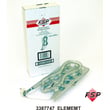
If you’re replacing the element, the correct part for this model is the dryer heating element WP3387747.
Quick checks if the dryer still does not heat after replacement
The installation instructions for this dryer emphasize verifying power and breakers when there’s no heat.
- Check that the dryer is plugged into a grounded outlet
- Make sure the door closes fully
- Verify both house fuses or both circuit breakers are on (many electric dryers use two)
- Run the dryer 5 minutes, then carefully check for heat
- Confirm the exhaust vent is not crushed, kinked, or clogged
DIY vs. technician: when each makes sense
| Situation | DIY is a good fit | Technician is a better fit |
|---|---|---|
| You have a multimeter and basic tools | Yes | No |
| Breakers/fuses keep tripping | No | Yes |
| You can access the heater housing easily | Yes | No |
| You want full electrical/airflow diagnosis | No | Yes |
Why it matters
A failed heating element is common, but airflow restrictions and power supply issues can mimic a “bad element.” Fixing the root cause helps prevent repeat failures and improves drying performance.
Last updated: January 2026
How to tell if your dryer element is bad?
If your Kenmore Elite dryer model 11066942500 runs but doesn’t produce heat (or takes much longer to dry), the heating element is a top suspect. We confirm it by checking for heat early in a cycle and then testing the element for continuity with a multimeter; a failed test points to a bad element.
Quick checks before you test parts
Before opening the cabinet, rule out common “no-heat” causes that mimic a bad element.
- Run a timed, high-heat cycle (not Air/Fluff) and check for heat after about 5 minutes
- Verify the dryer is fully plugged in and the door closes and latches
- Check your home’s electrical supply; many electric dryers use two fuses or breakers, and one can trip while the drum still turns
- Clean the lint screen and confirm strong airflow at the exhaust hood
- Make sure the vent is not crushed, kinked, or packed with lint
Why the breaker check matters
An electric dryer can tumble with only one leg of power, but it will not heat correctly. Restoring full power often fixes “no heat” without replacing parts.
How to test the heating element (basic method)
Use the steps in the 11066942500 owner’s manual for safe operation and access guidance, then:
- Disconnect power to the dryer
- Access the heater terminals (location varies by design)
- Set a multimeter to continuity or resistance (ohms)
- Measure across the element terminals
- Replace the element if it shows no continuity (open circuit)
If you need the correct replacement part for this model, use the dryer heating element WP3387747.
What you’ll typically see
| Symptom | More likely cause | What to do next |
|---|---|---|
| Drum turns, no heat | Tripped breaker, bad heating element, thermal cut-off | Check breakers first, then test element and safety devices |
| Heat starts then stops | Restricted venting, thermostat issue | Verify airflow, inspect cycling controls |
| Burning smell on first heat use | Normal “new element” odor | Let it run; odor should fade after the first cycle |
Why it matters
A bad heating element stops proper drying, but restricted airflow can also cause overheating and repeated heater failures. Fixing venting and lint buildup protects the heater, thermostat, and wiring.
Last updated: January 2026
What is the lifespan of a Kenmore dryer?
Most Kenmore dryers, including the Kenmore Elite 11066942500, typically last 10 to 13 years with normal household use. Regular lint and vent cleaning, correct loading, and prompt repair of wear parts can push service life longer and help the dryer heat and dry efficiently.
What affects dryer lifespan the most
- Airflow and venting: Restricted exhaust makes the dryer run hotter and longer.
- Lint buildup: Lint in the cabinet or vent increases strain on the blower and heating system.
- Overloading: Heavy loads stress the drum support rollers, belt, idler pulley, and motor.
- Heat system cycling: Frequent overheating can shorten the life of thermostats and thermal cut-offs.
- Maintenance habits: Simple routine care prevents many “no heat” and “long dry time” complaints.
Maintenance schedule we recommend for the 11066942500
Use the 11066942500 owner's manual for the exact care steps and safety guidance.
| Task | How often | Why it helps |
|---|---|---|
| Clean lint screen | Every load | Improves airflow and drying performance |
| Check vent path for kinks/crushing | After moving or reinstalling | Prevents overheating and long dry times |
| Clean exhaust vent | At least every 2 years | Reduces heat stress and improves efficiency |
| Remove lint inside cabinet | About every 2 years (qualified service) | Protects motor, heater area, and wiring |
Signs your dryer is nearing end-of-life (or needs key parts)
- Drying times keep getting longer even with a clean vent
- Squealing, thumping, or rumbling from the drum area
- Drum stops turning, but the timer advances
- Heat cuts in and out, or the dryer shuts down mid-cycle
- Burning smell or unusually hot cabinet (stop using and inspect venting)
Common wear parts that can extend life
If you are hearing drum noise or the drum is hard to turn, replacing wear items often restores smooth operation:
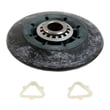
- Support WPW10314173 (drum support roller)
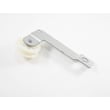
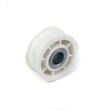
- Dryer idler pulley 279640 (belt tension pulley)
- Dryer heating element WP3387747 (for “no heat” after airflow is confirmed)
Why it matters
A dryer that is kept clean and vented correctly runs cooler, dries faster, and puts less load on the motor, drum supports, and heating components. That directly translates into fewer breakdowns and a longer overall lifespan.
Last updated: January 2026