
How do I know what model Craftsman garage door opener I have?
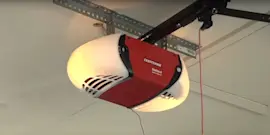
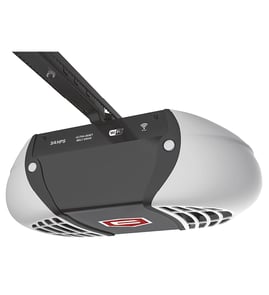
To identify your Craftsman garage door opener model, we look for the model number label on the opener’s power head (the motor unit mounted to the ceiling). On model 139655300, the model and serial information is typically on a sticker near the light lens, front panel, or side of the housing.
Check these common spots on the motor unit:
- Behind or next to the light cover (lens)
- On the front panel near the control buttons
- On the side of the opener housing
- On the back panel near the wiring terminals
- Occasionally on the top surface of the unit (use a flashlight)
If you see multiple numbers, use the one labeled Model (not FCC ID, patent numbers, or motor specs).
Capture both identifiers so we can match the right Craftsman garage door opener parts:
- Model number (example format: 139.XXXXXX or similar)
- Serial number (helps confirm production run)
- Drive type (chain, belt, or screw drive)
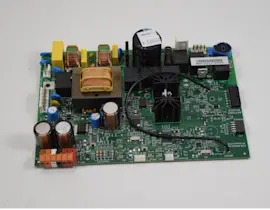
- Logic board color/label info (useful when parts vary by revision)
| Item you find | What it’s used for | Example |
|---|---|---|
| Model number | Primary parts lookup | 139655300 |
| Serial number | Confirms version/run | (varies) |
| Drive type | Narrows gear/rail parts | Chain or belt |
Use these practical workarounds:
- Check the wall control panel area for a secondary label
- Look for a parts diagram match by comparing the rail, trolley, and motor housing shape
- Use opener symptoms and diagnostic flashes to narrow the platform using Craftsman error codes
Craftsman openers often share similar housings across multiple model families, but internal parts (logic board, travel module, sensors, gears) can differ. Using the exact model number prevents ordering the wrong replacement part and saves time during troubleshooting.
Last updated: February 2026
Will any remote work with any garage door opener?
No. A garage door opener remote has to be compatible with the opener’s brand, radio frequency, and “learn” coding system, so a random remote will not reliably work with a Craftsman 139655300 garage door opener. A compatible universal remote can work, but only if it supports your opener’s technology.
Most compatibility issues come down to how the opener and remote “talk” to each other.
- Brand and platform: Craftsman openers often share technology with LiftMaster/Chamberlain families, but the remote still must match the platform.
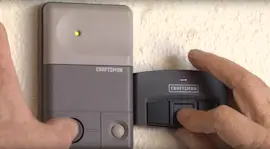
- Learn button color and logic board type: This commonly indicates which remote series will pair.
- Security coding: Rolling-code (Security+ style) systems require the right remote generation.
- Frequency: Many openers use common frequencies (for example 315 MHz or 390 MHz), but frequency alone is not enough.
- Remote type: Standard visor remote vs. keychain remote vs. wireless keypad.
Use this as a practical way to choose a remote for a Craftsman 139655300.
| If you have… | Best next step | What to avoid |
|---|---|---|
| Original remote works | Match the replacement to the same remote family | Buying “universal” without checking compatibility lists |
| No working remotes | Identify the opener’s learn button color/logic board | Guessing based only on brand name |
| Universal remote | Confirm it supports your opener’s learn system and frequency | Assuming one universal remote fits all openers |
These steps cover the most common programming flow for Craftsman openers.
- Locate the opener’s LEARN button on the motor unit.
- Press and release LEARN (indicator light typically turns on or blinks).
- Press the remote button you want to use until the opener responds.
- Test operation; reprogram if the door only moves briefly or the lights flash.
For a visual walkthrough, use our how to program garage door opener remotes video.
Using an incompatible remote wastes time and can look like a bad logic board, bad wall control, or a dead receiver. Matching the correct remote type first helps you troubleshoot real problems faster.
If the opener flashes diagnostic lights or shows a fault pattern while you’re trying to program, use Craftsman error codes to narrow down the issue.
Last updated: February 2026
Is it worth repairing a 20 year old garage door opener?
Yes, it’s often worth repairing a 20-year-old garage door opener if the problem is simple (remote issues, safety sensor alignment, force or travel settings) and the Craftsman model 139655300 is otherwise running smoothly. If the motor, drive system, or control board is failing repeatedly, replacement is usually the better long-term value.
- Repair makes sense when the opener runs but has intermittent issues (stops, reverses, won’t close).
- Repair makes sense when the fix is adjustment or cleaning (sensors, door balance, force settings).
- Replace makes sense when the opener is noisy, struggles to lift, or overheats.
- Replace makes sense when you see repeated failures in the same area (gears, motor, logic board).
- Replace makes sense when safety features are unreliable (door won’t reverse consistently).
Start with the items that commonly mimic “major failure” but are inexpensive or no-cost fixes.
| Symptom | Most common cause | Typical fix type |
|---|---|---|
| Door won’t close | Safety sensors blocked/misaligned | Clean, align, verify wiring |
| Door reverses | Force/travel out of adjustment or door binding | Adjust settings, check door hardware |
| Remote works sometimes | Weak remote battery or interference | Battery, reprogram, reduce interference |
| Motor runs but door doesn’t move | Drive gear or trolley issue | Mechanical repair |
For diagnostic blink patterns and fault indicators, use our Craftsman error codes reference.
- Low effort repairs: sensor alignment, force/travel adjustments, wall control checks.
- Moderate repairs: replacing worn drive components (chain/belt parts, gears), tightening rail hardware.
- Higher cost repairs: motor or logic/control board issues, especially if failures repeat.
A practical rule: if the repair cost approaches a large share of a new opener and the unit has other age-related issues (noise, inconsistent operation), replacement is the smarter investment.
A garage door opener is a safety device as much as a convenience feature. If an older opener can’t reliably sense obstructions, stop, and reverse, repairing it quickly (or replacing it) helps protect people, pets, vehicles, and the door system.
Last updated: February 2026
What are the common problems with Craftsman garage door openers?
Common problems we see with the Craftsman garage door opener model 139655300 include safety sensor issues (misalignment or blocked beam), remote or wall control problems, and drive system wear (chain/belt tension issues or worn gears). These often show up as a door that reverses, won’t close, or makes grinding or clicking noises.
- Door won’t close and opener lights blink: safety sensors are blocked, misaligned, or have wiring damage.
- Door reverses right after touching the floor: close limit or force setting is off, or the door is binding.
- Remote works sometimes or only up close: weak remote battery, interference, or receiver/logic board trouble.
- Motor runs but door doesn’t move: stripped drive gear, broken trolley, or a disengaged emergency release.
- Grinding, popping, or loud rattling: worn gears/sprocket, loose chain, or dry hardware.
- Clear and align the safety sensors: remove obstructions, wipe the lenses, and confirm both sensor LEDs are steady.
- Check the door balance: with the opener disconnected, the door should stay about halfway open; a heavy door overloads the opener.
- Inspect the rail and trolley: look for loose fasteners, bent rail sections, or a trolley that binds.
- Test wall control vs. remote: if the wall control works but remotes do not, focus on remote programming, batteries, and receiver issues.
- Listen for the failure point: grinding at the motor head points to gears; humming with no movement points to a jam or failed start components.
Many Craftsman openers use light blink patterns or diagnostic LEDs to point to the problem area (sensors, travel module, RPM sensor, logic board). Use our model-family troubleshooting to match the code to the fix: Craftsman error codes.
| Symptom | Most likely area | Typical fix direction |
|---|---|---|
| Won’t close, lights blink | Safety sensors | Align, clean, repair wiring |
| Reverses during travel | Force/limits, door binding | Adjust settings, fix door drag |
| Motor runs, door doesn’t move | Drive gear/trolley | Inspect and replace worn drive parts |
| Remotes inconsistent | Remote/receiver | Battery, reprogram, check interference |
Most “opener problems” are actually sensor alignment or a binding/unbalanced door. Fixing those first prevents repeat failures and reduces strain on the motor, gears, and logic board.
Last updated: February 2026
How to find out garage door opener type?
To figure out what “type” of garage door opener you have for Craftsman model 139655300, identify the drive system (chain, belt, or screw) and the radio/remote technology (learn button color or DIP switches). Those two details determine which parts and programming steps fit.
Unplug the opener, then look at the rail that runs from the motor unit to the door.
- Chain drive: metal chain like a bicycle chain
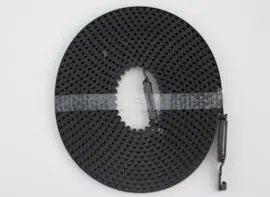
- Belt drive: rubber or reinforced belt (often quieter)
- Screw drive: long threaded steel rod
- Direct drive (rare): motor travels along the rail
| What you see on the rail | Opener type | Common clue |
|---|---|---|
| Metal chain | Chain drive | More vibration/noise |
| Black/gray belt | Belt drive | Quieter operation |
| Threaded rod | Screw drive | Fewer moving links |
Check the back or side of the motor unit where the learn/program button and wiring terminals are.
- Look for a learn button (often near an LED) and note its color
- If you see a small bank of tiny switches, you have DIP switches (older style)
- Check the wall control: some are multi-function (lock/light) and may require a compatible control board
For Craftsman openers, the learn button color and/or DIP switches are the fastest way to match the right remote and programming steps. Use our Craftsman error codes reference if the opener is flashing lights or showing a diagnostic pattern while you test controls.
Your opener “type” affects compatibility for key items like remotes, wall controls, safety sensors, and internal drive components. Matching the drive system and learn-button/DIP-switch style prevents buying the wrong replacement parts for model 139655300.
Last updated: February 2026