
How do I find my compressor model number?
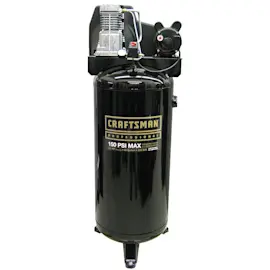
For a Craftsman twin-cylinder tank-type air compressor like model 106173781, the model number is typically printed on a data plate or sticker attached to the tank or frame; it’s often near the handle, base, or where the power cord and controls are mounted.
Where to look on a tank-type air compressor
Check these common spots first:
- Tank: front, side, or near the bottom seam
- Frame/base: near the feet or wheel bracket area
- Motor/pump area: on the shroud or nearby bracket (less common than the tank)
- Control panel area: near the pressure switch, regulator, or gauges
- Back side of the unit: especially if the front is kept “clean” for branding labels
What the label usually includes (and what to write down)
On most compressors, the same label includes multiple identifiers. Record them exactly as shown.
| Label item | What it’s used for | Example of what it looks like |
|---|---|---|
| Model number | Matching the correct parts list | 106173781 |
| Serial number | Production run identification | Letters and numbers |
| Electrical rating | Confirming power requirements | Volts/amps/Hz |
| Pressure rating | Confirming safe operating limits | PSI / kPa |
Tips if the label is missing or unreadable
If the sticker is scraped off or painted over, these steps help you recover the model number:
- Wipe the area with a damp cloth; dirt can hide faint printing
- Shine a flashlight across the surface at a low angle to reveal embossed text
- Look for a second label on the opposite side of the tank
- Check for a stamped number on the tank collar or frame plate
- Use your parts search history and saved appliances in Sears PartsDirect if you previously looked it up
Why it matters
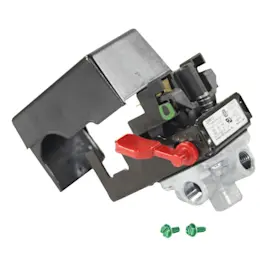
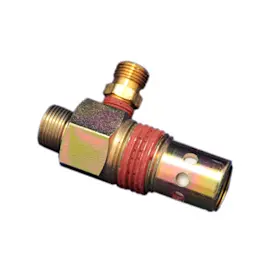
The model number is what ties your compressor to the correct parts diagrams and compatible components (such as pressure switches, regulators, safety valves, and check valves). Using the exact model number prevents ordering parts that fit a similar-looking Craftsman unit but won’t match your build.
Last updated: February 2026
What does 4.0 scfm at 90 PSI mean?
4.0 SCFM at 90 PSI means the compressor can supply 4 standard cubic feet of air per minute while delivering 90 PSI at the outlet. It is a performance rating used to match an air compressor to pneumatic tools; it is not automatically the confirmed rating for every Craftsman model.
How to use 4.0 SCFM @ 90 PSI to pick tools
Use the tool’s air requirement label (often listed as SCFM at 90 PSI) and compare it to the compressor’s SCFM rating at the same pressure.
- If the tool requires 3.0 SCFM @ 90 PSI, a 4.0 SCFM @ 90 PSI compressor runs it steadily
- If the tool requires 5.0 SCFM @ 90 PSI, the compressor falls behind; pressure drops during use
- Add 25% to 50% extra SCFM for smoother operation on continuous-use tools
- Set the regulator to the tool’s required PSI; higher PSI wastes air and increases cycling
- Use a larger hose (commonly 3/8-inch for higher-flow tools) to reduce pressure drop
SCFM vs CFM (what “standard” changes)
SCFM is measured under standardized conditions so you can compare compressors more fairly. CFM can be reported under varying conditions and is less useful for tool matching.
| Spec | What it tells you | What to do with it |
|---|---|---|
| SCFM @ 90 PSI | Usable airflow at a common working pressure | Primary number for most air tools |
| SCFM @ 40 PSI | Airflow at lower pressure | Helpful for some nailers/sprayers |
| PSI | Pressure capability | Must meet the tool’s minimum PSI |
Why it matters
Air tools need pressure (PSI) and volume (SCFM). PSI is the push; SCFM is the amount of air available to keep the tool running without bogging down.
Related DIY help
If you are troubleshooting a compressor that will not start, trips a breaker, or runs weak, electrical testing is often the first step; use how to use a multimeter to test electrical parts video.
Last updated: February 2026
What is the average lifespan of an air compressor?
Most air compressors last about 10 to 15 years with normal use and basic maintenance; smaller DIY units often run 5 to 10 years, while heavier-duty shop and industrial compressors commonly reach 15 to 20 years. For a Craftsman 106173781 twin-cylinder tank-type air compressor, lifespan depends most on duty cycle, heat, moisture control, and leak-free operation.
Typical lifespan by compressor type
| Compressor type | Typical lifespan | Notes |
|---|---|---|
| Small DIY / homeowner (portable) | 5 to 10 years | Shorter life if run hot or continuously |
| Twin-cylinder tank-type (like 106173781) | 10 to 15 years | Often limited by pump wear, valves, and tank condition |
| Industrial rotary screw / centrifugal | 15 to 20 years | Designed for continuous duty with scheduled service |
What shortens lifespan fastest
- Running past the duty cycle (long continuous run time that overheats the pump)
- Moisture left in the tank (internal rust and contaminated air)
- Air leaks in fittings, hose connections, or the check valve (extra run time)
- Dirty intake filter (restricted airflow and higher operating temperature)
- Low or degraded pump oil on oil-lubricated designs (accelerated wear)
Maintenance that adds years (high impact)
- Drain the tank after use or at the end of the day to remove condensation.
- Keep the intake area clean; replace or clean the air filter on schedule.
- Check for leaks (listen for hissing; use soapy water on fittings).
- Keep ventilation clear so the pump and motor can shed heat.
- If your unit is oil-lubricated, keep oil at the correct level and change it at regular intervals.
When it is time to repair vs. replace
| Symptom | Usually worth repairing | Usually points to end-of-life |
|---|---|---|
| Slow build to pressure | Leaks, dirty filter, worn reed/valves | Severe pump wear plus multiple leaks |
| Frequent cycling | Small leaks, pressure switch issues | Tank corrosion causing recurring problems |
| Loud knocking | Loose hardware, minor wear | Persistent knock with low output |
Why it matters
A compressor that runs longer to reach cut-out pressure builds heat and moisture faster; that speeds up pump wear and increases rust risk in the tank. Keeping run time down and water out is the simplest way to extend service life.
For safe DIY electrical checks (motor, pressure switch, capacitor), use our how to use a multimeter to test electrical parts video.
Last updated: February 2026
What is the most common cause of air compressor failure?
For the Craftsman 106173781 twin-cylinder tank-type air compressor, the most common cause of failure is poor maintenance that leads to overheating and accelerated wear (dirty intake filter, low or degraded oil on oil-lubricated units, and restricted cooling airflow). Air leaks and electrical issues are also frequent contributors.
Most common failure drivers (and what to check first)
- Overheating: clogged cooling fins, blocked shroud/guard, poor ventilation, long run times.
- Dirty or restricted intake filter: makes the pump work harder and run hotter.
- Lubrication problems (if oil-lubricated): low oil level, wrong oil type, old oil.
- Air leaks: fittings, drain valve, pressure switch line, tank check valve area.
- Electrical problems: weak power supply, damaged cord, failing pressure switch, bad capacitor (if equipped).
Quick symptom-to-cause guide
| Symptom | Most likely cause | What we do next |
|---|---|---|
| Runs hot, shuts off, or trips breaker | Overheating or electrical overload | Improve airflow, reduce duty cycle, verify outlet/circuit |
| Runs constantly, won’t reach cut-out | Air leak or worn pump valves/rings | Leak test, then evaluate pump condition |
| Hard start or hums then trips | Capacitor/motor issue or low voltage | Check voltage, inspect wiring, test electrical parts |
| Builds pressure slowly | Intake restriction or worn pump | Check filter and airflow, then pump wear |
Why it matters
Heat and friction are what kill compressors. When airflow is restricted or lubrication and filtration are neglected, internal temperatures rise, seals and valves wear faster, and the motor draws more current. Fixing the root cause early prevents repeat failures.
Practical prevention for this model type
- Keep the compressor in a clean, well-ventilated area; do not block the pump or motor.
- Drain tank moisture regularly to reduce corrosion and water carryover.
- Check and tighten fittings; use soapy water to find small leaks.
- If your unit is oil-lubricated, keep oil at the proper level and change it on a routine schedule.
- If you suspect an electrical issue, use safe test methods from how to use a multimeter to test electrical parts video.
Last updated: February 2026