Owner’s manual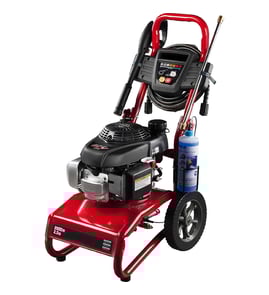



Can you use a 4000 PSI pressure washer on a car?
Using a 4000 PSI pressure washer on a car is not recommended; that much pressure can damage paint, decals, trim, rubber seals, and force water into electrical connectors. For the Troybilt 01903 pressure washer, we recommend using the widest spray tip and keeping extra distance, following the safety guidance in the 01903 owner's manual.
Safer ways to wash a car with a high-PSI washer
If you choose to use a high-pressure unit, reduce the effective pressure at the surface:
- Use the 40° spray tip (widest fan) for most rinsing
- Keep the nozzle farther away; our manual guidance is 8 to 24 inches from the surface, and for vehicles we stay toward the far end of that range or farther for delicate areas
- Avoid the 0° tip on vehicles (it can cut into clear coat and strip decals)
- Do not spray directly into door seals, window seals, grille openings, or under-hood gaps
- Use low-pressure chemical injection only when the nozzle/tip is set up for low pressure, then rinse gently
What to avoid on a vehicle
High pressure and tight spray patterns can cause expensive cosmetic and water-intrusion problems.
- Badges, pinstripes, and vinyl wraps
- Soft plastics (mirror housings, bumper trim) and weatherstripping
- Wheel bearings and brake components at close range
- Radiator fins and condenser fins
- Engine bay wiring, sensors, and fuse/relay boxes
Quick tip selection guide
| Task | Best approach | What to avoid |
|---|---|---|
| Pre-rinse | 40° tip, longer distance | 0° tip, close range |
| Wheels/tires | 40° tip, moderate distance | Spraying bearings/seals directly |
| Bug/tar spots | Pre-soak, gentle rinse | Concentrated high-pressure blasting |
| Underbody rinse | Wide fan, keep moving | Holding spray in one spot |
Why it matters
Car finishes and seals are designed for rain and hose pressure, not concentrated 4000 PSI spray. A narrow tip up close can act like a scraper and can also push water past seals into places that should stay dry.
If your hose is leaking or restricting flow
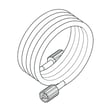
A damaged high-pressure hose can cause poor performance and unsafe handling. Replace it if you see cuts, bulges, or kinks; the manual also calls out checking for hose damage before use. If you need the correct replacement for this model, use the hose 84006753 listed for the Troybilt 01903, or search by model on Sears PartsDirect.
Last updated: February 2026
Do you really need a 4000 PSI pressure washer?
For most home cleaning, you do not need 4000 PSI. With your Troybilt 01903 pressure washer, the best results come from matching PSI, water flow, and the correct spray tip to the surface; 4000 PSI mainly helps when you clean large areas or heavy buildup faster.
When 4000 PSI is worth it
Use a 4000 PSI class machine when you regularly tackle tough, time-consuming jobs:
- Large concrete driveways and patios with heavy grime
- Stubborn oil stains (after pretreatment)
- Thick mildew on masonry or block
- Frequent use with a surface cleaner attachment
- Commercial-type, high-volume cleaning
When 3000 to 3500 PSI is the better fit
For most residential work, slightly lower pressure is easier to control and reduces damage risk:
- Decks, fences, and outdoor furniture
- Vinyl siding and soffits (use wider tips and more distance)
- Vehicles and windows (low pressure and detergent)
- Spot cleaning where precision matters
PSI vs GPM: what changes cleaning speed
Both pressure and flow matter; higher GPM often speeds up rinsing and coverage.
| Factor | What it changes | What you notice |
|---|---|---|
| Higher PSI | Impact force | Faster on stubborn grime, higher damage risk |
| Higher GPM | Coverage and rinsing | Faster overall cleaning |
| Tip angle | Pressure concentration | Big change in aggressiveness |
Why it matters (safe, effective technique)
Too much pressure can etch concrete, shred wood fibers, and force water behind siding. Follow the distance and operating guidance in the 01903 owner's manual, including keeping the nozzle about 8 to 24 inches from the surface.
Quick ways to improve results without upsizing
- Use the widest tip that still cleans (often 25° or 40°)
- Pre-soak with detergent using the chemical injection feature, then rinse
- Maintain steady water supply (the manual calls for more than 3.5 GPM and at least 20 PSI at the washer end)
- Replace a worn or kinked high-pressure line; the hose 84006753 is a common performance and safety item
You can order model-matched replacement parts for Troybilt 01903 from the parts list, or search by model number on Sears PartsDirect.
Last updated: February 2026
What are the most common issues with 01903?
The most common problems we see on the Troybilt 01903 gas pressure washer are low or surging pressure, leaks at hose or pump connections, detergent not siphoning, and hard starting or stalling. Most issues trace back to water supply restrictions, clogged nozzles, worn seals, or an unloader valve that is sticking.
Common symptoms and what usually causes them
- Low pressure or pressure surging: clogged spray tip, air in the inlet, restricted garden hose, dirty inlet screen, or unloader valve problems
- Water leaking: worn O-rings, loose fittings, cracked hose, or pump seal wear
- Detergent not drawing: wrong nozzle (needs low-pressure soap tip), clogged injector, air leak on suction line
- Engine won’t start or dies under load: stale fuel, dirty air filter, fouled spark plug, low oil shutdown, or carburetor varnish
- Pulsing when trigger is released: unloader not bypassing smoothly, thermal relief valve venting, or trapped pressure
Quick checks we recommend first
- Confirm strong water supply before starting the engine (fully open spigot; no kinks).
- Clean the spray tip and check the inlet screen for debris.
- Purge air: connect water, squeeze trigger until flow is steady, then start.
- Inspect fittings and the high-pressure line for seepage or cracks.
- If pressure still surges, focus on the unloader and pump bypass function.
Parts that commonly get replaced
| Problem | Likely part area | What to look for |
|---|---|---|
| Leaks at the gun/pump connection | High-pressure hose and seals | Wet fittings, cracked outer jacket, damaged O-rings |
| Low pressure/surging | Unloader valve, check valves, pump seals | Pressure spikes, hunting sound, inconsistent spray |
| No detergent draw | Chemical injector and nozzle | No suction at soap tube, only works with soap tip |
If your leak or pressure drop is at the line, replacing the hose 84006753 (part number 190249GS) is a common fix.
Why it matters
Running the 01903 with restricted water flow, air in the inlet, or a sticking unloader can overheat the pump and accelerate seal wear. Catching small leaks early also prevents fitting damage and sudden hose failure.
For model-specific operating steps and maintenance intervals, follow the owner's manual. For unloader-related pressure problems, use how to replace a pressure washer unloader valve as a step-by-step guide.
Last updated: March 2026