Owner’s manual
 Error Codes


How big is a king size capacity washer?
A “king size capacity” washer is typically a full-size top-load washer in the 3.2 to 3.8 cubic foot range (often marketed around 3.5 cu. ft.). For Kenmore model 11029842990, the most reliable way to confirm the exact tub capacity is the specifications section in the 11029842990 owner's manual.
Manufacturers use “king size” as a marketing term; in practice it usually aligns with these common capacity bands:
| Marketing term | Typical capacity (cu. ft.) | Common use |
|---|---|---|
| Large capacity | 3.0 to 3.4 | Towels, mixed loads |
| King size capacity | 3.2 to 3.8 | Bulkier bedding, larger loads |
| Extra-large capacity | 3.9+ | Very bulky items, fewer loads |
Even with the right cubic footage, performance depends on how you load and the water level you choose.
- Load by space items take up, not by weight
- Keep items loose so they can circulate and clean evenly
- Mix large and small items to reduce off-balance spinning
- Use a higher water level for bulky items and permanent press
- If the washer starts vibrating hard, pause and redistribute the load
The 11029842990 owner's manual includes “super capacity” loading examples (such as towels and sheet sets) and explains that overloading or selecting too low a water level leads to poor cleaning, wrinkling, excess lint, and faster fabric wear.
Capacity affects cleaning results, spin balance, and how much wear your clothes take. Using the correct water level and leaving room for movement prevents vibration and improves rinse and spin performance.
Last updated: January 2026
How to unclog drain hose on Kenmore washer?
To unclog the drain hose on your Kenmore washer model 11029842990, unplug the washer, drain any standing water, then remove the drain hose and flush out lint or debris. Reinstall the hose exactly as shown in the 11029842990 owner’s manual to prevent leaks and kinks.
- Unplug the washer (and turn off the water supply if you need to move it).
- If the tub is full, bail out water or run a drain/spin if the washer will still pump.
- Pull the washer forward so you can reach the hose connection at the bottom rear.
- Remove the drain hose and check both ends for lint, coins, socks, or sludge.
- Flush the hose with hot tap water; use a flexible brush or a small drain snake for packed lint.
- Reinstall the hose fully onto the drain connector and secure it with the clamp.
The 11029842990 drain hose needs to be pushed onto the washer’s drain connector until it reaches the ribbed stop, then clamped in the marked clamp area. Also keep the hooked end in the standpipe or laundry tub and rotate it to eliminate kinks.
- Run a short fill and drain cycle and watch for drips at the hose-to-washer connection.
- Confirm the hose is not crushed behind the washer.
- Make sure you did not force excess hose down into the standpipe.
If the hose is clear but draining is still slow or the washer will not drain/spin, these parts are common suspects:
| Symptom | Most likely cause | Part to consider |
|---|---|---|
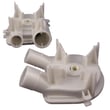
| Hums but will not drain | Pump jammed or worn | Washer drain pump WP3363394 |
| Drains intermittently | Kinked hose or partial blockage | Drain hose routing and clamp position |
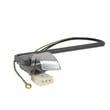
| Will not spin after draining | Lid switch not sensing closed lid | Washer lid switch WP3949238 |
A restricted drain hose can cause no-drain, wet loads, and leaks. Correct hose routing and clamping also protects floors from water damage and helps prevent drain water from flowing back into the washer.
Last updated: January 2026
What is the life expectancy of a Kenmore washer?
A Kenmore washer typically lasts 10 to 15 years with normal household use. For Kenmore model 11029842990, consistent care (proper loading, correct detergent, and addressing small leaks or noises early) helps you reach the upper end of that range; see the 11029842990 owner's manual for care and operating guidance.
Most top-load, direct-drive style Kenmore washers like this one are built for long service, but lifespan depends heavily on use and maintenance.
- Loads per week: more cycles equals more wear on the drive system and pump
- Overloading: strains the motor, clutch, and gear case
- Water quality: sediment can shorten inlet valve life
- Drain habits: coins, lint, and small items can damage the drain pump
- Vibration: out-of-balance loads accelerate wear on suspension components
When a washer stops agitating, spinning, or draining, these are frequent repair points on this platform:
| Symptom | Common wear area | Example part for this model |
|---|---|---|
| Won’t spin or stops mid-cycle | Lid safety circuit | Washer lid switch WP3949238 |
| Won’t drain or drains slowly | Pump or drain path | Washer drain pump WP3363394 |
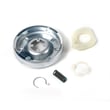
| Agitates poorly or “slips” | Agitator drive components | Agitator dog 80040 |
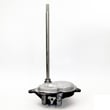
| No agitation/spin but motor runs | Drive coupling | Coupling 285753A |
Knowing the typical 10 to 15 year lifespan helps you decide whether a repair is cost-effective. If your 11029842990 is within that window, replacing a common wear part (like a lid switch, drain pump, or coupling) often restores reliable washing for years.
Last updated: January 2026