Owner’s manual
 Error Codes


How much does a Maytag dryer motor cost?
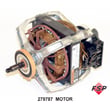
For the Maytag MED9700SB0 dryer, a replacement drive motor typically costs about $150 to $250, depending on the exact motor version and current availability. On our model parts list, the drive motor 279787 is listed at $194.92.
What you are buying (and what it does)
The drive motor turns the drum (through the belt and idler pulley) and also powers airflow through the blower wheel. If the motor is failing, the dryer may hum, run intermittently, or stop mid-cycle.
- Motor is a major moving part; it is not a quick-fix item like a fuse
- Motor issues are often confused with belt or idler pulley problems
- Poor airflow (lint blockage) can overheat components and shorten motor life
- Electric dryers require a proper 240-volt supply to run correctly
Quick checks before ordering a motor
Before replacing the motor, we recommend these basic checks from the troubleshooting section in the MED9700SB0 owner's manual.
- Confirm the dryer has 240V power (many homes have 2 breakers for the dryer)
- Reset tripped breakers or replace blown fuses (use time-delay fuses where applicable)
- Make sure the door closes firmly and the Start button is pressed and held 2 to 5 seconds for large loads
- Listen for a steady hum with no drum movement (often belt or idler related)
- Check airflow and lint buildup; restricted venting can cause overheating symptoms
Common parts that affect “won’t run” symptoms
If the drum will not turn but the motor seems to run, these parts are often involved.
| Symptom | More likely cause | Example part for MED9700SB0 |
|---|---|---|
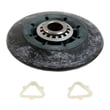
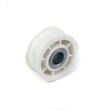
| Drum will not turn, squealing or thumping | Worn rollers or idler | Support WPW10314173, dryer idler pulley 279640 |
| Runs but shuts off, then restarts later | Overheating from airflow restriction | Venting and lint path cleaning |
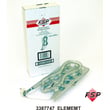
| Runs but clothes stay damp | Heating or temperature sensing issue | Dryer heating element WP3387747, dryer thermistor WP8577274 |
Why it matters
A dryer motor is one of the higher-cost repairs on the Maytag MED9700SB0. Ruling out simpler wear items (rollers, idler pulley, airflow restrictions) helps you avoid replacing the motor when a lower-cost part or maintenance step fixes the problem.
Last updated: February 2026
How to reset error code on Maytag dryer?
To reset an error code on your Maytag MED9700SB0 dryer, we first clear the current cycle, then restore power and restart. For a “PF” (power failure) code, you typically restart by pressing and holding Start; for “E” service codes (E1, E2, E3), the code returns until the underlying problem is repaired (see the MED9700SB0 owner's manual).
Quick reset steps (most Maytag dryers, including MED9700SB0)
- Press OFF twice to stop the dryer and clear the current settings.
- If the controls are unresponsive, unplug the dryer (or switch the breaker off) for 1 minute, then restore power.
- Close the door.
- Press and hold HOLD TO START until the dryer starts (about 1 second).
- If the code returns immediately, troubleshoot the cause (power, airflow, heating, or control lock).
What the most common codes mean on MED9700SB0
| Code on display | What it usually means | What to do next |
|---|---|---|
| PF | Power failure interrupted the cycle | Press and hold Start to restart the dryer cycle. |
| E1 / E2 / E3 | Service-related fault | Address the underlying issue; service is typically required if it persists. |
If the “reset” does not clear the code
These checks fix the most common causes that make codes come back:
- Power supply: Electric dryers need a proper 240-volt supply; check both breakers (many dryers use 2).
- Door and start: Confirm the door is firmly closed; press and hold Start long enough for the load.
- Control lock: If enabled, unlock it by pressing and holding CYCLE END SIGNAL for about 3 seconds.
- Airflow restriction: Clean the lint screen and make sure the vent and outside hood are not clogged.
- Overheating symptoms: If the dryer overheats or shuts down, inspect heating and temperature-sensing components.
Parts that commonly relate to heat and temperature issues
If your code is tied to heating problems (no heat, overheating, long dry times), these model-compatible parts are often involved:
- Dryer heating element WP3387747 (heat source)
- Dryer thermistor WP8577274 (temperature sensing)
- Dryer thermal cut-off fuse kit 279973 (safety cut-off)
Why it matters
Resetting clears the current cycle state, but the dryer will keep showing a code when the underlying condition remains (for example, repeated power interruptions, restricted venting, or a heating circuit fault). Fixing the root cause prevents repeat shutdowns and long dry times.
Last updated: February 2026
What is the capacity of the Maytag MED9700SB0?
The Maytag MED9700SB0 dryer has a 7.0 cu. ft. capacity. This is the usable drum volume for drying loads; it helps you match load size to cycle selection so clothes dry evenly without overloading.
How to confirm capacity for your exact unit
We recommend checking the model’s documentation for the listed capacity and any load-size guidance.
- Look up the specification section in the MED9700SB0 owner's manual
- Verify you are matching the complete model number MED9700SB0
- Use the manual’s loading guidance for bulky items (comforters, blankets)
- Avoid packing the drum tight; airflow is what dries clothes
What 7.0 cu. ft. means in everyday use
A 7.0 cu. ft. Maytag dryer is considered a full-size residential dryer. It typically handles:
- A full mixed load of everyday laundry
- Medium to large towel loads
- Bulky items (best dried one at a time for proper tumbling)
Quick load guidance
| Load type | Best practice in a 7.0 cu. ft. dryer |
|---|---|
| Everyday mixed load | Fill loosely; items should tumble freely |
| Towels | Do not compress; separate heavy towels |
| Bulky items | Dry 1 item at a time; use appropriate cycle |
Why it matters
Capacity affects drying performance, cycle time, and wear on parts like the drive system and drum supports. Consistent overloading can contribute to noise and premature wear of components such as the support WPW10314173.
Last updated: February 2026
What's the life expectancy of a Maytag dryer?
A Maytag dryer typically lasts 15 years with normal household use. For your Maytag MED9700SB0 electric dryer, consistent airflow maintenance (lint screen and venting) and avoiding overloads are the biggest factors in reaching that full service life; see the MED9700SB0 owner's manual for model-specific care guidance.
Typical life expectancy (what to expect)
Most full-size Maytag electric dryers fall into this range:
| Usage pattern | Typical life | What shortens it most |
|---|---|---|
| Normal household loads | 15 years | Restricted venting, heavy overloading |
| Heavy daily use | 10 to 12 years | Heat stress, belt and roller wear |
| Light/occasional use | 15+ years | Long idle periods, corrosion, pests |
What extends dryer life the most
We see these habits make the biggest difference on MED9700SB0-STYLE dryers:
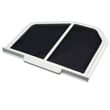
- Clean the lint screen every load; replace a damaged screen such as screen W10120998 if it no longer seals well.
- Keep the exhaust duct short, smooth, and clear; poor airflow overheats the heater and thermostats.
- Do not overload; overloading strains the drive motor, belt, and drum support rollers.
- Listen for squealing or thumping; worn rollers or an idler pulley should be addressed early.
- Use the right cycle and dryness settings; excessive heat time accelerates wear.
Parts that commonly wear as the dryer ages
These are the most common wear items we replace as dryers approach mid-life and beyond:
- Drum support rollers (example: support WPW10314173)
- Idler pulley (example: dryer idler pulley 279640)
- Blower wheel (example: dryer blower wheel WP697772)
- Heating system components (example: dryer heating element WP3387747)
Why it matters
A dryer that is forced to run hot because of restricted airflow can fail earlier and may also dry slower. Keeping airflow strong protects key components like the heating element, high-limit thermostat, and thermal cut-off.
Last updated: February 2026
Why is my new Maytag dryer not drying?
If your Maytag MED9700SB0 dryer runs but clothes stay damp, the most common cause is restricted airflow from a clogged lint screen, blocked exhaust vent, or a poor vent material or setup. Next, confirm the dryer has the correct 240-volt power supply and is vented outdoors as shown in the MED9700SB0 owner's manual.
Quick checks that fix most “not drying” complaints
- Clean the lint screen before every load; a clogged screen slows drying dramatically.
- Check airflow outside: run the dryer 5 to 10 minutes and feel for strong air at the exterior hood.
- Clear lint from the entire vent run and the outside hood.
- Replace plastic or foil venting with 4-inch heavy metal vent; seal joints with clamps (no screws into the duct).
- Avoid overloading; tightly packed loads dry slowly.
- If you are using an automatic sensor cycle, make sure the dryer is level so clothes tumble properly.
Heat and power: what to verify on an electric dryer
Electric dryers like the MED9700SB0 need full 240V power to heat. If one leg of power is missing, the drum can still tumble but you get no heat.
| Symptom | What it usually points to | What to do next |
|---|---|---|
| Tumbles, no heat | Power supply issue or heating circuit problem | Check both breakers/fuses; then test heating components |
| Long dry times, heat seems weak | Vent restriction | Inspect and clean venting; confirm heavy metal vent |
| Auto cycles end wrong or loads stay damp | Poor tumbling or sensor issue | Level the dryer; clean sensor bars; reduce load size |
When a part is likely involved
If airflow is strong and power is correct, a failed heating component is next. Common suspects include the heating element and temperature safety devices.
- Heating element: dryer heating element WP3387747
- Thermal safety devices: dryer thermal cut-off fuse kit 279973
- Temperature sensing: dryer thermistor WP8577274
Why it matters
Good airflow and correct venting protect drying performance and help prevent overheating. A restricted vent can make cycles run much longer and can also cause heat-related parts (like thermal cut-offs) to open.
Last updated: February 2026