Owner’s manual
 Error Codes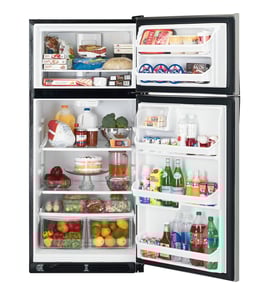



What is the average lifespan of a Kenmore refrigerator?
Most Kenmore refrigerators last 12 to 15 years on average. For your Kenmore 10676233402 top-mount refrigerator, consistent maintenance (especially keeping airflow clear, cleaning door gaskets, and keeping the unit level) is what most often determines whether you reach or exceed that range; see the 10676233402 owner's manual.
A refrigerator’s life is usually limited by wear on the sealed cooling system, fans, controls, and door sealing.
- Maintenance habits: cleaning, leveling, and gasket care extend life
- Heat and airflow: poor air circulation makes the compressor work harder
- Door seal condition: leaks cause longer run times and temperature swings
- Usage patterns: frequent door openings and warm food loads add strain
- Water and ice features (if equipped): valves and ice makers add more service points
The manual for model 10676233402 emphasizes proper air circulation and includes door adjustment and gasket care guidance.
- Keep vents inside the fresh food and freezer sections unblocked
- Maintain proper air circulation around stored items
- If doors don’t close smoothly, level the refrigerator and adjust doors
- Clean sticky gaskets and the surfaces they touch; apply a thin coat of paraffin wax after cleaning (per manual guidance)
- Address unusual noises early (fans and airflow issues often show up as “new” sounds)
| Refrigerator age | What we commonly see | What to do next |
|---|---|---|
| 0 to 5 years | Minor adjustments, occasional ice/water issues | Keep airflow clear; follow manual setup and care |
| 6 to 10 years | Fan noise, gasket wear, temperature inconsistency | Inspect gaskets, clean, and correct airflow restrictions |
| 11 to 15 years | Higher chance of control, fan, or sealed-system problems | Weigh repair vs. replacement based on symptoms and cost |
A refrigerator that runs longer to hold temperature uses more energy and puts extra load on the compressor and fans. Simple steps like gasket care and proper airflow help the refrigerator cool efficiently and can add years of dependable operation.
Last updated: January 2026
What are the disadvantages of a top mount fridge?
A top-mount refrigerator like Kenmore model 10676233402 puts the freezer on top and the fresh-food section below; the main disadvantages are more bending to reach everyday items, fewer convenience features on many models, and less flexible organization compared with bottom-freezer designs. See the 10676233402 owner's manual for your model’s specific features and airflow guidance.
- Less convenient fresh-food access: you typically bend more to reach produce drawers, deli items, and lower shelves.
- Freezer is easiest to reach: great if you use frozen foods often, but not ideal if fresh foods are your daily priority.
- Organization can feel tighter: many top-mount layouts have fewer adjustable bins and specialty storage than newer styles.
- Fewer built-in “extras” on many models: through-the-door water and ice are less common on top-mount units.
- Temperature issues show up faster if vents are blocked: top-mount designs rely on clear air passages between sections.
Your refrigerator cools by moving air between the freezer and fresh-food compartments. If packages block vents, you can get warm spots, freezing in the refrigerator section, or moisture problems.
- Keep items away from the freezer floor and vent areas.
- Do not pack food tightly against the top vent in the refrigerator section.
- Leave space around tall boxes so air can circulate.
- If odors transfer between sections, wrap foods tightly and clean both compartments.
| Feature | Top-mount refrigerator | Bottom-freezer refrigerator |
|---|---|---|
| Fresh-food access | More bending | More eye-level access |
| Freezer access | Easier | Requires bending/pull-out drawer |
| Storage flexibility | Often simpler | Often more configurable |
| Common convenience features | Fewer | More common |
- If you use the freezer daily, top-mount access can be a plus.
- If you want a simpler layout with fewer components to manage, top-mount designs are often straightforward.
Last updated: January 2026
What are the common problems with Kenmore Elite refrigerators?
Many Kenmore Elite refrigerator issues come down to airflow, defrost, or water/ice components; symptoms usually show up as warm temperatures, frost buildup, leaks, or unusual noises. For Kenmore top-mount model 10676233402, we use the troubleshooting and care steps in the 10676233402 owner's manual to narrow the cause before replacing parts.
- Not cooling or weak cooling: restricted airflow, dirty condenser area, or a failed evaporator fan motor
- Excessive frost/ice: door not sealing, frequent door openings, or a defrost system problem
- Water leaking or puddles: clogged/iced drain path, water line connection issue, or valve problem
- Ice maker not working: water supply issue, frozen fill tube, or ice maker failure
- Buzzing, clicking, or rattling: fan blade hitting ice, condenser fan issue, or compressor start components
- Set temps to typical targets: 37°F fresh food and 0°F freezer
- Confirm vents are not blocked; the manual calls out ensuring proper air circulation
- Listen for “normal sounds” versus new loud clicking or grinding (the manual includes a normal sounds section)
- Inspect door gaskets for gaps, tears, or sticking; clean the gasket and the sealing surface
- If the unit is unstable or doors do not close well, level the refrigerator and adjust doors per the manual
| Symptom | Common part involved | Example part for this model |
|---|---|---|
| Warm temps, noisy freezer area | Evaporator fan system | Evaporator motor WPW10189703 or refrigerator evaporator fan blade WP2163777 |
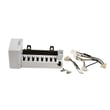
| No ice production | Ice maker assembly | Ice maker assembly - refrigerator ice maker by whirlpool 4317943 |
| Water not dispensing or slow fill | Water inlet valve or tubing | Refrigerator water inlet valve WP2188808 or refrigerator water tube 8201597 |
Cooling and ice-making problems often start small (airflow restriction, a weak fan, a door seal leak) but can lead to food temperature issues and heavy frost that strains the sealed system. Catching the symptom early usually keeps the repair simpler.
Last updated: January 2026