Owner’s manual



What is the most common problem with LG dryers?
For the LG DLE5977S dryer, the most common issue we see is long drying times caused by restricted airflow (a clogged lint screen, crushed vent, or blocked outside damper). Airflow problems can also trigger overheating protection and make the dryer stop mid-cycle.
What to check first (fast, no tools)
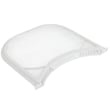
- Clean the lint screen every load; if it is torn or warped, replace the LG dryer lint screen 5231EL1003B.
- Confirm the lint screen housing is seated and not packed with lint.
- Check the vent hose behind the dryer for kinks, crushing, or excessive length.
- Go outside and verify the vent hood damper opens fully while the dryer runs.
- Try a timed dry cycle; if timed dry works better than sensor dry, the moisture sensing circuit may need attention.
If drying is still slow: likely causes and parts to consider
Airflow can be fine and the dryer can still struggle if temperature sensing or heating components are failing.
| Symptom | Common cause | What we typically inspect |
|---|---|---|
| Runs but clothes stay damp | Weak/no heat | Heating circuit, thermostats, element (electric models) |
| Stops early on sensor cycles | Moisture sensing issue | Sensor bars, wiring, control response |
| Overheats or shuts down | Airflow restriction or thermostat issue | Venting, high-limit thermostat |
Model-relevant parts often involved in these symptoms include the dryer moisture sensor 6500EL3001A, dryer thermistor AGM30045804, and dryer high-limit thermostat 6931EL3003D.
Why it matters
Restricted airflow makes any dryer work harder; it increases dry times, can cause overheating shutdowns, and can shorten the life of components like the heating element, thermostats, and drum support parts.
Helpful model-specific reference
For venting requirements, maintenance intervals, and troubleshooting steps specific to the LG DLE5977S, use the DLE5977S dryer manual.
Last updated: January 2026
What is the lifespan of an LG dryer?
For the LG DLE5977S dryer, LG does not publish a single “expected lifespan” in the product documentation; real-world service life varies widely. Many household dryers run for roughly a decade or more when airflow is kept clear and wear items are replaced as needed.
What we can confirm for DLE5977S (model-specific)
In the DLE5977S dryer manual, LG provides warranty periods and maintenance guidance, but it does not define an expected lifespan.
Key model details called out in the manual include:
- Clean the lint filter before or after each load
- Keep the exhaust duct and hood clear; restricted venting can cause poor drying and overheating
- Have the interior and exhaust system examined and cleaned periodically (often annually)
- Keep the dryer level so the drum tumbles properly and sensors read accurately
What typically shortens dryer life
These are common causes of early failure across LG electric and gas dryers, including DLE5977S:
- Long or crushed vent runs, clogged exterior hood, or lint buildup
- Repeated overloading (extra strain on drum support system and motor)
- Running with a clogged lint screen or poor airflow (overheating)
- Ignoring new noises (rumble, squeal, thump) that indicate wear
- Power issues (loose connections, incorrect supply, tripped breakers)
Common wear parts to watch on DLE5977S
If your dryer gets noisy, stops tumbling, or dries inconsistently, these model-matched parts are often involved:
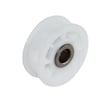
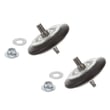
- Dryer drum support roller 4581EL2002L (supports drum; worn rollers can rumble or thump)
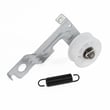
- Dryer drum belt 4400EL2001F (drives drum rotation; a worn belt can slip or break)
- Dryer thermistor AGM30045804 (helps regulate temperature; problems can affect heat and cycle time)
Quick “repair vs. replace” snapshot
| Symptom | Most common cause | First step |
|---|---|---|
| Long dry times | Vent restriction | Clean/inspect venting and hood |
| Thumping/squealing | Rollers, idler, belt wear | Inspect drum support and belt path |
| Tumbles but no heat | Heat control/heating circuit issue | Troubleshoot heat components |
Why it matters
A dryer that runs hot or takes too long to dry usually wastes energy and accelerates wear on the motor, belt, and drum support components. Strong airflow and routine cleaning are the simplest ways to extend service life.
Last updated: January 2026
How do I reset my LG dryer flow sensor?
The LG DLE5977S doesn’t list a dedicated “Flow Sense” or “flow sensor” reset in its model-specific manual; this dryer primarily uses a moisture-sensing system to adjust cycle time. If you’re seeing airflow-related symptoms (long dry times, overheating), the practical “reset” is restoring proper venting and power-cycling the control.
What to do on the LG DLE5977S
Use these steps to clear many airflow-related symptoms after you correct the cause:
- Turn the dryer off.
- Unplug the dryer (or switch the breaker off) for about 5 minutes.
- Clean the lint screen and reinstall it fully.
- Inspect and clear the exhaust path: dryer outlet, vent duct, and outside hood.
- Restore power.
- Run a short Timed Dry cycle and confirm strong airflow at the outside vent.
For venting limits, duct type, and maintenance intervals that apply to this model, follow the DLE5977S dryer manual.
Airflow checks that matter most
The DLE5977S manual emphasizes that restricted venting and lint buildup are common causes of poor drying performance.
| Check point | Normal | Problem sign |
|---|---|---|
| Lint screen | Clean mesh, seated flat | Clogged mesh, not fully seated |
| Vent duct behind dryer | Short, smooth, not crushed | Kinked, crushed, sagging |
| Outside hood | Damper opens, strong air | Weak air, damper barely moves |
When a part may be involved
If airflow is good but drying is still inconsistent, we typically look at components tied to airflow and sensing.
- A damaged or poorly fitting lint screen (see LG dryer lint screen 5231EL1003B)
- A loose or obstructed blower wheel (lint packed inside the blower housing)
- Moisture sensing issues that affect Sensor Dry cycles (see dryer moisture sensor 6500EL3001A)
Why it matters
Good airflow prevents overheating and helps the heater, thermostats, and motor run within normal temperatures. It also shortens dry times and improves Sensor Dry accuracy on the LG DLE5977S.
Last updated: January 2026