Installation guide
 Owner’s manual
 Error Codes


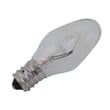
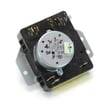


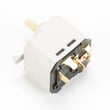
How do I know if my Kenmore dryer thermal fuse is blown?
On Kenmore electric dryer model 11061202013, a blown thermal fuse (or thermal cut-off) typically shows up as a dryer that will not run at all, or runs but produces no heat. The most reliable way to know is to unplug the dryer and test the fuse for continuity with a multimeter using the wiring and access steps in the 11061202013 installation guide.
- Dryer will not start even with the door closed and Start pressed firmly
- Drum does not tumble (no motor sound)
- Dryer runs but there is no heat (some failures affect heat only)
- Problem appears after restricted airflow (clogged lint screen or crushed vent)
- Disconnect power: Unplug the dryer or switch off both dryer breakers.
- Access the thermal device: Remove the appropriate panel to reach the heater housing or blower housing (location varies by design).
- Remove one wire from the fuse terminal so you do not read back through the circuit.
- Set your multimeter to continuity (or lowest ohms).
- Touch a probe to each terminal.
| Meter result | What it indicates | What to do next |
|---|---|---|
| Beep or near 0 ohms | Fuse is good | Check airflow, thermostats, heater circuit |
| No beep or OL/infinite | Fuse is blown | Replace the thermal fuse or thermal cut-off kit |
On this Kenmore dryer platform, overheating and no-heat issues are often tied to the thermal safety parts and heater circuit. If you are replacing the thermal cut-off, we typically replace the matched kit to restore safe operation.
- Dryer thermal cut-off fuse kit 279816
- Dryer operating thermostat WP3387134
- Dryer high-limit thermostat WP3977767
A thermal fuse or thermal cut-off opens to prevent overheating. If you replace it without fixing the airflow restriction (lint screen, vent duct, outside hood), the new fuse can blow again quickly.
Last updated: February 2026
How do I know what series Kenmore dryer I have?
Your Kenmore dryer “series” is identified from the full model number on the appliance ID tag; for Kenmore 110 models like 11061202013, the first three digits (110) indicate the series/family. On most Kenmore dryers, you’ll find the model and serial tag in the door opening area.
- Open the dryer door and look around the door opening (cabinet frame) for the ID tag.
- Check the back panel if you don’t see a tag in the door area.
- Write down the model number and serial number exactly as shown.
- Record the purchase and installation dates for your records (the install guide includes a notes section).
- Use the full model number when ordering parts or looking up diagrams.
Kenmore model numbers are typically grouped by a prefix that points to the product family and original manufacturer. For this model:
| What you’re looking at | Example | What it tells you |
|---|---|---|
| Series/family prefix | 110 | Kenmore 110 series dryer family |
| Full model number | 11061202013 | Exact configuration for parts and service |
| Serial number | (varies) | Production run details (useful for service) |
Using the full model number prevents wrong-part orders. Even within the Kenmore 110 series, items like the heating circuit, timer, door switch, and drum support parts can vary by exact model.
Use the model number to match documentation and specs in the 11061202013 installation guide.
Last updated: February 2026
How do I reset the Kenmore 11061202013 dryer?
To reset your Kenmore 11061202013 electric dryer, we recommend doing a simple power reset: turn the dryer off, disconnect power for 1 minute, then restore power and try a timed dry cycle. This clears many control glitches and “won’t start” conditions.
- Turn the cycle selector to Off.
- Unplug the dryer (or switch both dryer breakers off).
- Wait 1 full minute.
- Restore power.
- Close the door firmly, then select Timed dry and press Start.
If you are using the installation start-up check, follow the start procedure in the 11061202013 installation guide.
The installation instructions list common “no start” checks. Work through these in order:
- Confirm controls are set to a running/On position and Start is pressed firmly.
- Verify the dryer is plugged in and the electrical supply is on.
- Check the door is fully closed; a failed door switch can prevent starting.
- Check household fuses or breakers; many electric dryers use two fuses or a 2-pole breaker.
- If the drum light works but the motor will not run, inspect the belt and motor system.
| Symptom | Most common cause | Example part for model 11061202013 |
|---|---|---|
| No response when pressing Start | Door not sensed closed | Dryer door switch WP3406107 |
| Hums but drum does not turn | Broken belt or seized roller/idler | Belt 341241 |
| Runs but shuts off quickly | Overheating from restricted venting | Lint screen and venting (maintenance) |
A reset is fast, but repeated “no start” issues usually point to a door-switch problem, a power supply issue (one leg of 240V missing), or a drive problem like a broken belt. Fixing the root cause prevents overheating, nuisance shutdowns, and longer dry times.
Last updated: February 2026
How many cubic feet is a Kenmore series 500 dryer?
Kenmore “500 series” dryers come in multiple sizes, so cubic feet depends on the exact model. For your Kenmore 11061202013 electric dryer, the installation instructions confirm it is a 29-inch wide dryer; most 29-inch Kenmore/Whirlpool-built dryers are typically 6.5 to 7.0 cu. ft. Check the capacity listing in the 11061202013 owner's manual.
We recommend using the model-specific documents and the rating label so you get the exact cubic feet for your unit.
- Look in the Specifications section of the 11061202013 owner's manual.
- Check the model and serial tag (usually inside the door opening) for a capacity/spec line.
- If your dryer has multiple drum options, match the spec to your exact model number: 11061202013.
- If you are comparing dryers, use drum capacity (cu. ft.) plus door opening size and venting setup.
| Dryer size class | Common width | Typical capacity |
|---|---|---|
| Compact | 24 in. | 3.4 to 4.0 cu. ft. |
| Standard | 27 in. | 6.0 to 7.0 cu. ft. |
| Large / wide | 29 in. | 6.5 to 7.4 cu. ft. |
Capacity affects how well loads tumble and dry. If you routinely overload a dryer, drying times increase and airflow can suffer, which can contribute to overheating and nuisance trips of safety devices like the thermal cut-off.
The installation guide for this model calls for proper exhaust venting (4-inch heavy metal venting, exhausted outdoors). Poor venting can make a “large capacity” dryer feel small because loads take longer and dry unevenly. See the 11061202013 installation guide for venting requirements.
Last updated: February 2026
How much does it cost to replace a heating element in a Kenmore dryer?
For Kenmore electric dryer model 11061202013, the typical total cost to replace the heating element is about $150 to $350 (part plus labor). If you do the repair yourself, the part cost is often the main expense; confirm the correct procedure in the 11061202013 installation guide.
Replacement cost depends on whether you hire service and whether other heat-related parts are also needed.
- DIY parts only: commonly $50 to $120
- Service call + labor: commonly $100 to $250
- Extra parts (if overheating caused damage): $15 to $60+
| Scenario | What you pay for | Typical total |
|---|---|---|
| DIY element replacement | Heating element only | $50 to $120 |
| Pro repair (most common) | Element + labor | $150 to $350 |
| Pro repair with airflow issue | Element + vent cleaning/extra parts | $200 to $450 |
A broken heater coil is common, but we also see no-heat symptoms when a safety device opens due to restricted airflow.
- Heating element (coil open or grounded)
- Thermal cut-off or thermal fuse (opens from overheating)
- Operating thermostat or high-limit thermostat
- House power issue (electric dryers often need two fuses/breakers)
For this model, the heating element is sold as dryer element 279838.
These checks can prevent replacing the wrong part.
- After the dryer runs 5 minutes, open the door and feel for heat
- If there is no heat, verify both household fuses/breakers are good (electric dryers can run but not heat on one leg)
- Clean the lint screen and confirm strong airflow at the exhaust
- If the dryer overheated, inspect heat-limit parts before installing a new element
A heating element often fails because the dryer runs too hot from poor venting. Fixing airflow issues helps the new element last longer and keeps drying times normal.
Last updated: February 2026
What does PF stand for on a Kenmore dryer?
PF on a Kenmore dryer means power failure. On Kenmore model 11061202013, it shows up when incoming power is interrupted during a cycle (a brief outage, a tripped breaker, or a loose power cord connection), and the dryer stops.
- Press Start to resume the cycle (or reselect the cycle if it cleared).
- Check your home electrical panel for a tripped double breaker (dryer circuits are typically 240V).
- Make sure the dryer cord is fully seated in the outlet; do not use an extension cord.
- If PF returns, inspect the outlet and cord for heat damage; replace damaged components.
- Review the electrical connection requirements in the 11061202013 installation guide.
| What you notice | Most likely cause | What we recommend |
|---|---|---|
| Clock/display reset, PF appears after storm | Utility outage or brief power drop | Resume cycle; monitor for repeats |
| PF happens when dryer starts heating | Weak breaker, loose terminal block connection | Check breaker and cord/terminal connections |
| PF happens randomly, outlet feels warm | Worn outlet or cord, poor contact | Stop using; have outlet/cord serviced |
A repeated PF code is more than an inconvenience; unstable power can cause nuisance shutdowns and can overheat wiring connections. Fixing the power supply issue helps protect the dryer’s timer, control board, and wiring.
Last updated: February 2026
What size is a Kenmore Model 11061202013 dryer?
For the Kenmore 11061202013 electric dryer, the cabinet size is about 43 3/8 in. high x 29 in. wide x 27 3/4 in. deep (depth varies slightly by door style). For exact fit planning, we use the dimensions shown in the 11061202013 installation guide.
These are the key measurements typically used for installation clearances and alcove or closet planning:
- Height: 43 3/8 in. (about 1102 mm)
- Width: 29 in. (about 737 mm)
- Depth: 27 3/4 in. (about 705 mm)
- Recommended side clearance: about 1 in. on each side (helps reduce noise transfer)
- Typical rear clearance for venting: at least 5 1/2 in. behind the dryer (for vent and elbow)
The installation instructions show two door configurations (side-swing and hamper-style). That is why depth can look slightly different depending on how you measure (cabinet only vs. door closed vs. handle).
| What you measure | What it means | Best for |
|---|---|---|
| Cabinet depth | Dryer body only | Closet depth planning |
| Overall depth (door closed) | Cabinet plus door/handle | Walkway clearance |
| Door swing clearance | Space needed to open door fully | Laundry room layout |
Correct sizing prevents common install problems like a crushed exhaust vent, a door that cannot open fully, or a dryer that sits too far forward. It also helps airflow, which improves drying performance and reduces overheating risk.
- Confirm you have a separate 30-amp circuit for this electric dryer.
- Make sure the floor is sturdy and reasonably level.
- Plan vent routing so the dryer can sit back without kinking the duct.
- Allow enough room for the door to open fully.
Last updated: February 2026