Owner’s manual
 Error Codes


What are the dimensions of a 28 cubic foot refrigerator?
A 28 cu. ft. refrigerator is usually about 36 inches wide, around 70 inches tall, and roughly 34 to 36 inches deep (depth varies most depending on handles and door style). For your Samsung RF28HFEDTSR, we recommend confirming the exact cutout and clearance measurements in the RF28HFEDTSR manual.
Most 28 cu. ft. French door and side-by-side refrigerators fall into these planning ranges:
- Width: 35 3/4 to 36 inches
- Height: 69 to 70 inches
- Depth: 34 to 36 inches (often listed without handles)
- Door swing clearance: varies by hinge design and handle depth
- Ventilation clearance: space needed behind/above for airflow
Even when the cabinet size is similar, installation fit depends on clearances.
- Measure the opening width at the front and back
- Measure height to the lowest cabinet/trim above the refrigerator
- Measure depth to the wall and note baseboards
- Confirm door swing will clear walls and islands
- Plan a path for delivery (doorways, hallways, turns)
| Measurement | Typical planning value | What changes it most |
|---|---|---|
| Width | ~36 in. | door style, trim kits |
| Height | ~70 in. | hinge cover, leveling legs |
| Depth | 34 to 36 in. | handles, door thickness |
A refrigerator that is only 1 inch too tall or too deep can prevent proper ventilation, cause doors to hit cabinets, or keep drawers from opening fully. Using the model-specific installation clearances helps avoid fit issues and cooling performance problems.
Last updated: January 2026
What is the most common problem with Samsung refrigerators?
For Samsung refrigerators like model RF28HFEDTSR, the most common issues we see are cooling problems (warm fridge or freezer), ice maker troubles (no ice or clumping), and water leaks. These symptoms often trace back to airflow restrictions from frost buildup, fan problems, or temperature control and sealed-system concerns.
These are the complaint patterns that show up most often across Samsung bottom-mount and French door designs:
- Fridge section warms up but freezer seems OK (airflow or evaporator frost issue)
- Ice maker stops producing, freezes up, or makes small/clumped cubes
- Water under crisper drawers or on the floor (defrost drain or water line issue)
- Loud humming, buzzing, or rattling (fan, ice room, or compressor area)
- Unit runs constantly and struggles to reach set temperature
For model-specific operating checks (controls, modes, alarms), we follow the steps in the RF28HFEDTSR manual.
| Symptom | Most likely system | First checks we recommend |
|---|---|---|
| Fresh food warm, freezer cold | Airflow/evaporator frost | Check vents blocked by food; listen for evaporator fan |
| Both sections warm | Sealed system or compressor circuit | Verify condenser area airflow; check for error codes |
| Water pooling inside | Defrost drain | Inspect for ice clogging; clear drain path |
| No ice | Ice maker/water supply | Confirm water pressure; check filter and fill tube |
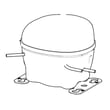
If the refrigerator cannot cool at all, runs continuously, or you hear repeated start attempts, the sealed system and compressor circuit become higher on the suspect list. For this model, a compatible replacement is the Samsung refrigerator compressor MKV190CL2BASH.
Cooling and ice maker symptoms can look similar, but the fix can be very different. Identifying whether the issue is airflow (frost or fan), water supply (filter/valve), or the sealed system helps avoid unnecessary parts replacement and reduces food spoilage risk.
Last updated: January 2026
Why is ice forming in the bottom of my Samsung fridge?
Ice forming on the bottom of your Samsung RF28HFEDTSR is usually caused by moisture getting into the freezer and then refreezing, or by defrost water not draining correctly and freezing in the lowest area. We start by checking door sealing, airflow, and the defrost drain path using the RF28HFEDTSR manual.
- Door not sealing tightly: torn gasket, food packages blocking the door, or a door slightly out of alignment.
- Frequent door openings: humid kitchen air enters, then freezes on the coldest surfaces.
- Blocked or frozen defrost drain: meltwater cannot flow to the drain pan, so it refreezes at the bottom.
- Poor airflow: overpacked freezer or blocked vents can create cold spots that promote icing.
- Warm items placed in freezer: extra moisture and heat load increases frost and ice.
- Inspect the door gasket for gaps, rips, or areas that do not contact the cabinet evenly.
- Do a paper test: close the door on a sheet of paper; if it slides out easily, sealing is weak.
- Clear vents and improve airflow: keep items from touching the rear wall and vent openings.
- Check for drain symptoms: recurring ice sheet on the freezer floor often points to a drain issue.
- Defrost and dry: unplug the refrigerator, remove food, and let the freezer fully defrost; then dry the compartment and restart.
| What you see | Most likely cause | Best first action |
|---|---|---|
| Ice sheet on freezer floor | Defrost drain restricted/frozen | Full defrost; then check drain path |
| Frost around door edges | Door gasket leak or door misalignment | Inspect gasket; adjust door alignment |
| Ice buildup after heavy use | Humid air intrusion | Reduce door-open time; verify seal |
| Uneven frost patterns | Airflow restriction | Repack to open vents |
Ice on the bottom can block airflow, reduce cooling performance, and lead to water leaks when it melts. Fixing the air leak or drain issue early helps protect food temperatures and reduces compressor run time.
Last updated: January 2026