Owner’s manual


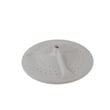
Are Whirlpool washer parts interchangeable?
Some Whirlpool washer parts are interchangeable, but we only recommend using parts listed for your exact washer model WTW6120HC0. Whirlpool uses multiple designs across model series, so a part that “looks the same” can still differ in fit, wiring, or calibration and cause leaks, noise, or spin and drain problems.
Parts can be interchangeable only when the replacement is the exact approved part for the model (or an approved substitute). For WTW6120HC0, the safest approach is to match by model number first, then confirm the part ID.
- Match the full model number: WTW6120HC0
- Compare the part ID (not just a description)
- Confirm the part’s location and function (drive system, lid lock, water fill)
- Avoid “universal” parts for critical systems (lid lock, inlet valve, actuator)
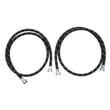
- Use new water inlet hoses during installation to prevent leaks
These components are model-sensitive because they affect safety, water control, and drive performance:
| System | Example part on this model | What can go wrong if mismatched |
|---|---|---|
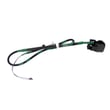
| Lid safety | Lid lock-sol W11700916 | Won’t lock, won’t start, lid error codes |
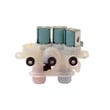
| Water fill | Washer water inlet valve W11220230 | No fill, overfill, temperature mix issues |
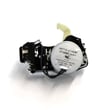
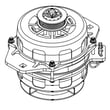
| Drive and spin | Washer actuator W10913953 | Won’t shift, won’t spin, grinding noises |
| Belt drive | Drive belt W11239857 | Slipping, squealing, no agitation/spin |
Use these checks before ordering:
- Look up parts by model WTW6120HC0.
- Confirm the part ID and the part name match what you need.
- Cross-check installation notes and maintenance guidance in the WTW6120HC0 washer installation and care manual.
A washer is a system; the lid lock, inlet valve, actuator, belt, and drive pulley all work together. Using the correct Whirlpool-approved part helps prevent repeat failures, water leaks, and cycle interruptions.
Last updated: February 2026
What does F1 and E3 mean on a Whirlpool washer?
On the Whirlpool WTW6120HC0 washer, an F1/E3 style code points to a drain or water-level sensing problem. In real-world troubleshooting, the most common causes are a drain restriction, a failing drain system component, or a control sensing the wrong water level; start with the quick checks in the WTW6120HC0 owner's manual.
- Unplug the washer for 1 minute, then restore power and retry a Rinse and Spin.
- Make sure the drain hose is not kinked, crushed, or shoved too far down the standpipe.
- Confirm the standpipe or laundry tub drain is flowing freely (a slow house drain can trigger drain errors).
- Reduce oversudsing: use HE detergent and measure carefully; too many suds can slow draining.
- Verify the washer is level; an unlevel tub can affect sensing and spin performance.
If the washer will not drain, drains slowly, or stops mid-cycle, these model-matched parts are frequent fixes:
| Symptom you see | Most likely area | Model-matched part to consider |
|---|---|---|
| Won’t drain or drains very slowly | Drain path or pump system | (Inspect hoses first) then check drive system and control inputs |
| Stops and shows code during drain/spin | Lid not locking consistently | Lid lock-sol W11700916 and washer lid strike W11457841 |
| Intermittent sensing, odd fill levels | Pressure sensing air path | Hose WP353244 |
When the washer cannot drain correctly or the water level signal is inaccurate, the control can stop the cycle to prevent overflow, protect the drive motor, and avoid spinning a tub that still contains water.
For additional code patterns and what to check by symptom, use our Whirlpool belt drive top load washer error codes guide.
Last updated: February 2026
What is the most common problem with Whirlpool washers?
The most common Whirlpool washer problems are not draining or not spinning, which customers often notice as standing water, a wet load at the end of the cycle, or a cycle that stops early. On the Whirlpool WTW6120HC0, these symptoms are frequently tied to load balance, drain restrictions, or a lid lock issue.
- Redistribute the load; bulky items can throw the basket off balance and prevent a full spin.
- Run a Rinse & Spin cycle to confirm whether the washer can drain and reach high spin.
- Verify the lid closes firmly; a lid lock problem can stop agitation or spin.
- Check the drain hose for kinks or a crushed section behind the washer.
- Use the maintenance steps in the WTW6120HC0 owner's manual to keep the washer interior and dispensers clean.
| Symptom | What it usually points to | Parts that often relate (if needed) |
|---|---|---|
| Won’t spin, stops mid-cycle | Unbalanced load, lid not locking, drive system issue | Lid lock-sol W11700916, drive belt W11239857 |
| Won’t drain or drains slowly | Drain hose restriction, pump or drain path issue | (Drain hose routing and checks are in the manual) |
| Loud banging or walking | Load balance, leveling, suspension wear | Leveling steps are in the manual |
| Won’t start | Power supply issue, lid lock not engaging, control/actuator issue | Washer actuator W10913953 |
A washer that cannot drain or spin leaves clothes wetter, increases cycle time, and can strain the drive system. Addressing balance, hose routing, and lid lock operation early helps prevent repeat failures and reduces wear on components like the drive belt and actuator.
If basic checks do not change the symptom, these model-matched parts are common fixes for spin or start complaints:
- Lid lock-sol W11700916 (lid won’t lock, won’t spin, intermittent stopping)
- Drive belt W11239857 (slipping, squealing, weak or no spin)
- Washer actuator W10913953 (won’t shift between agitate and spin)
For code-based troubleshooting, we also use the Whirlpool belt drive top load washer error codes guide to match the displayed code to the most likely cause.
Last updated: February 2026