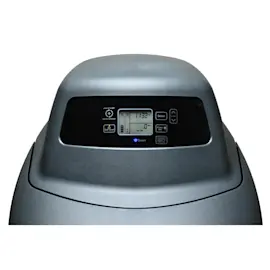
Owner’s manual
 Error Codes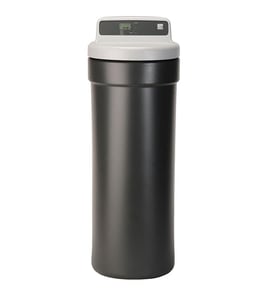




How long does a 40 lb bag of water softener salt last?
For the Kenmore 62538846003 water softener, a 40 lb bag of pellet or nugget salt typically lasts about 4 to 6 weeks in an average household; harder water, higher water use, or frequent regeneration can shorten that to 2 to 4 weeks.
What changes how fast you use salt
Salt use is driven by how often the softener regenerates and how much brine it needs each cycle.
- Water hardness (GPG): higher hardness uses more salt
- Household water use: more gallons per day means more regeneration
- Iron in the water: often increases regeneration demand
- Salt type setting: the timer setting for salt type affects cycle behavior
- Salt bridging: a crust can prevent salt from dissolving, causing hard water even when the tank looks full
How full we recommend keeping the salt tank
Your manual explains you do not need to keep the tank full; in humid areas it is best to keep it about 1/4 to 1/2 full and refill more often. Use pellet or nugget water softener salt (avoid rock salt). See the owner's manual.
Quick refill guide (practical targets)
| What you see | What it usually means | What we do |
|---|---|---|
| Tank around 1/3 full | Normal operating range | Add salt soon and reset salt monitor if used |
| Low salt light on | Salt is getting low | Add salt before it runs out |
| Tank looks full but water is hard | Possible salt bridge | Break up bridge, check brinewell cover |
Why it matters
If the softener runs out of usable salt (or a salt bridge forms), it cannot make brine for regeneration, and you will quickly get hard water again. Keeping salt at a steady level also helps reduce bridging in humid conditions.
Last updated: January 2026
How much should a new water softener system cost?
A new whole-home water softener system typically costs $1,000 to $6,000 installed, depending on grain capacity, water hardness, plumbing complexity, and features (metered regeneration, electronics, bypass valve). For Kenmore model 62538846003, we recommend using the 62538846003 owner's manual to match sizing and setup needs before you buy.
Typical price ranges (unit vs. installed)
Here are realistic ranges we see for residential water softeners:
- Basic softener (unit only): $300 to $1,500
- Mid-range softener (unit only): $800 to $2,500
- Premium or specialty systems (unit only): $2,000 to $7,000+
- Professional installation (labor + fittings): $300 to $1,000+
| What you’re paying for | Typical cost range | What changes the price most |
|---|---|---|
| Softener equipment | $300 to $7,000+ | Grain capacity, controls, brand, efficiency |
| Installation labor | $300 to $1,000+ | Pipe material, shutoff access, drain routing |
| Common add-ons | $50 to $500+ | Bypass valve, new shutoffs, drain line updates |
What drives the total cost
These factors usually move the price the most:
- Grain capacity and household size (bigger capacity usually costs more)
- Local water hardness and iron content (may require higher capacity or pretreatment)
- Plumbing access (tight spaces, older piping, or long drain runs add labor)
- Electrical and drain requirements (nearby outlet, proper drain/air gap)
- Whether you reuse or replace key components like a bypass valve
Why it matters
If the softener is undersized, it regenerates too often and wastes salt and water. If it is oversized, you pay more upfront and can get less efficient operation. Getting the sizing and settings right protects plumbing, water heaters, and fixtures.
When repair is the better value
If your current Kenmore 62538846003 is leaking or not regenerating, replacing a few wear parts can restore performance for far less than a full replacement. A common example is renewing internal seals with the Kenmore water softener seal kit 7185487.
Last updated: January 2026
What water softeners do plumbers recommend?
Plumbers typically recommend water softeners that are correctly sized to your home’s water hardness and flow demand, and that have a proven control valve and easy-to-service parts. For a Kenmore water softener like model 62538846003, the best “recommendation” is the unit that matches your water test results and is installed and programmed per the 62538846003 owner’s manual.
What plumbers usually look for (and what you should too)
- Correct capacity for your hardness level (grains per gallon) and household size
- Reliable regeneration control (timer or demand-initiated)
- A bypass valve for service and troubleshooting
- Easy maintenance access to seals, O-rings, and the valve drive motor
- Availability of common replacement parts (seal kit, valve motor, screens)
Quick checklist to choose the right softener
| What to match | What to measure | Why it matters |
|---|---|---|
| Water hardness | Hardness test (gpg) | Prevents under-softening or wasted salt |
| Peak flow | Bathrooms, fixtures, irrigation | Avoids pressure drop and hard-water “breakthrough” |
| Iron level | Water test (ppm) | Some softeners handle only “clear water” iron |
| Installation location | Drain, power, freeze protection | Prevents damage and nuisance failures |
Kenmore-specific guidance for model 62538846003
Our Kenmore 62538846003 is designed to remove hardness minerals and “clear water” iron up to the limits listed in the manual, but it is not a drinking-water purifier. It also runs on 24 volts using the included transformer, and the softener and piping must be protected from freezing (all covered in the 62538846003 owner’s manual).
If you’re comparing brands, use your water test results first, then compare features like regeneration type, serviceability, and parts support.
Why it matters
A “top-rated” softener that is oversized, undersized, or installed incorrectly will waste salt, regenerate too often, or still leave you with hard water. Matching hardness, iron, and flow demand is what delivers consistent soft water and protects appliances.
Last updated: January 2026