Owner’s manual



How do I fix a 4E error on my Samsung washer?
A 4E error on your Samsung WF520ABP washer means the washer is not filling with water correctly. We fix it by confirming water supply is on and flowing, then checking hoses and inlet screens; if water flow is still weak, the water inlet valve is the most common failed part.
Quick checks (most fixes)
- Turn both hot and cold shutoff valves fully on.
- Make sure fill hoses are not kinked, crushed, or frozen.
- Verify strong water flow at the wall by briefly removing a hose and aiming it into a bucket.
- Clean the small mesh screens inside the hose connections at the washer.
- Confirm the correct cycle and temperature settings; some cycles require both supplies.
Step-by-step: what to do next
- Power reset: Unplug the washer (or switch off the breaker) for 2 minutes, then retry.
- Check hose routing: Keep hoses as straight as possible; avoid tight bends behind the cabinet.
- Clean inlet screens: Remove hoses at the washer, pull out and rinse the screens, reinstall.
- Test fill performance: Start a normal cycle and listen for steady water flow into the dispenser.
When a part is likely needed
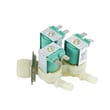
If the valves are on, hoses and screens are clear, and water pressure is good but the washer still throws 4E, the inlet valve may not be opening reliably.
Common related part for this model
Symptom-to-cause guide
| What you notice | Most likely cause | What we recommend |
|---|---|---|
| No water enters at all | Shutoff valve closed, kinked hose, clogged screen | Restore supply, straighten hose, clean screens |
| Slow fill, then 4E | Low water pressure or partially clogged screen | Check pressure, clean screens |
| Good pressure, screens clean, still 4E | Inlet valve failure | Replace inlet valve |
Why it matters
A washer that cannot fill to the correct level can stop mid-cycle, rinse poorly, and strain components by repeatedly trying to fill. Fixing the water supply issue quickly helps prevent repeat errors and incomplete washes.
For model-specific access panels, hose routing, and safety steps, follow the WF520ABP owner's manual.
Last updated: February 2026
How long does a Samsung VRT washer last?
A Samsung VRT front-load washer like model WF520ABP typically lasts 10 years with average use; with consistent care (proper loading, cleaning, and prompt repairs), it commonly reaches 12 to 15 years. Use the WF520ABP owner's manual for the maintenance routine that best supports long life.
Typical lifespan for this washer type
Front-load washers have more wear points (door boot, drain pump, suspension) than basic top-loaders, so lifespan depends heavily on maintenance and vibration control.
- Average household use: about 10 years
- Well-maintained, moderate loads: 12 to 15 years
- Hard use (heavy loads, frequent cycles): closer to 8 to 10 years
| Usage pattern | What it looks like | Typical outcome |
|---|---|---|
| Light | Small loads, fewer cycles | Longer life |
| Normal | Mixed loads, regular weekly use | Average life |
| Heavy | Large loads, frequent cycles | Shorter life |
What shortens life fastest (and what to do instead)
- Overloading: keep loads loose enough to tumble freely
- Chronic out-of-balance spinning: level the washer and avoid washing single heavy items
- Detergent overuse: use HE detergent and measure carefully
- Skipping cleaning: run periodic tub-clean cycles and wipe the door area dry
- Ignoring early symptoms: address leaks, grinding, or slow draining right away
Parts that commonly affect “how long it lasts”
If the washer starts banging, walking, leaking at the door, or not draining, these are common wear items for the WF520ABP platform:
- Samsung washer shock absorber DC66-00470A (controls tub movement and vibration)
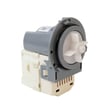
- Washer drain pump DC31-00054D (helps prevent standing water and drain errors)
- Washer door boot assembly DC97-16140C (prevents door leaks and odor issues)
Why it matters
Most “washer lifespan” problems are really vibration, moisture, or drainage problems. Keeping the tub stable, the door seal clean, and the pump path clear reduces stress on the motor, bearings, and control system.
Last updated: February 2026
What is the capacity of the Samsung WF520ABP?
The Samsung WF520ABP washer has a 4.3 cu. ft. capacity, which is considered a large-capacity front-load washer. That size typically handles bulky items like comforters and larger mixed loads while still using high-efficiency wash action.
What 4.3 cu. ft. means for everyday loads
In practical terms, a 4.3 cu. ft. drum is designed for fewer loads per week and better space for tumbling (which helps cleaning and rinsing).
- Fits larger mixed loads (towels, jeans, sweatshirts)
- Better room for bulky items (blankets, comforters)
- Helps reduce overpacking, which can cause vibration and poor spin
- Works best with HE detergent and proper load sizing
Quick capacity comparison
| Washer capacity | Typical description | Best for |
|---|---|---|
| 3.5 to 3.9 cu. ft. | Medium-large | Regular family loads |
| 4.0 to 4.5 cu. ft. | Large | Bulky items, fewer loads |
| 4.6 cu. ft. and up | Extra-large | Very large households |
Why it matters
Capacity affects cleaning performance and washer balance. Overloading a front-load washer can lead to out-of-balance spinning and extra wear on suspension parts. If your WF520ABP is shaking or banging, worn suspension components such as the washer shock absorber DC66-00470A are a common cause.
Where to confirm the spec
For the exact capacity listing and other model-specific specs (cycles, dimensions, electrical requirements), check the WF520ABP owner's manual.
Last updated: February 2026
What is the most common problem with Samsung washing machines?
The most common issues we see with Samsung washers like model WF520ABP are spin and drain problems: the washer shakes or bangs, leaves clothes wet, or stops with water still in the tub. These symptoms usually trace back to load balance, draining restrictions, or worn suspension and drive components.
Most common symptoms and what they usually mean
- Won’t spin out / clothes still wet: load is unbalanced, drain is slow, or the drive system is struggling
- Banging, walking, or heavy vibration: leveling issue or worn suspension (shocks)
- Won’t drain or drains slowly: blockage in the pump/filter area or a failing drain pump
- Door won’t lock or leaks at the door: door boot or clamp issues
- Stops mid-cycle with an error code: often points to a specific system (drain, fill, balance)
Quick checks we recommend first (before replacing parts)
- Rebalance the load: wash similar-weight items together; avoid one heavy item by itself.
- Confirm the washer is level: all four feet firmly on the floor; no rocking.
- Check draining: verify the drain hose is not kinked and the standpipe is not backing up.
- Run a rinse and spin: helps confirm whether the issue is drain-related or balance-related.
- Look for error codes: they narrow the troubleshooting fast (especially for drain and balance faults).
Common parts involved when the problem is mechanical
If the basic checks do not fix it, these are frequent culprits on front-load washers:
| Symptom | Most likely system | Example part for WF520ABP |
|---|---|---|
| Excessive shaking/banging | Suspension | Washer shock absorber DC66-00470A |
| Won’t drain / water left in tub | Drain system | Washer drain pump DC31-00054D |
| Leaks at door or boot won’t stay seated | Door boot/clamp | Washer door boot spring clamp DC97-04973B |
Why it matters
Spin and drain problems are connected: if the washer cannot drain fast enough, it often will not reach full spin speed. Fixing the root cause protects the tub, bearings, and motor system, and it prevents repeat “wet clothes” loads.
Helpful model-specific resources
- Use the WF520ABP owner’s manual for cycle behavior, error code meanings, and operating checks.
- For balance-related faults, our Samsung front load washer dc error code guide is a fast way to match symptoms to next steps.
Last updated: February 2026