Owner’s manual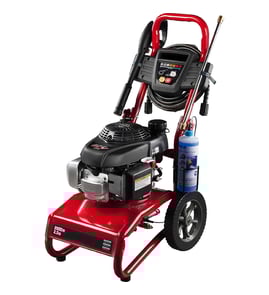
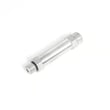




Can you put 87 gas in a pressure washer?
Yes. For the Craftsman 580752520 gas pressure washer, we recommend clean, fresh regular unleaded gasoline with a minimum 87 octane (87 AKI). Do not use E85, and do not mix oil into the gasoline; follow the fuel guidance in the Craftsman 580752520 operator’s manual.
- Use fresh, clean, unleaded gasoline.
- Use 87 octane (87 AKI) or higher.
- Gasoline with up to 10% ethanol is acceptable.
- Do not use E85 or other unapproved fuels.
- Do not add oil to the gas (this is not a 2-cycle fuel mix).
| Fuel type | OK to use? | Notes |
|---|---|---|
| Regular unleaded 87 octane (E0 or up to E10) | Yes | Best everyday choice for normal conditions |
| Midgrade/premium (89 to 93) | Yes | Usually fine, but not required for performance |
| E15 | Not recommended | Can cause fuel system issues on many small engines |
| E85 | No | Specifically not approved for this model |
Using the correct octane and ethanol blend helps prevent hard starting, surging, and carburetor varnish. It also protects the fuel system so your pressure washer runs consistently and is easier to store between uses.
If your 580752520 has trouble starting or runs rough after storage, we typically see stale fuel as the cause. These steps help:
- Drain old fuel and refill with fresh 87 octane.
- Treat fresh fuel with a fuel stabilizer if you will store it 30 days or longer.
- Check the fuel cap venting and fuel lines for restriction.
- Review our solving pressure washer problems guide for common fuel and starting checks.
Last updated: January 2026
What is a good PSI for a gas pressure washer?
A good PSI depends on what you’re cleaning. For the Craftsman 580752520 gas pressure washer, the rated maximum outlet pressure is 2,700 PSI, which is a strong all-around level for most household cleaning when you choose the right spray pattern and keep a safe distance (see the 580752520 operator's manual).
- 1,200 to 2,000 PSI: cars, patio furniture, grills, painted surfaces
- 2,000 to 3,000 PSI: driveways, sidewalks, decks, fences, siding (most common “homeowner” range)
- 3,000+ PSI: heavy-duty stripping and deep concrete cleaning; higher risk of surface damage
This model uses a selector nozzle with multiple spray patterns; the pattern you choose and how close you spray matter as much as the PSI rating.
- Start with a wider, gentler pattern and increase only if needed
- Keep the nozzle 8 to 24 inches from the surface for most cleaning
- Avoid getting closer than 6 inches on tires and other easily damaged materials
- Use SOAP for detergent application; detergent won’t apply in the high-pressure patterns
| Cleaning task | Practical target | Safer approach |
|---|---|---|
| Washing a vehicle | Lower pressure | Wider pattern, more distance |
| Cleaning siding | Medium pressure | Test a small area first |
| Cleaning concrete | Medium to higher pressure | Keep moving; don’t “etch” one spot |
Using more PSI than the surface can handle can gouge wood, strip paint, etch concrete, and force water behind siding. Using too little PSI wastes time and can lead to overuse of detergent.
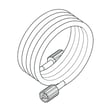
If spray feels weak or inconsistent, the issue is often flow restriction or a leak, not “needing more PSI.” For this model, inspect the hose and connections; a worn or leaking hose can reduce performance. If needed, replace the pressure washer hose 84006753.
For broader troubleshooting steps, we recommend solving pressure washer problems.
Last updated: January 2026
Is it worth repairing a pressure washer?
Yes, repairing a pressure washer is usually worth it when the fix is a common wear item and the pump and engine on your Craftsman 580752520 are still in good shape; if the repair approaches about half the cost of a comparable new unit, replacement often makes more sense. For model-specific specs and maintenance intervals, use the 580752520 operator's manual.
- Repair if the problem is a hose leak, loose fitting, clogged inlet screen, or detergent siphon issue
- Repair if the engine starts and runs smoothly and the pump still builds pressure
- Repair if you can fix it with basic tools and a low-cost part
- Replace if the pump is severely worn (no pressure even after basic checks) or the engine has major internal damage
- Replace if multiple systems are failing (pump, engine, hose, gun) and downtime matters
These are typical, cost-effective fixes on gas pressure washers like the Craftsman 580752520:
- Replace a damaged high-pressure hose: pressure washer hose 84006753
- Fix detergent pickup issues by inspecting the siphon line and filter: pressure washer chemical injector hose 705076
- Clean the water inlet screen and confirm you are using cold water supply
- Verify the selector nozzle is set correctly (SOAP is required for detergent draw)
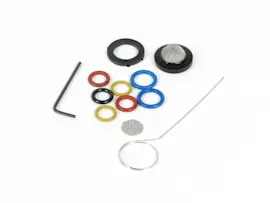
- Check for spray gun trigger issues and leaks at connections (often an O-ring or fitting issue)
| Situation | Usually best choice | Why |
|---|---|---|
| Minor leak, clog, or siphon problem | Repair | Low cost, fast turnaround |
| Unit runs well but has weak spray | Repair first | Often a restriction, air leak, or hose issue |
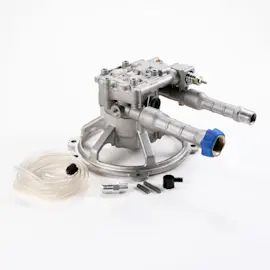
| Major pump failure or repeated loss of pressure | Replace or major repair decision | Pump work can approach replacement value |
| Engine won’t start and has low compression | Replace | Engine rebuild is rarely cost-effective |
A pressure washer that is maintained and repaired early (hoses, inlet screen, detergent system) typically avoids pump overheating and premature wear. On the 580752520, running with poor water supply or letting it idle without spraying can shorten pump life.
If you are deciding based on symptoms, we recommend starting with solving pressure washer problems to narrow down whether you are dealing with a supply issue, a hose restriction, or a pump-related problem.
Last updated: January 2026