Owner’s manual
 Error Codes



How do I reset my LG sensor dryer?
For the LG DLG1320W sensor dryer, we reset it by doing a power reset first: turn the dryer off, unplug it for 1 minute, then plug it back in and press START/PAUSE to run a cycle. This clears most control glitches and restores normal Sensor Dry operation; see the DLG1320W owner's manual.
Quick reset steps (recommended)
- Press POWER to turn the dryer off.
- Unplug the power cord (or switch the breaker off).
- Wait 60 seconds.
- Restore power.
- Select a Sensor Dry cycle and press START/PAUSE.
- If the dryer was paused, remember it can turn off automatically after about 8 minutes of being stopped.
If Sensor Dry is acting “off” (times jump, clothes still damp)
Sensor Dry uses moisture sensing to adjust time automatically, so the display can change during the cycle. These steps fix most “sensor” complaints:
- Clean the lint filter after every load.
- Avoid overloading; bulky loads can fool the sensor.
- Use the correct cycle (Normal, Towels, Delicates) and dryness level.
- Make sure airflow is strong; a restricted vent causes long dry times and overheating.
Helpful part to check
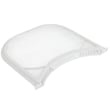
If airflow is weak because lint is bypassing a damaged screen, replacing the dryer lint screen 5231EL1003B helps restore proper drying performance.
What “reset” can and cannot do
| Situation | What to do | What to expect |
|---|---|---|
| Control panel frozen or cycle won’t start | Power reset (unplug 1 minute) | Clears many electronic glitches |
| Long dry times on Sensor Dry | Clean lint filter, check venting | Better airflow, more accurate sensing |
| Dryer stops mid-cycle | Restart with START/PAUSE | Normal operation resumes if no fault exists |
Why it matters
A proper reset plus good airflow keeps the DLG1320W’s dual-sensor drying system accurate, prevents unnecessary high heat, and helps loads finish dry without over-drying.
Last updated: February 2026
How does sensor dry work on LG dryer?
On our LG DLG1320W dryer, Sensor Dry uses a dual-sensor system to detect moisture in the load and in the air, then automatically adjusts the drying time for better results. The estimated time can change during the cycle as the dryer recalculates dryness.
How Sensor Dry adjusts the cycle
Sensor Dry cycles are designed to prevent over-drying and under-drying by continuously updating the run time.
- Sensors compare moisture levels in clothes and in the drum air
- The dryer automatically sets recommended temperature and dryness level for the selected Sensor Dry cycle
- The estimated time remaining may go up or down as conditions change
- Choosing Very dry/More dry increases time; Less dry/Damp dry decreases time
- Dry level selection is available only on Sensor Dry cycles
Best practices for accurate Sensor Dry results
Load size and fabric mix affect how well the sensors “read” moisture.
- Sort by fabric type (cottons, delicates, towels) and dry similar items together
- Avoid mixing heavy items (towels, jeans) with lightweight items (tees, synthetics)
- Do not overload; airflow through the drum is critical for sensor accuracy
- Clean the lint filter before every load; restricted airflow causes longer dry times
- Use Damp dry if you plan to iron items right after the cycle
What you will see on the display
| Cycle type | What the time display means | Can the time change automatically? |
|---|---|---|
| Sensor Dry | Estimated time remaining | Yes, it fluctuates as the dryer recalculates |
| Manual/Time Dry | Set time remaining | No, only changes if you adjust it |
Why it matters
Sensor Dry helps protect fabrics and saves energy by stopping closer to the dryness level you choose, instead of running a fixed time that may overdry clothes.
For cycle options and dryness level details specific to DLG1320W, use the DLG1320W owner's manual.
Last updated: February 2026
How to check LG dryer heating element?
To check the heating system on your LG DLG1320W dryer, we verify safe power shutoff first, then test the heater circuit with a multimeter for continuity and expected resistance. If readings are open, shorted, or far out of range, the heater circuit has a failed component.
Safety first (before any meter testing)
- Unplug the dryer (electric shock risk).
- If you have a gas version, shut off the gas supply valve before servicing.
- Let the dryer cool completely.
- Use gloves; sheet metal edges inside the cabinet are sharp.
- Confirm the dryer is on a dedicated 240 VAC circuit for electric models (never a 120 V circuit).
For model-specific access and panel removal steps, follow the DLG1320W owner's manual.
What to test with a multimeter
Most “no heat” complaints are caused by an open heater circuit. Check these items in this order:
- Heating element (electric models): test for continuity across the element terminals.
- High-limit thermostat: test for continuity at room temperature.
- Blower thermostat: test for continuity at room temperature.
- Thermal cutoffs or fuses (if equipped): test for continuity.
- Wiring and connectors: look for heat damage, loose spades, or broken wires.
If your dryer tumbles but does not heat and airflow is restricted, also inspect the venting and lint path; poor airflow can overheat the heater housing and open a safety thermostat.
Typical resistance and continuity expectations
Exact ohms vary by design, but these targets help you interpret results:
| Component | What “good” looks like | What “bad” looks like |
|---|---|---|
| Heating element | Continuity; typically ~8 to 15 ohms | Open (OL) or near 0 ohms (short) |
| High-limit thermostat | Continuity (closed) at room temp | Open (OL) at room temp |
| Blower thermostat | Continuity (closed) at room temp | Open (OL) at room temp |
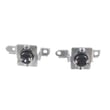
If you need a common heat-safety part for this model, the dryer high-limit thermostat AGM30045804 is one of the listed options for DLG1320W.
Why it matters
A dryer can “run” with a failed heater circuit, but it will not dry properly. Testing the element and thermostats quickly separates an airflow problem from a failed heating component, saving time and preventing repeat failures.
Last updated: February 2026
What is the most common problem with LG dryers?
The most common LG dryer problem is poor drying performance: the dryer takes too long or does not heat properly. On the LG DLG1320W, this is usually caused by restricted airflow (lint buildup or a clogged vent) or a heat-safety part shutting heat down; tumbling problems from worn drum parts are also common.
Most common symptoms we see
- Clothes still damp at end of cycle
- Cycle time keeps getting longer
- Dryer runs but there is little or no heat
- Burning smell or very hot cabinet (airflow restriction)
- Squealing, thumping, or drum not turning
Quick checks that fix many “no heat” and “long dry time” calls
Start with these basics from the DLG1320W owner's manual and standard LG dryer troubleshooting:
- Clean the lint filter before every load; wash it occasionally and dry it fully before reinstalling.
- Confirm strong airflow at the outside vent hood while the dryer is running.
- Check the vent path for kinks, crushed flex duct, or heavy lint buildup.
- For gas models, confirm both the house gas shutoff and the dryer gas shutoff are fully open.
- Verify power: the cord is fully seated and the breaker is not tripped.
Parts that commonly cause the problem
Airflow issues come first, but if airflow is good, these parts are frequent culprits:
| Symptom | Common cause | Example part for DLG1320W |
|---|---|---|
| Runs but no heat / heat cuts out | High-limit thermostat opens from overheating | Dryer high-limit thermostat AGM30045804 |
| Takes too long, sensor cycles end early | Moisture sensor bars coated with residue | Dryer moisture sensor 6500EL3001A |
| Drum will not tumble or squeals | Belt, idler, or rollers worn | Dryer drum belt 4400EL2001F |
Why it matters
A restricted vent can make any dryer seem “bad at heating” because the heat cannot move through the drum. Fixing airflow first protects key components (thermostats, burner system, motor) and restores normal cycle times.
For error-code related symptoms, use our LG dryer error codes reference to match the code to the most likely cause.
Last updated: February 2026
What is the remote start button on an LG dryer?
On the LG DLG1320W dryer, the Remote Start button is used to enable remote control features (when paired with the LG app) so you can start or manage a cycle from your phone after you have selected the cycle and options at the dryer. For normal use at the dryer, you still start the cycle with START/PAUSE (see the DLG1320W owner's manual).
How Remote Start typically works
Remote Start is an “enable” button, not the main start button. In most setups, you:
- Turn the dryer on and choose a cycle with the cycle selector knob
- Adjust cycle settings and options on the control panel
- Press Remote Start to allow app control
- Start the cycle from the app (or manage certain functions remotely)
For starting a cycle directly at the dryer, the manual procedure is to press START/PAUSE after selecting your cycle and settings.
Quick comparison: START/PAUSE vs. Remote Start
| Control | What it does | When to use it |
|---|---|---|
| START/PAUSE | Starts or pauses the selected cycle at the dryer | Everyday, in-person operation |
| Remote Start | Enables remote/app control of the dryer | When you want to start or manage the cycle from your phone |
Why it matters
If Remote Start is enabled but you are trying to run the dryer normally, it can feel like the dryer “won’t start” because Remote Start is not the same as pressing START/PAUSE. Using the correct button prevents confusion and helps you avoid canceled settings.
If Remote Start is not working
These checks fix most Remote Start issues:
- Confirm the dryer is powered on and a cycle is selected
- Press Remote Start after choosing cycle settings (not before)
- Make sure the door is fully closed (the dryer will not run with the door open)
- If the dryer was paused too long, restart the cycle using START/PAUSE (the dryer can shut off automatically after being stopped)
- Use the correct error code information if a code appears (see LG dryer error codes)
Last updated: February 2026
Why is my LG dryer showing D?
On our LG DLG1320W dryer, a “D” message is a venting airflow warning (often shown as d80, d90, or d95). The dryer can still run, but restricted exhaust airflow makes drying take longer and can cause overheating.
What the “D” (d80/d90/d95) message means
These codes indicate how restricted the dryer’s venting is:
| Display | What it points to | What you’ll notice |
|---|---|---|
| d80 | Significant restriction | Longer dry times, hotter cabinet |
| d90 | Severe restriction | Very long dry times, possible shutoffs |
| d95 | Extreme restriction | Frequent heat-related interruptions |
What to do first (fast checks)
- Clean the lint screen completely and make sure it seats correctly (a damaged screen can leak lint into the duct).
- Check the vent hood outside; confirm the flap opens strongly while the dryer runs.
- Inspect the flexible vent behind the dryer; straighten kinks and crushed sections.
- If you use foil or plastic duct, replace it with heavy metal venting.
- Clean out old ductwork and lint buildup before running more loads.
If your lint screen is torn, warped, or not fitting tightly, replacing it can reduce lint bypass into the blower and vent; use the correct dryer lint screen 5231EL1003B.
Why it matters
Restricted venting traps heat and moisture inside the dryer. That increases cycle time, wastes gas, and can trip safety thermostats such as the dryer high-limit thermostat AGM30045804, which protects the dryer from overheating.
Helpful model-specific notes
Our DLG1320W is shipped to vent out the rear, and it can be reconfigured to vent to the bottom or side (right-side venting is not available on gas models). For the correct venting setup details and safety guidance, follow the DLG1320W owner's manual.
Last updated: February 2026