Owner’s manual
 Error Codes




How to hard reset Kenmore washer?
To hard reset your Kenmore washer model 79641393511, unplug it for 60 seconds, then plug it back in and try a cycle again. This power reset clears many control glitches and is the same reset step used for a “control error” in the 79641393511 owner's manual.
Hard reset steps (recommended first)
- Press POWER to turn the washer off.
- Unplug the washer from the outlet.
- Wait 60 seconds.
- Plug the washer back in.
- Press POWER, select a cycle, then press START/PAUSE.
If the washer is stuck and the door will not unlock
The door stays locked if the water level is high or the water is hot. Use this safe drain method:
- Press START/PAUSE to pause (this is the normal way to unlock the door).
- If it still will not unlock, press POWER.
- Press SPIN SPEED (do not select a full cycle).
- Press START/PAUSE to drain and spin.
- Do not force the door open.
When a reset is not enough
A reset helps symptoms like a frozen display, cycle that will not start, or a one-time PF (power failure) message. If the problem returns quickly, check these common causes:
- Too many suds from non-HE detergent or too much detergent
- Load out of balance (heavy single items)
- Door not latching fully (door lock system)
- Drain problem (slow drain can stop the cycle)
Quick symptom-to-part check
| Symptom | What to check | Related part (if needed) |
|---|---|---|
| Will not drain or stops mid-cycle | Drain pump, hoses, clogs | Drain pump motor (4681EA2001T) - washer part by lg electronics 4681EA2001T |
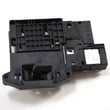
| Door will not lock/unlock correctly | Door lock and strike alignment | Lg washer door lock EBF61315802 |
Why it matters
Resetting the control restores normal operation after a brief power interruption or control logic “hang,” and it is the fastest first step before replacing parts like a drain pump motor, door lock, or electronic control board.
Last updated: February 2026
How to identify a Kenmore washer model?
Your Kenmore washer model number is printed on the identification plate inside the door opening on model 79641393511. Use that exact model number (and the serial number) when ordering parts or looking up troubleshooting steps in the 79641393511 owner's manual.
Where to find the model and serial number
On this Kenmore front-load washer, the identification plate is located inside the washer door. Check these common spots:
- Inside the door opening on the cabinet frame (most common)
- Along the inner edge of the door opening where the door seal meets the front panel
- On a label that also lists the serial number and electrical ratings
What the model number looks like (and why it matters)
Kenmore washer model numbers are typically a long number string. For this unit, the model family is shown in the manual as 796.4139* (the asterisk indicates a color code), and your full model is 79641393511.
Use this quick guide
| You see on the label | What it means | What to use for parts |
|---|---|---|
| 796.4139* | Model series/family | Use the full model from the label |
| 79641393511 | Full model number | Use this to match diagrams and parts |
| Serial number | Unique unit ID | Helpful for service and production info |
Tips to avoid ordering the wrong part
- Copy the model number exactly as shown (all digits, no spaces)
- Record the serial number too; it helps confirm the correct version
- Match the part by name and ID when possible (example: lg washer door lock EBF61315802)
- If your washer shows an error code, use a Kenmore-specific guide such as Kenmore 796 front load washer error codes to narrow the failure to a system (drain, fill, door lock, motor)
Why it matters
Kenmore model numbers determine the correct fit for key components like the door lock, drain pump motor, and water inlet valve. Using the exact model number prevents mismatched parts and repeat repairs.
Last updated: February 2026
What is the average lifespan of a Kenmore washer?
A Kenmore washer typically lasts 10 to 15 years. For the Kenmore 79641393511 front-load washer, consistent care (using HE detergent, avoiding overloads, and keeping the drain system clear) helps you reach the high end of that range; see the 79641393511 owner's manual for model-specific care steps.
Typical lifespan and what affects it
Most washers wear out from a few predictable stress points: water flow components, draining, and door sealing on front-load designs.
- Load size and balance: frequent overloading and unbalanced spins shorten bearing and suspension life.
- Detergent choice: use HE (low-sudsing) detergent to prevent excess suds and long “suds reducing” cycles.
- Drain health: coins, lint, and debris strain the pump and can cause slow or no-drain symptoms.
- Water quality: hard water can increase buildup in valves and hoses.
- Door seal care: wiping the boot and leaving the door ajar reduces odor and mildew.
Parts that commonly limit washer life
On front-load Kenmore 796 models, these are frequent wear items when a washer starts aging:
| Symptom | Common area | Example part for 79641393511 |
|---|---|---|
| Won’t drain, humming, water left in tub | Drain pump system | Drain pump motor (4681EA2001T) - washer part by lg electronics 4681EA2001T |
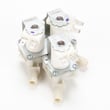
| Slow fill, fill errors, weak flow | Water inlet valve | Lg washer water inlet valve 5220FR2075L |
| Door won’t lock, won’t start | Door lock/strike | Lg washer door lock EBF61315802 |
Maintenance that adds years (high impact)
We recommend these habits for the Kenmore 79641393511:
- Measure detergent; never exceed the label recommendation (too many suds can stop spinning to prevent leaking).
- Run a monthly tub-clean cycle (or hot cycle) and clean the dispenser drawer.
- Check pockets and use a mesh bag for small items to protect the drain pump.
- Keep the washer level to reduce vibration and suspension wear.
Why it matters
A washer that is maintained well usually fails later and more predictably; you often replace a valve, door lock, or drain pump before you ever face major tub or bearing wear.
Last updated: February 2026
What causes a Kenmore washer to leak from the bottom?
On Kenmore washer model 79641393511, bottom leaks usually come from the drain path (loose or kinked drain hose, a leaking pump or hose connection) or from the fill system (inlet hoses or inlet valve seepage). Start by tracing fresh water trails under the cabinet to the highest wet point.
Quick checks we recommend first
- Unplug the washer and turn off both water faucets before inspecting.
- Pull the washer forward and look for the highest point that is wet; water runs downward and can mislead you.
- Check that the drain hose is not stretched, pinched, crushed, or kinked.
- Confirm the drain hose height and insertion are correct (too low or poorly secured can cause overflow or flooding).
- Inspect inlet hoses for cracks and make sure fittings are tight and have rubber seals.
- If the washer was exposed to freezing temperatures, let it warm to room temperature and recheck for leaks.
Most common leak sources (and what they look like)
| Where you see water | Most likely cause | What to inspect next |
|---|---|---|
| Front bottom, near door area | Door boot tear or clamp issue | Door boot for rips; clamp seating such as washer door boot spring clamp ACA56078801 |
| Center bottom during drain/spin | Drain pump or tub-to-pump hose leak | Pump housing, hose clamps, and drain pump motor (4681EA2001T) - washer part by lg electronics 4681EA2001T area |
| Back bottom, near hoses | Inlet hose or inlet valve seepage | Hose washers, tightness, and inlet valve body such as lg washer water inlet valve 5220FR2075L |
Installation and maintenance items that prevent leaks
- Keep the drain hose secured; an unsecured hose can cause flooding.
- Do not extend the drain hose more than the manual allows; over-extending can cause poor draining and overflow.
- Periodically check inlet hoses for wear and replace if cracked or leaking.
- Clean inlet valve filter screens if filling is poor; clogged screens can contribute to valve problems.
Why it matters
A small bottom leak can quickly damage the drain pump, door lock wiring, or flooring. Finding the highest wet point and matching it to the fill or drain stage (fill, wash, drain, spin) is the fastest way to pinpoint the failing hose, valve, or pump.
For model-specific hose routing, drain height, and inlet filter cleaning steps, use the 79641393511 manual.
Last updated: February 2026