Owner’s manual
 Error Codes


How many years should a Maytag dryer last?
A Maytag dryer like model MED5700TQ0 typically lasts 13 years. With consistent vent cleaning, proper loading, and quick replacement of wear items (belt, rollers, idler), many dryers reach 15 to 20 years of service.
Typical lifespan (what to expect)
Most dryers fail from airflow restrictions (overheating) or normal wear in the drum drive system.
| Dryer condition | Typical service life | What usually limits life |
|---|---|---|
| Average use, basic maintenance | ~13 years | Heat stress, wear parts |
| Good maintenance, good airflow | 15 to 20 years | Wear parts, motor age |
| Poor airflow, heavy use | 8 to 12 years | Overheating, thermal failures |
What extends the life of your MED5700TQ0
- Clean the lint screen every load; it keeps airflow strong and drying times shorter.
- Clean the vent duct and outside hood regularly; restricted airflow overheats the heater circuit.
- Avoid overloading; heavy loads strain the drum belt, idler pulley, and motor.
- Use Sensor Dry when possible; the IntelliDry sensor system shuts off when the load reaches the selected dryness (reduces over-drying and heat exposure).
- Use lower heat when you are unsure; the manual recommends choosing a lower temperature rather than a higher one for mixed fabrics.
Parts that commonly wear first (and are usually worth fixing)
These are normal wear items on many Maytag dryers, including the MED5700TQ0:
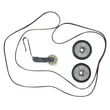
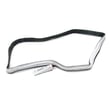
- Belt 341241
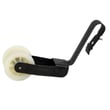
- Dryer idler pulley WP691366
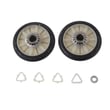
- Dryer repair kit 4392065 (commonly used to refresh multiple drum support components at once)
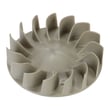
- Dryer blower wheel WP694089 (can crack or loosen and reduce airflow)
Why it matters
A dryer that takes longer to dry is not just inconvenient; long dry times usually mean poor airflow or a heating control issue, which increases operating temperature and shortens the life of components like the heating element and thermal cut-off.
For cycle and temperature guidance specific to this model, use the MED5700TQ0 owner's manual.
Last updated: February 2026
Where to find part number on Maytag dryer?
On your Maytag dryer model MED5700TQ0, the part number is usually printed on the part itself, while the model and serial tag is on the dryer cabinet opening. Start by locating the model/serial label first, then match the exact part number when ordering.
Where to look on the dryer
Check these common locations on Maytag dryers like MED5700TQ0:
- Inside the door opening on the front panel (model/serial label is often here)
- On the back panel of the cabinet
- Along the door frame or cabinet side near the lint screen housing
- On the lower front area behind the toe panel (some configurations)
For diagrams and model identification details, use the MED5700TQ0 owner's manual.
Where to find the part number (on the part)
Once you know which component you need, look directly on the part for a stamped, printed, or tagged number:
- Heating parts: on the heater housing or element frame
- Switches: on the switch body (often small print)
- Belts: printed along the belt’s outer surface
- Motors: on the motor data plate/label
- Thermostats and fuses: printed on the flat face or edge
If you are replacing a common wear item, matching by known part ID can be faster; for example, the belt 341241 is a listed drum belt option for this model.
Quick ID guide (what number means what)
| What you see | What it’s used for | Example format |
|---|---|---|
| Model number | Identifies the dryer | MED5700TQ0 |
| Serial number | Production code/date | Letters and numbers |
| Part number | Identifies the component | 279838, 3406107 |
| Part ID | Sears PartsDirect catalog identifier | WP3406107, 341241 |
Why it matters
Using the model number (MED5700TQ0) ensures we show the correct Maytag dryer parts list; using the part number from the old part helps you avoid ordering a look-alike that does not fit, especially for items like a dryer heating element, thermal cut-off fuse kit, or door switch.
Last updated: February 2026
Why is my Maytag dryer not drying clothes completely?
When our Maytag dryer model MED5700TQ0 isn’t drying clothes completely, the most common causes are restricted airflow (lint screen or venting), the wrong cycle or temperature selection, or a heating problem such as a weak heating element or a tripped thermal cut-off.
Quick checks that fix most “still damp” loads
- Clean the lint screen before every load; even a thin film can reduce airflow.
- Confirm strong airflow at the outside vent hood while the dryer runs.
- Avoid overloading; packed loads block air movement and confuse sensor drying.
- Use the right cycle: SENSOR DRY for most loads; TIMED DRY to finish items that are still damp.
- Match heat to fabric; when unsure, choose a lower temperature setting (per the MED5700TQ0 owner's manual).
Cycle and setting tips (based on how this dryer works)
This model uses an IntelliDry Sensor Dry system that senses moisture and shuts off when the selected dryness is reached. If the load is bulky or airflow is restricted, the sensor can stop early.
| Situation | Best setting to try | Why it helps |
|---|---|---|
| Mixed fabrics, everyday loads | Sensor Dry | Auto-shuts off at target dryness |
| Bulky towels/robes | Heavy Dry, high heat | More heat and time for thick items |
| Items still damp at end | Timed Dry (10 to 20 min) | Completes drying after an automatic cycle |
| Heat-sensitive items | Air fluff / no heat | Prevents heat damage |
When to suspect a part problem
If airflow is good and settings are correct but drying is still poor, check for heating and safety-limit issues.
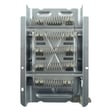
- No heat or very low heat: consider the dryer element 279838.
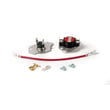
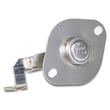
- Runs but shuts heat off quickly: a failed thermal cut-off is common; consider the dryer thermal cut-off fuse kit 279816.
- Long dry times with normal heat: inspect the blower wheel for damage or slipping; consider the dryer blower wheel WP694089.
Why it matters
Poor drying is usually an airflow issue first; fixing vent restriction protects the heater circuit, improves dry times, and helps prevent repeat failures of thermostats and thermal fuses.
Last updated: February 2026