Owner’s manual
 Error Codes


Does a GE washer have a filter that needs to be cleaned?
Yes, many GE washers have a filter or screen that can collect debris, but on the GE GTW685BSL1WS the routine “filter cleaning” most owners need is cleaning the dispenser drawer and running the built-in Basket Clean cycle for odor control. For details specific to your washer’s care steps, use the GTW685BSL1WS owner’s manual.
What “filter” means on the GTW685BSL1WS
This model’s regular maintenance focuses on cleaning areas that trap detergent, softener, and residue rather than a front-access drain-pump filter like many front-load washers.
Common places to check and clean:
- Dispenser drawer: Remove and wash in warm, soapy water; rinse and reinstall.
- Dispenser box area: Wipe the fixed housing with a damp cloth.
- Wash basket and tub: Use the Basket Clean cycle monthly.
- Water inlet hose screens: If fill is slow, shut off water and clean the small screens at the hose connections.
How to fix “rancid” or sour-smelling laundry
Odor is usually caused by detergent buildup, low-water HE washing, and leaving moisture trapped in the tub.
Recommended steps (in order):
- Run Basket Clean with 1 cup liquid bleach (empty washer).
- Clean the dispenser drawer and let it dry before reinstalling.
- Use HE detergent and reduce the amount if you see suds or residue.
- Use Deep Rinse when using fabric softener.
- Leave the lid open between loads so the basket can dry.
Quick comparison: top-load vs front-load “filters”
| Washer type | Typical filter access | What you usually maintain |
|---|---|---|
| GE top-load (like GTW685BSL1WS) | No front clean-out filter in normal use | Basket Clean cycle, dispenser drawer, inlet screens |
| Many front-load washers | Drain pump filter (often behind a small access door) | Drain pump filter cleaning plus tub cleaning |
Why it matters
Keeping residue and moisture under control prevents odor, improves rinse performance, and helps protect components like the drain system from buildup that can eventually contribute to draining problems.
Last updated: January 2026
What is the life expectancy of a GE washing machine?
A GE washing machine typically lasts 10 to 14 years. For your specific GE GTW685BSL1WS top-load washer, you can often reach the high end of that range by using HE detergent correctly, avoiding overloads, and running the monthly cleaning routine described in the GTW685BSL1WS owner’s manual.
What affects washer lifespan the most
We see these factors make the biggest difference on GTW-series top-load washers:
- Load size and balance: consistent overloading or out-of-balance spinning shortens the life of suspension and drive components.
- Detergent habits: too much detergent causes oversudsing and residue buildup.
- Monthly tub cleaning: running the Basket Clean cycle helps prevent odor and buildup.
- Water supply hose age: replace fill hoses every 5 years to reduce leak risk.
- Installation and leveling: an unlevel washer vibrates more and wears faster.
Maintenance schedule we recommend
Use this simple schedule to keep a GTW685BSL1WS running strong.
| Task | How often | Where to confirm steps |
|---|---|---|
| Run Basket Clean cycle (empty tub) | Monthly | GTW685BSL1WS owner’s manual |
| Check/replace water supply hoses | Every 5 years | GTW685BSL1WS owner’s manual |
| Clean dispenser drawer (if residue appears) | As needed | GTW685BSL1WS owner’s manual |
| Verify washer is level and stable | At install, then as needed | GTW685BSL1WS owner’s manual |
Signs your washer is nearing end of life
If you’re seeing multiple issues at once, it often points to age-related wear:
- Frequent out-of-balance events even with properly loaded laundry
- Loud humming/gurgling that persists during drain or spin
- Water leaks that return after hose checks
- Clothes consistently too wet after spin
- Repeated cycle interruptions or control problems
Why it matters
A washer that’s maintained well usually costs less to own over time because it avoids premature failures, reduces odor and residue problems, and helps prevent water damage from aging hoses.
Last updated: January 2026
What is the most common problem with GE washers?
For the GE GTW685BSL1WS washer, the most frequent service-type complaints tend to fall into a few repeat categories: not draining, not spinning well (often from an out-of-balance load), and not filling. We use the troubleshooting steps in the GTW685BSL1WS owner’s manual to narrow the symptom before replacing parts.
Common problem categories for GTW685BSL1WS
- Won’t drain or drains slowly: water left in the basket, “humming” during drain, or the cycle ends with standing water.
- Clothes too wet after spin: Spin light blinking, repeated rebalancing, or the washer stops short of a full-speed spin.
- No fill or slow fill: long fill times or “H2O SUPPLY” message.
- Won’t start or stops with lid message: “Lid” scrolling, lid must be closed to start most cycles.
- Too many suds: poor rinsing, longer cycle times, or leaks/overflow symptoms.
Quick checks that separate drain vs spin issues
- If water is still in the tub, focus on the drain hose path and pump.
- If water is gone but clothes are wet, focus on load balance, cycle selection, and suspension.
- If the display shows “H2O SUPPLY”, verify both faucets are fully open and inlet screens are clear.
- If Spin light blinks, redistribute the load and run Drain & Spin.
When a part is a likely suspect
| Symptom you see | What it usually points to | Model-compatible example part |
|---|---|---|
| Standing water, drain “humming,” slow drain | Drain restriction or failing pump | Washer drain pump assembly WH23X28418 |
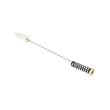
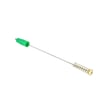
| Frequent banging, chronic off-balance, wet loads after spin | Suspension not controlling tub movement | Washer suspension rod and spring assembly WH16X26911 |
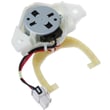
| Agitate/spin behavior seems incorrect or inconsistent | Shifting mechanism issue | Washer shifter WH03X30517 |
Why it matters
Treating “won’t drain” and “won’t spin dry” as separate symptoms prevents unnecessary part replacement and helps protect the tub suspension and drive system from repeated off-balance events.
Last updated: January 2026