Installation guide
 Owner’s manual
 Error Codes



How to remove bottom grille on GE refrigerator?
On the GE PFSS6PKWBSS bottom-mount refrigerator, the bottom grille (base grille) typically comes off by releasing its retaining clips or removing a couple of screws (model variations exist). We recommend following the exact steps in the PFSS6PKWBSS installation guide to avoid cracking the grille or scratching the finish.
Quick removal steps (most common)
- Unplug the refrigerator or switch off power at the breaker if you will reach near wiring.
- Look along the top edge of the grille for screws; remove them with a Phillips screwdriver if present.
- If there are no screws, grip the grille near the ends and pull straight outward to release the clips.
- If it feels stuck, check for hidden fasteners near the corners before pulling harder.
- Set the grille aside on a towel to prevent scuffs.
Reinstalling the grille
- Align the grille tabs with the slots in the cabinet frame.
- Press evenly until the clips snap into place.
- Reinstall any screws you removed and tighten them snugly (do not overtighten).
What to check if it will not come off
| Symptom | Likely cause | What we do next |
|---|---|---|
| Grille flexes but will not release | A screw is still installed | Recheck the top edge and corners for screws |
| One side pops loose, other side stays | Clip is hung up | Pull evenly from both ends |
| Grille is blocked | Leveling legs are too low or grille is misaligned | Raise leveling legs slightly, then retry |
Why it matters
Removing the bottom grille the right way helps protect the retaining clips and keeps the grille fitting tight afterward; a loose grille can rattle and may reduce airflow around the condenser area.
Last updated: February 2026
What is the average lifespan of a GE profile refrigerator?
GE Profile refrigerators typically last 10 to 15 years. For your GE PFSS6PKWBSS bottom-mount refrigerator, consistent maintenance (clean airflow, good door sealing, and timely filter changes) is what most often determines whether it lands closer to 10 years or pushes beyond 15.
What affects lifespan the most
- Condenser airflow and cleanliness: dust buildup makes the compressor work harder.
- Door gasket condition: air leaks cause longer run times and temperature swings.
- Ice maker and water system health: clogs and low water flow can strain components.
- Temperature settings and usage: frequent door openings and warm room temps increase run time.
- Power quality: repeated outages or surges can stress the control board.
Maintenance checklist to help it reach the high end of the range
- Vacuum and brush the condenser area regularly (frequency depends on pets and dust).
- Keep doors closing squarely; avoid overloading door bins.
- Replace the water filter on schedule; use the correct filter for this model.
- Confirm freezer temps stay stable; ice production depends heavily on freezer temperature.
- Address small issues early (odd noises, frost buildup, warm spots) before they cascade.
Common “age-related” repairs and what they usually mean
| Symptom | Common cause | Typical next step |
|---|---|---|
| Warm fridge or freezer | Sealed system issue, fan issue, sensor issue | Check temps, airflow, then diagnose components |
| Ice maker slows or stops | Water supply, filter restriction, ice maker wear | Replace filter, verify fill, then test ice maker |
| Door won’t seal well | Worn or warped gasket | Inspect and replace gasket if needed |
| Erratic temps | Sensor or control problem | Check sensor readings and control response |
Why it matters
A refrigerator that runs longer to hold temperature uses more energy and wears out key components faster. Simple upkeep, plus using the right replacement parts, is the most reliable way to extend the service life of a GE Profile unit.
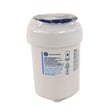
For model-specific care and maintenance intervals, follow the PFSS6PKWBSS owner’s manual. For water system upkeep, use the how to replace the water filter in a GE refrigerator guide and the correct filter such as the GE refrigerator water filter MWFP.
Last updated: February 2026
What is the most common problem with a GE refrigerator?
The most common problem we see with GE refrigerators like model PFSS6PKWBSS is a cooling complaint (refrigerator or freezer not cold enough). In many cases, the root cause is airflow or heat-transfer related, such as dirty condenser coils, a fan issue, or a door left slightly open.
Most common symptoms (and what they usually point to)
- Food softening in the freezer or ice cream getting “mushy” (airflow or defrost issue)
- Fresh food section warm but freezer cold (damper or airflow restriction)
- Unit runs a lot (dirty coils, door not sealing, warm room, heavy use)
- Ice maker slow or not making ice (freezer temp too warm, cubes stuck, water supply issue)
- Moisture on the outside during humid weather (normal; settings related)
Quick checks you can do first
Use these steps before replacing parts; they solve a large share of “not cooling” and ice maker complaints.
- Make sure no package is holding a door open (this is also a common cause of slow ice freezing).
- Confirm vents inside the compartments are not blocked by food containers.
- Clean condenser coils and make sure the condenser fan area is clear of dust.
- If ice cubes are stuck, turn the ice maker off, remove the cubes, then turn it back on.
- If you recently moved the refrigerator, pull it straight out and push it straight back in; avoid side-to-side movement and do not roll over the power cord or water line.
Common causes and typical fixes
| Problem area | What you notice | Typical fix |
|---|---|---|
| Airflow/venting | Warm spots, uneven temps | Unblock vents; avoid overpacking |
| Condenser coils | Long run times, weak cooling | Clean coils; improve airflow behind unit |
| Ice maker | No ice or slow ice | Clear stuck cubes; verify freezer temp and water supply |
| Door sealing | Frost, moisture, temp swings | Inspect gasket for gaps; clean and reseat |
Model-specific parts that often come up
If troubleshooting points to a failed component, these are common replacements for PFSS6PKWBSS:
- Refrigerator temperature sensor WR23X10582 (temperature feedback issues)
- Refrigerator damper motor WR60X10253 (fresh food section airflow control)
- Refrigerator ice maker assembly WR30X10097 (no ice or intermittent ice)
Why it matters
Cooling and ice maker problems are often connected: if the freezer is even a few degrees too warm, ice production slows and food quality drops. Following the operating and care guidance in the PFSS6PKWBSS owner's manual helps prevent repeat issues.
Last updated: February 2026