

What model is the Whirlpool quiet partner 3?
Whirlpool Quiet Partner III is a dishwasher line, not a dryer model. If you are trying to identify your appliance, the model number is printed on the dishwasher’s rating label (typically on the tub frame near the door) and will look like a code similar to GU2200XTSS3.
Use these quick checks to avoid ordering the wrong Whirlpool parts:
- Open the dishwasher door and look along the inner door edge and tub frame
- Check the side walls of the tub opening near the hinges
- Write down the full model number and serial number exactly as shown
- If the label is worn, take a clear photo and zoom in to confirm characters
- Do not use “Quiet Partner III” alone for parts lookup because it is a series name
Most Whirlpool Quiet Partner III dishwashers use a model number pattern like this:
| What you see | What it means | Example |
|---|---|---|
| Quiet Partner III | Series/marketing name | Quiet Partner III |
| Model number | Exact identifier for parts | GU2200XTSS3 |
| Serial number | Production identifier | Varies |
Parts are matched to the exact model number, not the series name. Using the full model number prevents fit issues with key items like the door latch, pump, or control components.
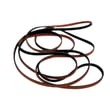
If you are actually looking for parts for Whirlpool electric dryer model LER5636EQ3, use the dryer model number on the dryer’s door opening label and match parts by that model, such as the drum belt 341241.
Last updated: January 2026
What is the average lifespan of a whirlpool dryer?
A Whirlpool electric dryer like model LER5636EQ3 typically lasts 10 to 13 years with normal household use. Regular airflow maintenance and prompt repair of wear items (belt, thermostat, heating circuit) often pushes real-world life closer to 12 to 15 years.
Most dryers fail early for two reasons: restricted venting (overheating) or worn moving parts. These factors have the biggest impact:
- Loads per week (heavy daily use shortens life)
- Vent length and lint buildup (restricted airflow overheats the heater and safety fuses)
- Overloading (stresses the drum support and belt)
- Heat setting choices (high heat all the time increases wear)
- Fixing small issues early (squeals, thumps, weak heat)
We recommend these habits for Whirlpool electric dryers:
- Clean the lint screen before every load
- Check airflow at the outside vent hood; strong flow means the vent is clear
- Clean the vent duct at least yearly (more often with long runs or pets)
- Avoid overloading; the drum should tumble freely
- Stop using the dryer if it overheats or shuts off mid-cycle and correct the airflow issue
Many “old dryer” problems are normal wear and are usually repairable.
| Symptom | Common wear item | Example part for LER5636EQ3 |
|---|---|---|
| Drum won’t turn, motor runs | Belt or idler pulley | Drum belt 341241 |
| No heat, tumbles normally | Heating circuit or safety cut-off | Dryer element 279838 |
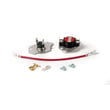
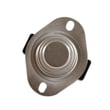
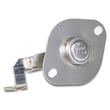
| Overheats or shuts off | Thermostat or thermal cut-off kit | Cut-off kit 279816 |
A dryer that runs hot or takes too long to dry is not just inconvenient; it accelerates wear on the heating element, thermostats, and wiring. Keeping airflow strong is the single best way to protect the LER5636EQ3 and reach the upper end of the lifespan range.
Last updated: January 2026
How do I find the cubic feet of my dryer?
To find the cubic feet (capacity) of your Whirlpool LER5636EQ3 electric dryer, we measure the inside of the drum and calculate its volume. Most full-size Whirlpool dryers are roughly 6.0 to 7.5 cubic feet, but measuring your drum gives the most accurate number.
Unplug the dryer first, then open the door and measure the drum interior.
- Diameter (D): straight across the drum, inside wall to inside wall
- Depth (L): from the inside front lip to the back wall of the drum
- Measure in inches for both
- Measure the metal drum, not the door opening trim
- Take each measurement twice and use the average
A dryer drum is essentially a cylinder.
- Cubic inches = π × (D ÷ 2)² × L
- Cubic feet = cubic inches ÷ 1,728
| What you have | What to do | Result |
|---|---|---|
| Diameter (in) and depth (in) | Use cylinder formula | Cubic inches |
| Cubic inches | Divide by 1,728 | Cubic feet |
If your drum measures D = 23 in and L = 20 in:
- Radius = 11.5 in
- Cubic inches ≈ 3.1416 × 11.5² × 20 ≈ 8,310
- Cubic feet ≈ 8,310 ÷ 1,728 ≈ 4.8 cu ft
(Your LER5636EQ3 may measure differently; this is just a math example.)
Dryer capacity helps you match load size to airflow and heat. Overloading often causes long dry times and extra wear on the drive system (belt and idler pulley), while underloading can waste energy.
Good airflow lets you dry fuller loads more effectively.
- Clean the lint screen every load
- Check the vent for restrictions and crushed ducting
- Keep the lint chute clear if lint is bypassing the screen
- If the drum struggles to turn under load, inspect the belt and pulley system
If you’re troubleshooting drum movement while checking capacity, the drum belt 341241 is a common wear item on this model.
Last updated: January 2026
What is the most common problem with whirlpool dryers?
The most common Whirlpool dryer problems are no heat and won’t start or won’t tumble. On the Whirlpool LER5636EQ3 electric dryer, the most frequent root causes are restricted airflow (venting), a failed heating circuit component, or a worn drive system part such as the belt.
- Dryer runs but no heat: failed heater circuit part, or poor airflow causing overheating and shutdowns
- Dryer won’t start: door not closing properly, failed door switch, or timer/control issue
- Dryer runs but won’t tumble: broken belt or a seized drive component
- Long dry times: clogged lint screen, lint buildup in the chute, or blocked venting
- Burning smell or very hot cabinet: severe airflow restriction, lint buildup, or a failing blower wheel
- Clean the lint screen and confirm strong airflow at the outside vent hood.
- Inspect the vent path for kinks, crushed flex duct, or heavy lint buildup.
- Verify the dryer is getting full power (electric dryers typically need 240V; a tripped breaker can leave the motor running on 120V with no heat).
- Confirm the door closes firmly and the latch engages.
- If the drum does not turn, stop using the dryer to prevent further damage.
| Symptom | Common part involved | What it affects |
|---|---|---|
| Won’t tumble | Drum belt 341241 | Drum rotation |
| Won’t start (door issue) | Door switch WP3406107 | Start circuit safety interlock |
| No heat | Dryer element 279838 | Heat generation |
| No heat after overheating | Cut-off kit 279816 | Safety cut-off in heater circuit |
| Overheats, cycles oddly | Dryer operating thermostat WP3387134 | Temperature regulation |
Airflow problems are the most common “starter issue” because they cause long dry times and overheating; that overheating can trip safety devices and make it look like the heater or thermostat failed. Fixing venting first prevents repeat failures and protects the heating system.
For additional Whirlpool dryer troubleshooting patterns (especially if your unit displays codes), use our Whirlpool duet dryer error codes guide.
Last updated: January 2026