Owner’s manual
 Error Codes


How wide is a 25.6 cubic foot refrigerator?
Most 25.6 cubic foot side-by-side refrigerators are about 36 inches wide. For your GE DSS25KSRBSS, the exact cabinet width and required doorway clearance are listed in the DSS25KSRBSS owner’s manual, and you should also plan for extra space for leveling, airflow, and water line routing.
Typical width and what to expect
A 25.6 cu. ft. capacity usually lands in the standard side-by-side footprint.
- Typical exterior width: 35 3/4 to 36 inches
- Typical height: about 69 to 71 inches (varies by hinge and leveling legs)
- Typical depth: about 33 to 35 inches (more with handles)
- Door swing clearance can add several inches beyond the cabinet width
Doorway and moving clearance (important for installation)
For GE side-by-side units like DSS25KSRBSS, doorway width matters as much as cabinet width.
- Measure the narrowest point from the truck to the final location (door jambs, turns, stair rails)
- If an entrance is under 38 inches, plan on removing the refrigerator doors during the move
- Leave protective tape and pads on until the refrigerator is in place
- Use a padded hand truck and strap the unit securely (do not overtighten)
| Measurement you need | How to measure | Why it matters |
|---|---|---|
| Cabinet width | Left to right across the case | Confirms fit between cabinets |
| Doorway width | Smallest clear opening | Determines if doors must come off |
| Depth with handles | Front of handles to back | Prevents sticking into walkways |
| Clearance behind | Space to wall plus water line loop | Allows service access and prevents kinks |
Why it matters
Width alone does not guarantee a clean install. Door removal planning and clearance for airflow and the water supply line help prevent damage during delivery and reduce issues like poor cooling or a pinched water line.
Last updated: January 2026
What is the most common problem with a GE refrigerator?
Cooling problems are the most common issue we see with GE refrigerators like model DSS25KSRBSS. In many cases, the fix is basic (dirty condenser coils, airflow blocked by frost, or a door not sealing), but cooling complaints can also trace to defrost or temperature-sensing parts.
Quick checks we recommend first
- Confirm the temperature controls are not set to 0 (off); on this GE design, setting controls to 0 does not remove power to the light circuit.
- Give the refrigerator time after a power interruption; many units need up to 24 hours to fully stabilize temperatures.
- Clean condenser coils and make sure the condenser fan area is not blocked by dust.
- Check door gaskets for gaps and make sure doors close fully (avoid overloading door bins).
- Look for heavy frost on the freezer back wall (often points to a defrost problem).
Common causes and the parts that often solve them
If basic checks do not restore normal temperatures, these are frequent culprits on side-by-side refrigerators:
| Symptom | Most likely system | Parts that commonly fail |
|---|---|---|
| Warm fresh food section, freezer OK | Airflow/evaporator area | Evaporator fan motor, frost buildup from defrost issue |
| Frost buildup, warming over time | Defrost system | Defrost heater, defrost thermostat |
| Temps swing, food freezing or warming | Temperature sensing/control | Temperature sensor |
| Slow water flow, hollow ice, no ice | Water supply/filtration | Water filter, water valve |
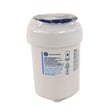
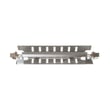
Model-matched examples from our parts list include the GE profile refrigerator temperature sensor WR55X10025, the refrigerator defrost heater WR51X10055, and the refrigerator water filter MWFP.
Why it matters
A refrigerator that cannot hold steady temperatures can spoil food and overwork the compressor. Catching airflow restrictions, frost buildup, or a clogged filter early often prevents bigger, more expensive failures.
Where to confirm settings and troubleshooting steps
We follow the model-specific troubleshooting charts and operating guidance in the DSS25KSRBSS owner's manual.
Last updated: January 2026
Are GE side by side refrigerators good?
Yes. GE side-by-side refrigerators like model DSS25KSRBSS are a solid choice for everyday reliability and organization; they typically offer easy access to fresh and frozen foods, adjustable door bins and shelves, and convenient ice and water dispensing on many versions.
What “good” usually means for a side-by-side
A good side-by-side refrigerator balances consistent temperatures, usable storage, and low-maintenance features.
- Organization: Narrow, tall compartments make it easy to separate frozen foods and fresh foods.
- Adjustability: Door bins and shelves are designed to be moved to fit your needs.
- Convenience: Many models include an ice maker and water dispenser.
- Everyday durability: Common wear items (filters, bulbs, dispenser parts) are replaceable.
- Serviceability: Many issues can be diagnosed with basic checks and a multimeter.
Model-specific features we see in the documentation
For GE DSS25KSRBSS, the manual describes adjustable door bins and typical dispenser-model storage guidance.
| Feature area | What you can expect | Why it helps |
|---|---|---|
| Door bins | Adjustable refrigerator and freezer door bins | Better fit for tall bottles and small items |
| Dispenser area | Ice bin clearance guidance on dispenser models | Prevents bin interference and improves usability |
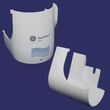
| Lighting | Replaceable appliance bulb behind a light shield | Restores visibility without replacing the fixture |
For exact feature details and use instructions for your configuration, use the DSS25KSRBSS owner’s manual.
Quick checks that improve performance and satisfaction
These steps address the most common “is it good?” pain points (noise, slow ice, weak water flow, warm temps).
- Replace the water filter on schedule; a clogged filter reduces flow and can affect ice production.
- Keep door bins seated correctly so doors close and seal fully.
- Avoid overpacking near air vents; airflow drives even cooling.
- If ice dispensing sticks, inspect the chute door for proper closing.
- If temperatures swing, test the sensor and confirm the controls are set correctly.
Parts that commonly affect ice and water performance
| Symptom | Part to consider |
|---|---|
| Slow water, odd taste | Refrigerator water filter MWFP |
| No water to dispenser/ice maker | Refrigerator water valve WR57X33326 |
| Ice chute not sealing well | Refrigerator dispenser ice chute door kit WR17X11653 |
Why it matters
A side-by-side that seals well, maintains airflow, and has a clean water path will cool more evenly, waste less energy, and deliver better ice and water performance over time.
Last updated: January 2026
Why is my GE side by side freezing up?
On the GE DSS25KSRBSS side-by-side refrigerator, “freezing up” is usually caused by airflow being blocked by frost/ice, controls set too cold, or a defrost system issue. Start by confirming the temperature control settings and then check for frost buildup that points to a defrost problem.
Quick checks first (most common)
- Verify the controls are not set to 0 (0 stops cooling but does not shut off power); set both to 5 and allow 12 to 24 hours to stabilize.
- Adjust only one increment at a time, then wait 12 hours before adjusting again.
- Make sure doors fully close and seals are clean; warm air leaks can drive excess frost.
- Do not overpack; blocked vents cause cold spots and freezing in the fresh food section.
- If the freezer is “too warm” and you see clumping ice, move the freezer control colder one step at a time.
| Symptom you see | Most likely area to check | What it usually means |
|---|---|---|
| Frost blanket on freezer back wall | Defrost system | Defrost heater/thermostat not clearing frost |
| Fresh food items freezing | Airflow or control setting | Controls too cold or damper/vents blocked |
| Water line or dispenser area freezing | Water supply/valve seep | Slow seep can freeze in the tube over time |
If you see heavy frost: focus on the defrost system
A solid frost layer on the evaporator area restricts airflow and makes temperatures swing. These parts are common fixes when the defrost cycle is not clearing ice:
- Refrigerator defrost heater WR51X10055
- Refrigerator defrost thermostat WR50X10068
- Evaporator fan operation (a failed fan can mimic a “freeze up” by stopping airflow)
If the water dispenser line is freezing
A slow seep through the inlet valve can keep a small amount of water sitting in the tube where it freezes.
- Check for slow dripping at the dispenser when not in use.
- Replace a weak or seeping inlet valve if symptoms match.
- Replace a restricted filter; low flow can contribute to odd water behavior.
Helpful parts to match this symptom:
Why it matters
Ice buildup and blocked airflow force longer run times, cause uneven temperatures, and can lead to food freezing in the fresh food section while other areas warm up. Correct control settings and a working defrost system keep temperatures stable.
For control-setting details and timing guidance, follow the DSS25KSRBSS owner’s manual.
Last updated: January 2026